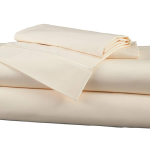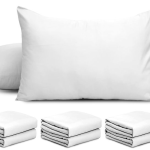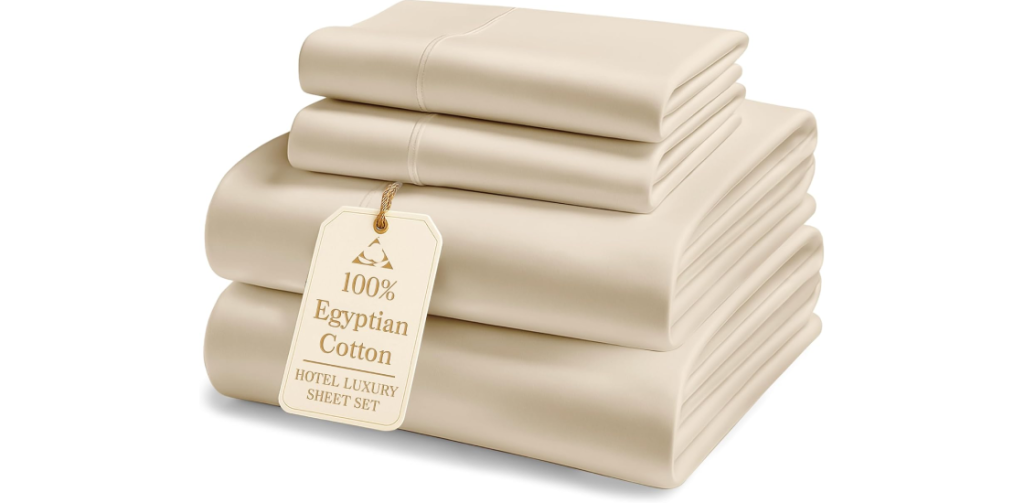
Premium Egyptian cotton suits independent and assisted living suites, where laundry is gentler and comfort drives resident satisfaction. Long-term care rooms with barrier washing and heavy soiling need a harder-wearing specification. Match the fabric to the care level rather than to the facility.
Premium Egyptian cotton is the right choice for some rooms in a senior living facility and the wrong one for others. In independent living suites and retirement residences, where laundry is closer to hospitality than to healthcare, it delivers comfort residents notice daily. In long-term care rooms running barrier washing at high temperature with frequent soiling, fine premium yarns wear out fast and the money is better spent elsewhere.
Bedding in senior living also carries requirements hospitality does not. Therapeutic mattresses lose effectiveness when too many layers sit between the resident and the support surface. Adjustable beds change shape under the sheet. Skin on older residents is more fragile, and how a fabric handles friction and moisture has clinical consequences. This guide covers matching the specification to the care level, what Egyptian cotton actually guarantees, choosing thread count and weave for institutional laundry, fitting therapeutic and adjustable beds, and buying consistently across facilities.
Match The Specification To The Care Level, Not The Facility
Most senior living operators buy one bedding specification for a whole building. That is the decision worth revisiting, because a single site can contain three very different laundry and soiling environments.
Independent Living And Retirement Residences
Residents here are largely self-sufficient, linen changes run on a hospitality-style schedule, and soiling is comparable to a hotel. Laundry is typically standard commercial washing rather than infection-control washing.
This is where premium Egyptian cotton earns its cost. Residents live in these rooms for years and notice the bedding every night, and comfort contributes directly to satisfaction and to how families judge a residence during a tour.
Assisted Living
A middle case. Linen changes are more frequent, some soiling occurs, and laundry may run hotter with more bleach. Premium cotton still works, though specifying a slightly heavier fabric and a more durable construction will extend replacement cycles.
Long-Term And Complex Care
Frequent soiling, barrier washing, high wash temperatures and chlorine bleach are routine. Fine yarns woven at high thread counts break down quickly under those conditions, however good the fibre.
Specifying premium Egyptian cotton here means replacing sheets far sooner, and the residents least able to appreciate the difference in hand-feel are the ones whose linen takes the heaviest treatment. A durable mid-weight cotton or a poly-cotton blend usually delivers a lower cost per use and a better resident outcome, because worn thin sheets are replaced promptly rather than stretched to justify their price.
| Care environment | Recommended specification |
|---|---|
| Independent living suites | Premium Egyptian cotton, sateen or percale by preference |
| Retirement residence guest suites | Premium Egyptian cotton |
| Assisted living | Premium cotton, heavier weight, reinforced construction |
| Long-term care | Durable mid-weight cotton or poly-cotton blend |
| Complex and memory care | Durable blend, prioritising wash tolerance |
| Respite and short-stay rooms | Match to the laundry program, not the room type |
Info: Buying two specifications for one building sounds like an inventory complication and usually is not. Facilities already separate linen by floor or wing, and colour-coded hems or a different trim colour keep the two streams apart in the laundry.
What Egyptian Cotton Actually Guarantees
The term is used loosely across the bedding trade, and buyers paying a premium should know precisely what they are paying for.
Origin Is Not Quality
Egyptian cotton describes cotton grown in Egypt. That is all the name establishes on its own. Egypt produces several cotton varieties, and not all of them are the extra-long staple types that give the name its reputation.
The property that matters is staple length, meaning the length of the individual cotton fibres. Extra-long staple fibre spins into smoother, stronger yarn with fewer fibre ends protruding from the surface, which is why it resists pilling and keeps its hand after repeated washing. Short-staple cotton pills within months in an institutional laundry regardless of where it was grown.
Giza varieties are the extra-long staple cottons the reputation is built on. A supplier able to name the variety is telling you something specific. One who says only Egyptian is telling you about geography.
Verifying The Claim
Egyptian cotton is among the most widely misrepresented claims in bedding. The Cotton Egypt Association licenses use of the Egyptian Cotton trademark and operates DNA testing to verify fibre origin, and there have been significant cases of products sold as Egyptian cotton that were not.
Ask any supplier for three things:
- The staple classification, extra-long staple or long staple, rather than the country alone
- Licensing or certification evidence for the Egyptian Cotton trademark, if the claim is being made
- Test documentation if a premium is being charged on the basis of fibre origin
A supplier who manufactures in house can usually trace this. One buying finished goods from a third party often cannot, which is worth knowing before a premium is paid.
Thread Count And Weave For Institutional Laundry
Retail guidance on Egyptian cotton often recommends counts of 600 and above. That advice is written for a household washing machine and does not transfer to senior living.
Why Very High Counts Underperform Here
High thread counts are achieved by weaving finer yarns more densely, and finer yarns are individually weaker. In a facility laundry running high temperatures, chlorine bleach and frequent cycles, a densely woven fine fabric thins and tears sooner than a moderate count woven from heavier yarn.
Dense fabrics also dry more slowly, which raises energy cost and tempts staff into longer drying cycles that abrade the fabric further.
Counts advertised well above 400 are frequently inflated by counting individual plies within a yarn, a practice covered in our guide to hotel percale sheet sets. A single-ply fabric at a moderate count will normally outlast a multi-ply fabric advertised at double.
Choosing The Weave
Percale, a plain over-under weave, is matte, crisp and breathable. It suits residents who sleep warm and holds up well to institutional washing.
Sateen floats threads across the surface for a smooth, slightly lustrous finish. It feels warmer and more luxurious, which suits independent living suites, but the exposed floats abrade faster and the surface is more slippery.
That slipperiness deserves thought in care settings. A low-friction surface reduces shear on fragile skin, which is desirable, but it also allows residents to slide down the bed when the head is raised, which creates repositioning work and its own shear risk. Ask your clinical or occupational therapy staff which matters more for the resident group in question before standardising on sateen.
Fitting Therapeutic And Adjustable Beds
This is where senior living bedding differs most from hospitality, and where procurement decisions have clinical consequences.
Pocket Depth On Care Beds
Pressure-redistribution mattresses, overlays and therapeutic surfaces are often considerably deeper than standard mattresses, and stacking an overlay on a base mattress deepens them further. Fitted sheets that fit a hotel bed will not stay on.
Measure the actual depth of each mattress configuration in the building, including any overlay, and specify pocket depth with a margin so the elastic grips beneath the corner rather than straining across it. A sheet that pops off during a night is a fall risk as well as an inconvenience, because it leaves a loose fabric mass on a bed a resident may try to move in.
Sheets On Articulating Beds
Adjustable and hospital beds change shape when the head or knee section raises. A sheet that fits flat can pull tight or untuck as the bed articulates, and a sheet pulled taut across a bent mattress puts tension directly under the resident.
Order pocket depth for the deepest configuration rather than the flat one, and have housekeeping check fit with the bed raised during any sample trial rather than only when flat.
Layering And Pressure Redistribution
Pressure-redistribution mattresses work by allowing the body to sink in and be enveloped by the surface. Layers between the resident and that surface interfere with it, and tightly tucked or non-stretch bedding can hold the body above the mattress rather than letting it settle in.
The practical implication for procurement is that adding an extra draw sheet, underpad or protector to solve a laundry problem may compromise the mattress a facility has already paid for. Decisions about what sits between the resident and the support surface belong with clinical staff, not only with purchasing.
What Senior Living Laundry Does To Bedding
Facility laundry is harder on fabric than hotel laundry, and the specification should be chosen with that in mind.
Infection-control and barrier washing run hotter and use stronger chemistry than hospitality programs. Chlorine bleach is common for soiled linen. Incontinence handling means some items are washed far more frequently than a room-turnover schedule would suggest, and staff under pressure tend to run one program for everything rather than sorting by fabric.
Three questions establish whether a proposed specification will survive:
- What are the actual wash and dry temperatures used, not the ones policy specifies?
- Is chlorine bleach used, and on which linen streams?
- Does the laundry sort by fabric type, or does everything run the same cycle?
If the answer to the third question is that everything runs the same cycle, then the most demanding stream sets the specification for the whole building. Buying premium cotton for the independent living floor only works if that linen can be kept out of the barrier wash.
Before ordering across a facility, run sample sets through the actual laundry at its real settings for at least 20 cycles and measure shrinkage, fit on the real mattresses, pilling, seam integrity and colour against an unwashed control.
Buying Consistently Across Facilities
Operators running several residences face the same reorder problem as multi-site property managers, with a resident-facing consequence. New stock enters linen rooms alongside older stock, and if lots vary in shade, two rooms on the same corridor look different to a visiting family.
Ask any supplier:
- Is an approved specification retained between orders so future lots match the one signed off?
- How is lot-to-lot variation in shade and fabric weight controlled?
- Can a single production run cover a facility-wide rollout?
- What is the minimum order quantity, and does it change on reorders?
- Where is stock warehoused, and what are reorder lead times?
- Do you manufacture in house or source from third parties?
- Can you supply deep pocket depths, custom sizes and colour-coded hems to separate linen streams?
The certification question matters here too. OEKO-TEX Standard 100 tests finished textiles for substances harmful to health, which is worth specifying anywhere fabric sits against fragile or compromised skin for extended periods.
Final Thoughts
Premium Egyptian cotton belongs in senior living, but not in every room. Independent living suites give residents years of nightly contact with the bedding and run laundry closer to hospitality than healthcare, which is where the premium returns something. Long-term and complex care rooms, with barrier washing and frequent soiling, wear out fine yarns quickly and are better served by a durable blend.
Verify what you are buying. Egyptian names a growing region, extra-long staple names the property that resists pilling, and only one is worth a premium. Check fit against the mattresses you own, including overlays and articulating beds at full elevation. Layers between a resident and a pressure-redistribution surface affect how it performs, so involve clinical staff.
Northern Linens manufactures in house, retains approved specifications between orders and supplies deep pocket depths for care beds. Request samples and test them in your own laundry, on your own mattresses.
Frequently Asked Questions
Are Egyptian Cotton Sheets Suitable For Senior Living Facilities?
In independent and assisted living, yes. Those rooms run hospitality-style laundry and residents notice the comfort daily. In long-term care, where barrier washing and frequent soiling are routine, fine premium yarns wear out quickly and a durable cotton or blend delivers a lower cost per use.
What Makes Egyptian Cotton Different From Regular Cotton?
Egyptian cotton names a growing region rather than a quality grade. The meaningful property is staple length. Extra-long staple fibre spins into smoother, stronger yarn with fewer protruding fibre ends, which resists pilling. Egypt also produces shorter staple varieties that carry none of that advantage.
What Thread Count Is Best For Senior Living Bedding?
Moderate counts outperform very high ones in facility laundry. High counts use finer, individually weaker yarns woven densely, which thin and tear sooner under high temperatures and chlorine bleach. Counts advertised above roughly 400 are also frequently inflated by counting plies within a yarn.
What Pocket Depth Do Senior Living Sheets Need?
Enough to cover the deepest mattress configuration in the building, including any pressure-redistribution overlay, with margin for the elastic to grip beneath the corner. Depth should be checked with articulating beds at full elevation, since the surface changes shape when the head section raises.
How Does Bedding Affect A Pressure-Redistribution Mattress?
These surfaces work by letting the body sink in and be enveloped. Additional layers, or tightly tucked non-stretch bedding, can hold the body above the surface and reduce that effect. Decisions about what sits between a resident and the mattress should involve clinical staff.
How Can Buyers Verify An Egyptian Cotton Claim?
Ask for the staple classification rather than the country name, request licensing evidence for the Egyptian Cotton trademark, and ask for test documentation where a premium is charged on fibre origin. Suppliers manufacturing in house can usually trace this, while resellers often cannot.