Choosing hotel bedding isn’t about finding the softest sheets on a shelf — it’s about sourcing linens that survive 150+ industrial wash cycles, hold their color, and still feel new to a guest on night one and night one-thousand. This guide breaks down exactly what hospitality procurement teams should evaluate before placing a bulk order: thread count and weave, GSM, fabric composition, certifications, and total cost of ownership.
If you manage purchasing for a hotel, short-term rental portfolio, or property management company, this is written for you — not for someone shopping for a single bed at home.
What Is “Hotel Collection Bedding,” Really?
“Hotel collection bedding” refers to linens built to commercial specifications — durable weaves, verified thread counts, and fabric weights designed for daily use and repeated industrial laundering, not the retail bedding sold under similar-sounding names at department stores. The two are often confused, but they’re built to different standards entirely.
Retail “hotel collection” labels typically use lower-grade sateen weaves with synthetic blends, optimized for a soft first touch in a showroom rather than years of commercial wash cycles. True commercial hotel bedding is graded on wash-cycle durability, colorfastness, and consistency across every unit in an order — not on how it feels folded on a shelf.
That distinction matters most when you’re ordering for dozens or hundreds of rooms, since inconsistent quality across a batch creates uneven guest experiences and higher replacement costs.
What Thread Count Should Hospitality Buyers Actually Look For?
Most 3-star and mid-scale hotels specify cotton percale in the 200–300 thread count range, while 4- and 5-star luxury properties typically move up to 250–400 thread count for a smoother hand-feel. Thread count above 400 rarely improves comfort in a commercial setting and mainly adds cost, since it doesn’t account for weave type or fiber quality — the two factors that matter more.
Thread count counts the total number of horizontal (weft) and vertical (warp) threads woven into one square inch of fabric. A higher number generally signals a denser weave, but only within a realistic range — marketing claims of 800 or 1,000 thread count almost always involve multi-ply threads counted as single threads, which inflates the number without improving durability.
| Hotel Tier | Typical Thread Count Range | Common Weave |
|---|---|---|
| Limited-service / economy | 180–250 TC | Percale or plain weave |
| Mid-scale / 3-star | 200–300 TC | Percale |
| Upscale / 4-star | 250–350 TC | Percale or sateen |
| Luxury / 5-star | 300–400 TC | Percale (single-ply, long-staple cotton) |
Percale weave is the industry default for hotel sheets because it’s crisp, breathable, and holds up better than sateen across repeated industrial washing. Sateen has a softer, glossier feel but shows wear and pilling faster under commercial laundering conditions, which is why most properties reserve it for duvet covers rather than daily-use sheets.
Does Fabric Weight (GSM) Matter as Much as Thread Count?
GSM (grams per square meter) measures the actual density and weight of a fabric, and it matters just as much as thread count for judging durability — especially for towels, mattress protectors, and duvet inserts where thread count doesn’t apply. A high thread count paired with a low GSM often signals thin, lightweight fabric that won’t hold up to commercial use.
For bedding categories where thread count isn’t the relevant metric — mattress protectors, blankets, and pillow fill — GSM is the number to check instead. Buyers sourcing across multiple product types should ask suppliers for GSM specs on every category, not just sheets, since a supplier that only quotes thread count may be leaving out the number that actually predicts wear.
What Fabric and Certification Standards Should Be Non-Negotiable?
Long-staple or extra-long-staple cotton (ELS) in a percale weave is the standard fabric choice for hotel sheets, and OEKO-TEX Standard 100 certification is the baseline safety benchmark to require from any wholesale supplier. Skipping either one increases the risk of premature fabric breakdown or exposure to harmful chemical residues in daily-use linens.
Key standards to confirm before signing a wholesale contract:
- Fiber length: Long-staple or extra-long-staple cotton resists pilling and holds shape far longer than short-staple cotton.
- OEKO-TEX Standard 100 certification: Confirms the fabric has been tested and verified free of harmful substances — important for guest safety and for healthcare or childcare-adjacent properties.
- Colorfastness: White and light-colored linens should hold their color and resist graying through repeated industrial bleaching and washing.
- Wash-cycle durability: Ask suppliers directly how many industrial wash cycles their fabric is rated to withstand before quality noticeably degrades — a fabric rated for 150+ cycles reduces replacement frequency and long-term cost.
- Consistent SKU-level quality: Every unit in a bulk order should match in weight, weave, and color — batch inconsistency is one of the most common (and most avoidable) quality complaints in hotel procurement.
How Should Hospitality Buyers Think About Cost Per Order vs. Cost Per Wash Cycle?
The lowest price per unit isn’t the same as the lowest cost over the linen’s lifespan, since cheaper fabric that needs replacing twice as often usually costs more over a two- or three-year period. Hospitality buyers get better long-term value by comparing cost against expected wash-cycle life, not just the invoice total.
A simple way to compare two supplier quotes:
- Get the per-unit price for each sheets, duvet covers, pillowcases, mattress protectors product category.
- Ask each supplier for their fabric’s rated wash-cycle durability.
- Divide unit price by rated wash cycles to get a rough cost-per-wash figure.
- Compare that number across suppliers, not just the sticker price.
This approach also makes it easier to justify a slightly higher upfront cost when the fabric quality and durability data support it.
Which Northern Linens Product Categories Cover Hotel Bedding Needs?
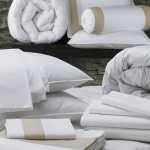
A complete hotel bed program typically draws from four to five core wholesale categories, and sourcing them from one manufacturer keeps quality and fabric weight consistent across every layer of the bed. Mixing suppliers across categories is one of the more common causes of mismatched color and texture between sheets and duvet covers.
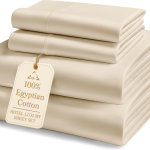
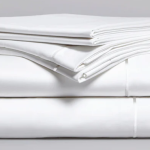
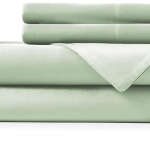
- Sheet Sets — the daily-use foundation of any hotel bed program, available across the percale weights and thread counts most hospitality buyers specify.
- Duvet Covers & Duvets — sourced in matching fabric weights to sheet sets for a consistent finished look across every room.
- Pillow Cases & Pillows — including hypoallergenic fill options, relevant for properties serving allergy-conscious guests or healthcare-adjacent stays.
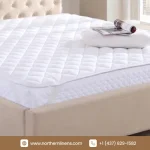
- Mattress Protectors & Pads — a category worth evaluating on GSM and waterproofing rather than thread count, and a first line of defense against premature mattress replacement.
- Blankets & Throws and Bath Towels — round out a full-room program and benefit from the same batch-consistency standards as sheets and duvets.
If your team is also evaluating fabric type in more depth — organic cotton, bamboo, or percale versus sateen — that’s a deeper comparison worth its own read rather than a few paragraphs here.
Frequently Asked Questions
What thread count is best for hotel bed sheets?
Most hotels perform well with 200–300 thread count percale for standard rooms and 250–400 thread count percale for upscale or luxury properties. Thread counts above 400 add cost without a meaningful durability or comfort benefit in a commercial setting.
Is a higher thread count always better for hotel bedding?
No. Thread counts marketed above 500–600 are often achieved using multi-ply threads counted individually, which inflates the number without improving how the fabric performs under industrial washing. Weave type, fiber length, and GSM are better indicators of real quality than thread count alone.
What’s the difference between percale and sateen for hotel sheets?
Percale is a tighter, plain weave that feels crisp and cool, and it holds up better across repeated commercial laundering, which is why most hotels use it for daily-use sheets. Sateen has a softer, glossier feel but wears and pills faster under industrial wash conditions, so it’s more commonly used for duvet covers than fitted or flat sheets.
Why does OEKO-TEX certification matter for wholesale bedding?
OEKO-TEX Standard 100 certification confirms that a fabric has been independently tested and found free of harmful substances at levels that could affect health. For hotels, healthcare facilities, and any property serving the public at scale, it’s a baseline safety standard rather than an optional upgrade.
How many industrial wash cycles should hotel bedding withstand?
Well-made commercial-grade cotton percale is generally expected to withstand well over 100 industrial wash cycles before quality noticeably degrades, though the exact number varies by fabric weight and construction. Asking a supplier directly for their rated wash-cycle durability is the most reliable way to compare options.
Should I buy sheets and duvet covers from the same supplier?
Yes, where possible. Sourcing sheets, duvet covers, and pillowcases from one manufacturer keeps fabric weight, weave, and color consistent across every layer of the bed, which is harder to guarantee when mixing suppliers across categories.
What’s the most cost-effective way to compare wholesale bedding suppliers?
Compare cost per expected wash cycle rather than price per unit alone. A slightly higher-priced product that lasts twice as many wash cycles is often the better long-term value, especially at the order volumes most hotels and property managers are purchasing.
Sourcing Hotel-Grade Bedding at Wholesale Pricing
Northern Linens manufactures commercial-grade sheet sets, duvet covers, pillowcases, mattress protectors, and towels for hotels, healthcare facilities, retailers, and short-term rental operators across Canada and the US — with OEKO-TEX certified fabric and consistent SKU-level quality on every order, from fifty units to fifty thousand.
Ready to source hotel bedding at wholesale pricing? Contact Northern Linens for a custom quote, or call +1 437 829 1582 to speak with the wholesale team directly.