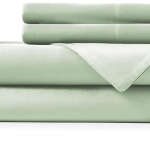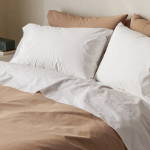
Percale demand is growing across the Canadian bedding market, and it isn’t a passing trend — it’s a shift driven by consumers who’ve slept under sateen or low-count cotton blends, found them too warm or too slippery, and gone looking for something else. This guide gives wholesale retailers what they need to source percale correctly, price it right, and answer the questions an informed percale buyer will ask before purchasing.
What Is Percale, and Why Does It Feel So Different From Other Sheets?
Percale is a weave construction, not a fiber type — a one-over-one-under interlocking pattern that produces a tight, balanced, breathable surface. That construction, more than the fiber underneath it, is what gives percale its crisp, matte, cool feel.
The Physical Properties Behind Percale’s Appeal
- Matte finish, no sheen — reads as clean and understated rather than glossy.
- Crisp out of the wash, softening over time — the texture relaxes with use rather than starting soft and thinning out.
- Open weave structure — allows more air circulation than tighter weaves, which is the main driver of its breathability.
- Even tension across warp and weft — spreads wear more evenly, which supports a longer usable life.
- Fewer exposed yarn floats than sateen — meaning less surface friction, which translates to lower pilling over repeated washing.
Each of these properties maps to a different customer: hot sleepers respond to the breathability, design-conscious buyers respond to the matte finish, and practical buyers respond to the durability and easy wash care. A well-built percale range can speak to all three at once.
What Thread Count Should Percale Sheets Actually Be?
Percale performs best in a specific thread count range, and going higher doesn’t make it better — it can work against the exact properties that make percale worth stocking. Retailers who don’t understand this are the ones absorbing returns from percale buyers who tend to research before they purchase.
Why 200–400 Thread Count Is the Functional Range for Percale
The 200–400 thread count range is where a one-over-one-under weave functions as intended, with enough open structure to keep the fabric breathable. Push much past 400, and the weave density starts closing the air gaps that define percale in the first place — a 600-thread-count percale claim is generally a sign of multi-ply yarn counted to inflate the number, not a genuinely denser weave.
What to Verify Before Stocking a Percale Line
- Single-ply yarn — percale should use single threads, not multiple thin plies twisted and counted separately.
- Long-staple cotton — fiber length drives softness and durability more than the thread count number alone.
- Verifiable labelling — thread count claims should match an actual fabric specification sheet, not just packaging copy.
- Fabric composition documentation — should come standard with bulk orders, not on request only.
- OEKO-TEX certification — confirms yarn, dye, and finishing inputs meet substance safety standards, which more customers now ask about at point of sale.
Percale or Sateen: How Should You Split Your Range?
Most retail markets don’t need a single winner between percale and sateen — they need both, positioned toward the customers who actually want each one. The stocking mistake isn’t choosing wrong; it’s not explaining the difference clearly enough for customers to choose confidently.
| Customer Trait | Leans Percale | Leans Sateen |
|---|---|---|
| Sleep temperature | Runs warm, wakes up hot | Sleeps cool naturally |
| Aesthetic preference | Clean, tailored, matte | Lustrous, hotel-style sheen |
| Priority | Wash durability, low maintenance | Hand feel, visual impression |
| Climate/season | Warmer regions, summer rotation | Colder climates, year-round luxury positioning |
| Buying motivation | Practical, has tried sateen and didn’t like it | Aspirational, associates sheen with luxury |
In markets with warm summers or a strong sleep-conscious consumer base, percale performs best as its own anchored category rather than a secondary line behind sateen.
Which Fabric Should Sit Under the Percale Weave?
Percale can be woven from more than one fiber type, and the fabric underneath the weave determines the price tier, the sustainability story, and which customer the product is aimed at.
Long-Staple Cotton Percale
This is the benchmark version of the product and the right anchor for most percale ranges.
- Softens progressively over roughly the first 20–30 washes rather than degrading.
- Holds colour through repeated laundering at standard home wash temperatures.
- Sells well across most of the year, with particularly strong demand in spring and summer.
- Commands the strongest price point and margin within the percale category.
Organic Cotton Percale
Organic cotton percale is grown without synthetic pesticides or fertilizers and should carry independent certification (such as GOTS) to back that claim.
- Third-party certification gives the retailer a verifiable claim, not just a marketing label.
- Frequently paired with OEKO-TEX certification for full input and processing coverage.
- Tends to perform best in urban markets and with younger, sustainability-focused buyers.
- Fits naturally into a broader sustainable bedding assortment.
Cotton-Polyester Blend Percale
Blend percale trades some of the pure-cotton feel for lower cost and easier care.
- Wrinkles less than 100% cotton percale.
- Lower unit cost supports a wider price range in the assortment.
- Should always be labelled clearly as a blend — customers researching percale specifically will check.
What Sizing and Pocket Depth Should Canadian Retailers Stock?
Getting percale right isn’t just about the weave and fiber — fit matters just as much, and Canadian mattress depths have shifted enough that standard pocket depths now cause avoidable returns.
- Standard mattress depth: roughly 10–14 inches.
- Pillow-top and memory foam mattresses: often 16–18 inches.
- Queen and King sizes drive the majority of premium sheet sales in Canada.
- Deep pocket, full-perimeter elastic fitted sheets reduce slippage complaints, especially on taller mattresses.
- Accurate depth labelling on packaging and listings cuts down on post-purchase returns tied to fit rather than fabric quality.
Frequently Asked Questions
What thread count is best for percale sheets in Canada?
The best percale sheets fall between 200 and 400 thread count, made from single-ply, long-staple cotton yarn. This range is where the one-over-one-under weave delivers its defining breathability and crispness. Claims above 400 thread count in percale usually reflect multi-ply yarn inflation rather than a genuinely denser, better fabric.
Why does percale feel more breathable than sateen?
Percale’s one-over-one-under weave keeps consistent air gaps across the fabric surface, while sateen’s four-over-one-under construction brings more yarn to the surface and closes those gaps to create its signature sheen. That’s a direct tradeoff — sateen’s smoothness comes at the cost of some breathability, which is why hot sleepers tend to prefer percale.
Does percale get softer the more you wash it?
Yes — long-staple cotton percale typically softens over roughly the first 20 to 30 washes as the fibers relax and the weave settles, rather than starting soft and thinning out over time. That’s a meaningful selling point against lower-count cotton blends, which tend to thin and pill relatively quickly instead of improving with use.
What’s the difference between organic cotton percale and standard long-staple cotton percale?
Long-staple cotton percale describes fiber length and yarn quality, which drives softness and durability. Organic cotton percale describes the farming and processing method and should carry certification, such as GOTS, confirming no synthetic pesticides or fertilizers were used. The two aren’t mutually exclusive — a sheet can be both long-staple and organic, combining feel and sourcing credentials.
Should retailers stock percale instead of sateen, or both?
Most retail assortments perform better carrying both, positioned toward different customers rather than treated as competing products. Percale suits warm sleepers and buyers prioritizing wash durability; sateen suits buyers purchasing on visual impression and hand-feel. Clearly explaining that difference at point of sale — in copy, signage, or product descriptions — tends to reduce returns on both lines.
What certifications should retailers check before sourcing bulk percale bed linen?
OEKO-TEX Standard 100 is the baseline certification to look for, since it confirms yarn, dye, and finishing inputs have been tested for harmful substances. For organic cotton percale specifically, GOTS certification is the credential that verifies the organic claim through the supply chain, not just at the raw cotton stage.
What pocket depth should retailers stock for the Canadian mattress market?
Deep pocket fitted sheets — generally sized for 16–18 inch mattress depths — should be a standard stocking option, not an upgrade, given how common pillow-top and memory foam mattresses have become. A fitted sheet built for a standard 12-inch mattress won’t stay put on a deeper mattress overnight, and that mismatch generates returns that have nothing to do with fabric quality.