Cooling bamboo sheet sets suit motels and inns when the specification matches the laundry. Bamboo viscose moves moisture well and feels cool to guests, but it loses strength when wet, so wash temperature, chemistry and fabric weight decide whether a set lasts one season or several.
Cooling bamboo sheet sets work well in motels and inns provided the specification is matched to how the property launders them. Bamboo viscose moves moisture away from skin faster than cotton, which is what guests register as coolness, but the same fibre is weaker when wet than cotton is. That single property determines whether a bulk order lasts three years or falls apart in nine months.
Most bedding suppliers will discuss softness and thread count. Fewer will discuss what happens after 200 industrial wash cycles at a small property with an on-site machine and inconsistent detergent dosing. This guide covers what bamboo sheets actually are, what makes a sheet feel cool to a guest, how bamboo viscose behaves under commercial laundering, the specifications worth comparing between suppliers, getting the fit right on motel mattresses, and how to test a sample before committing to a property-wide order.
What Bamboo Sheets Are, And What The Label Must Say
Buyers comparing quotes need to know that the word bamboo on a product page can describe two different materials, and only one of them is common in bedding.
Bamboo Viscose Is A Regenerated Fibre
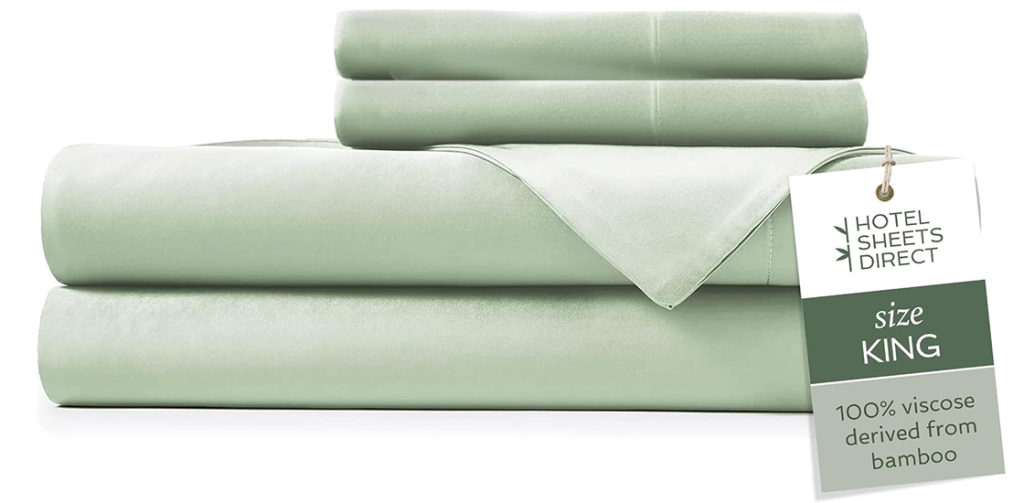
Almost all sheets sold as bamboo are bamboo viscose, sometimes written as viscose from bamboo. The bamboo is dissolved into a pulp and extruded into fibre, which is why the finished fabric feels nothing like the plant. The process is what produces the drape and the smooth surface buyers associate with bamboo bedding.
Mechanically processed bamboo, sometimes called bamboo linen, does exist. It is coarse, expensive and rare in hospitality bedding, so a quote offering bamboo sheets at a commercial price is offering viscose.
Canadian Labelling Rules Apply
Under Canadian textile labelling requirements, fabrics must be identified by their generic fibre name. A viscose fabric made from bamboo is labelled as viscose or rayon, with the bamboo source noted separately rather than substituted for the fibre name.
This matters commercially. A supplier whose labelling or marketing describes the product only as bamboo, with no reference to viscose or rayon, is either unfamiliar with the rules or choosing to ignore them. Neither is reassuring in a supplier you intend to reorder from for years.
Why The Distinction Changes Your Purchase
Viscose and cotton behave differently in the wash, and the differences are the subject of most of this guide. A buyer who thinks they are purchasing a plant fibre similar to linen will set the wrong laundry parameters and blame the sheets when they fail.
Info: Ask any supplier for the fibre content statement exactly as it appears on the product label, not as it appears in the marketing. The two are not always the same, and the label is what governs.
What Makes A Sheet Feel Cool To A Guest
Guests do not experience thermal conductivity. They experience whether they wake up damp, and that is largely a question of how quickly moisture leaves the skin and evaporates.
Moisture Movement Matters More Than Fibre Alone
Bamboo viscose absorbs and releases moisture readily, which keeps the layer of air against the skin drier. Dry skin loses heat more efficiently, so the sheet feels cool without doing anything to the room temperature.
This is why bamboo bedding performs well in rooms with older air conditioning or uneven cooling, which describes a good number of motel and inn properties. The sheet cannot lower the room temperature, but it changes how the guest experiences it.
Weave Affects Airflow
Two weaves dominate hospitality bedding, and they feel different for reasons that have nothing to do with fibre.
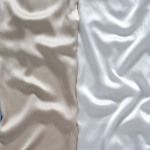
Percale is a plain over-under weave. It is crisper, matte, and more open, which allows more airflow through the fabric. Guests describing sheets as cool and hotel-like usually mean percale.
Sateen floats several threads across the surface before crossing under. That produces a smooth, slightly lustrous face and a denser structure with less airflow. It feels silkier and reads as more luxurious, which suits boutique properties, but it is the warmer of the two.
For a property positioning itself on cooling comfort, percale is generally the safer specification. For a boutique inn selling a premium feel, sateen may be the better fit even though it breathes less.
Claims To Treat With Caution
Bamboo bedding is often marketed as antibacterial, hypoallergenic or naturally odour-resistant. Whatever properties raw bamboo has, the viscose process dissolves the plant and reconstitutes the fibre, so claims carried over from the plant do not automatically survive it.
Claims of this kind are regulated in Canada and difficult to substantiate. Regulators in other markets have taken enforcement action against sellers making them about bamboo textiles. A supplier making these claims to you in a sales conversation is likely making them on packaging and product pages, which your property then repeats to guests. That moves the supplier’s exposure onto you.
Cooling and moisture-wicking describe what the fabric actually does and are defensible. Anything medical is not.
How Bamboo Viscose Holds Up To Commercial Laundering
This is where hospitality buying differs most from retail buying, and where a set that reviews beautifully in a home can fail in a motel.
Wet Strength Is The Main Limitation
Viscose fibres lose a meaningful portion of their strength when saturated. Cotton does the opposite and gains strength when wet. Every commercial wash cycle puts bamboo viscose through mechanical agitation and extraction while it is at its weakest, which is why the same fabric that lasts years in a household can fail quickly in a property washing daily.
Failure usually appears first at stress points: fitted sheet corners, elastic seams, and the hem where housekeeping grips to pull the sheet taut.
Wash Chemistry And Temperature
Three variables do most of the damage, and all three are within your control.
- Chlorine bleach degrades viscose noticeably faster than it degrades cotton. Properties that bleach whites as standard should either specify a blend or move to an oxygen-based alternative.
- High alkalinity from heavy-duty commercial detergents accelerates fibre breakdown. Ask your laundry chemical supplier about a lower-alkalinity programme for these items.
- Wash and dry temperature above what the supplier specifies causes shrinkage and weakens fibres. Over-drying is the more common error, since fabric left tumbling after it is dry takes continued abrasion for no benefit.
Get the supplier’s stated maximum wash and dry temperatures in writing, then confirm your laundry can actually hold them. An off-site commercial laundry running a single programme for all linens will not adjust for one product line.
When A Blend Is The Better Buy
A bamboo viscose and cotton blend gives up some drape and moisture handling in exchange for better wet strength and bleach tolerance. For a high-turnover motel running a harsh wash programme, a blend usually produces a lower cost per use than pure viscose, even though the sheets feel slightly less luxurious in the hand.
Anyone selling you bedding should be willing to say this plainly. Pure bamboo viscose is the premium product, and it is the wrong specification for a property that bleaches whites daily, uses an off-site laundry it cannot control, or turns rooms fast enough that sheets take heavy mechanical stress. Buying it anyway means replacing par levels sooner and paying more per year for a sheet guests will not distinguish from the blend after the first wash.
Decide on the laundry, not the positioning.
Property and laundry situation | Better specification |
Boutique inn, gentle in-house wash, no chlorine bleach | Pure bamboo viscose, sateen |
Motel positioning on cooling comfort, controlled in-house laundry | Pure bamboo viscose, percale |
High-turnover motel, chlorine bleach on whites | Bamboo and cotton blend |
Off-site laundry running one programme for all linens | Bamboo and cotton blend |
Vacation rental, low volume, owner-managed washing | Pure bamboo viscose, either weave |
Mixed portfolio, laundries not standardised | Blend, for consistency across sites |
Early Signs Of Failure
Train housekeeping to flag these, since catching them early tells you whether to change the wash programme before the whole par level is compromised.
- Pilling on the surface, particularly where bodies move against the sheet
- Thinning or translucency across the centre panel
- Elastic loss or corner tearing on fitted sheets
- Colour drifting grey or yellow, which usually indicates chemistry rather than wear
- Sheets no longer reaching the mattress corners, indicating cumulative shrinkage
The Specifications Worth Comparing Between Suppliers
Quotes are difficult to compare because suppliers describe the same fabric in different terms. Ask every supplier for the same list.
Specification | What to ask for | Why it matters |
Fibre content | The exact label wording, including viscose or rayon | Establishes what you are buying |
Fabric weight | GSM, grams per square metre | Better durability indicator than thread count for viscose |
Weave | Percale or sateen | Determines airflow and feel |
Finished dimensions | Measured after laundering, not before | Pre-shrunk figures hide shrinkage |
Shrinkage allowance | Stated percentage after a set number of washes | Predicts whether sheets will still fit |
Colourfastness rating | The test standard used | Predicts greying and fading |
Maximum wash temperature | A figure, not a range | Must match your laundry’s programme |
Bleach tolerance | Chlorine, oxygen, or neither | Decides your whites programme |
Certification | OEKO-TEX Standard 100 or equivalent | Third-party assurance on substances used |
Reorder consistency | Whether future lots match current colour and weight | Prevents mismatched linen across rooms |
Thread count deserves less attention than it usually receives. It was developed for cotton and is easily inflated by counting plies, and it tells you little about how a viscose fabric will wear. Fabric weight and finished dimensions after laundering are the more useful numbers.
Note: Reorder consistency is the specification buyers forget and regret. A property that rolls out bedding across 40 rooms will reorder within a year, and a slight colour or weight variation between lots is visible when two rooms are compared. Ask directly how lot-to-lot variation is controlled.
Getting The Fit Right On Motel Mattresses
Fitted sheets fail on fit more often than on fabric, and the cost lands on housekeeping rather than on the linen budget.
Measure the actual depth of your mattresses including any topper or protector, then add a margin so the sheet grips beneath the corner rather than straining across it. A pocket that is too shallow pops off during the night and generates guest complaints. A pocket that is too deep bunches under the guest and slows room turnover, because housekeeping fights the excess fabric on every bed.
Properties with more than one mattress depth should either standardise the mattresses or order two pocket depths and colour-code them in the linen room. Mixed depths with a single sheet size guarantees a proportion of poor fits every day.
Also confirm whether the quoted set includes a flat sheet. Some hospitality sets are supplied as fitted sheets and pillowcases only, and discovering that after delivery leaves a gap in your par levels.
How To Test A Sample Before A Bulk Order
No specification sheet predicts how a fabric behaves in your laundry with your water, your chemistry and your staff. A sample trial takes a few weeks and prevents an expensive mistake across an entire property.
Running The Trial
Request enough sets to dress two or three rooms, then put them into normal service. Wash them through your own laundry at your own settings, not at the settings the supplier recommends, because your settings are what the sheets will actually receive.
Run at least 20 cycles before judging. Most fabrics survive five. The differences between a good specification and a poor one appear between the tenth and thirtieth wash.
What To Measure
- Dimensions before the first wash and again at the end, to quantify cumulative shrinkage
- Fit on your mattresses after shrinkage, since this is where a marginal pocket depth fails
- Surface condition, checking for pilling and thinning
- Colour, compared against an unwashed set kept aside as a control
- Seams and elastic at the corners and hems
- Housekeeping feedback on how quickly the sheets make up, which affects labour cost per room
- Guest comments, if the trial rooms are in normal service
Keep one unwashed set as a reference sample. When a later delivery looks different, that reference is what settles the conversation with your supplier.
Evaluating The Supplier, Not Just The Sheet
The specifications table covers the fabric. These questions cover the business behind it, and they decide whether the second order matches the first.
- Will you supply sample sets for a wash trial before we commit?
- What is the minimum order quantity, and does it change on reorders?
- How is consistency maintained between production lots?
- What are typical lead times for a reorder, and where is stock held?
- Do you manufacture in house or source from third parties?
- Can we order custom sizes or private labels for our property?
The last three matter more than buyers expect. A supplier holding Canadian stock can replace a damaged par level in days rather than weeks. One manufacturing in house can hold a specification steady across reorders, instead of passing along whatever a third party shipped that quarter. A property that rolls out bedding across every room will reorder within a year, and a supplier who cannot answer these questions is one whose second delivery may not match the first.
Final Thoughts
Cooling bamboo sheet sets earn their place in motels and inns because bamboo viscose moves moisture quickly, which is what guests feel as coolness. The fibre’s weakness is that it loses strength when wet, so the decision is less about the sheet than about the match between specification and laundry. Percale breathes more, sateen feels more luxurious, and a cotton blend buys durability where the wash programme is harsh.
Compare suppliers on fabric weight, finished dimensions after laundering, wash tolerances and lot-to-lot consistency rather than thread count. Then test before committing. Twenty cycles through your own machines tells you more than any specification sheet, and a supplier unwilling to provide samples has told you something too.
Northern Linens manufactures hospitality bedding in house with flexible order quantities and Canadian warehousing. Request sample sets and see how the specification holds up in your own laundry.
Frequently Asked Questions
Are Bamboo Sheets Suitable For Commercial Hospitality Use?
Yes, provided the laundry programme suits the fibre. Bamboo viscose is breathable and moisture-wicking, which guests experience as cooling, but it weakens when wet. Properties using chlorine bleach or high-alkalinity detergents should specify a bamboo and cotton blend instead of pure viscose.
What Is The Difference Between Bamboo And Bamboo Viscose?
Almost all bamboo bedding is bamboo viscose, a fibre chemically regenerated from bamboo pulp. Canadian labelling rules require it to be identified as viscose or rayon. Mechanically processed bamboo, sometimes called bamboo linen, is coarse, costly and rarely used in hospitality bedding.
Do Bamboo Sheets Last In Commercial Laundry?
Their lifespan depends on wash chemistry more than on wash frequency. Chlorine bleach and high-alkalinity detergents shorten it noticeably. Properties that confirm the supplier’s maximum wash temperature, avoid over-drying and switch to oxygen-based bleach generally see acceptable durability from bamboo bedding.
Should Hospitality Buyers Choose Percale Or Sateen?
Percale is a plain weave that allows more airflow and feels crisp, making it the better choice for properties positioning on cooling comfort. Sateen has a denser structure and a smoother, more lustrous surface, which suits boutique inns selling a premium feel but breathes less.
Is Thread Count A Useful Measure For Bamboo Sheets?
Not particularly. Thread count was developed for cotton and can be inflated by counting plies within a yarn. For bamboo viscose, fabric weight in GSM and finished dimensions after laundering are more reliable indicators of how a sheet will perform and how long it will last.
How Many Wash Cycles Should A Sample Trial Run?
At least 20, using the property’s own laundry equipment, chemistry and settings rather than the supplier’s recommendations. Most fabrics survive the first five cycles regardless of quality, and meaningful differences in shrinkage, pilling and seam integrity appear between the tenth and thirtieth wash.