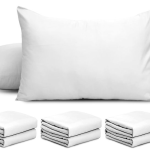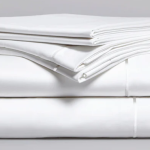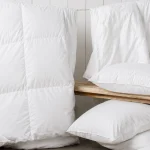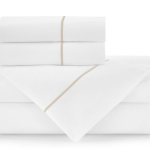
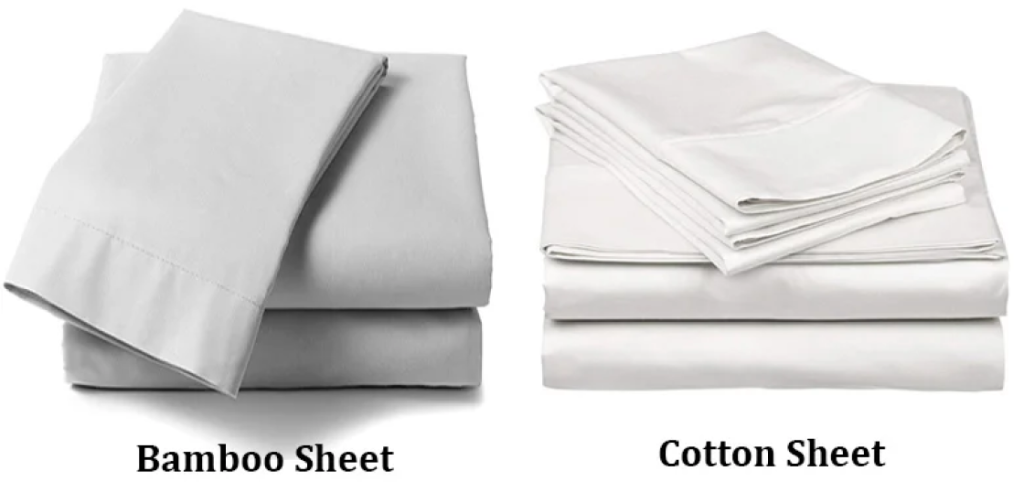
The right sheet fabric for a hotel isn’t the softest one in a showroom, it’s the one that still looks and feels good after 150 industrial wash cycles. Guests only ever touch a sheet a handful of times before it goes back to the laundry, but that sheet has to survive high heat, aggressive detergent, bleach, and constant tumble drying for the entire life of your inventory. That changes the calculus completely compared to how someone shops for sheets at home.
This guide compares cotton percale, standard cotton, bamboo (rayon/viscose and lyocell), and linen specifically for commercial hospitality use, with a focus on how each fabric actually holds up to institutional laundering rather than just how it feels on day one.
What Makes a Fabric “Commercial-Grade” for Hospitality Use
A commercial-grade sheet fabric is one that maintains its structure, color, and feel through repeated high-heat industrial laundering, not just one that has a high thread count or a soft hand-feel out of the package. Hotels need fabric that resists pilling, snagging, graying, and shrinkage across hundreds of wash cycles, since a sheet that feels luxurious new but breaks down after 20 washes ends up costing more per usable night than a slightly less plush fabric that lasts three times as long.
Three properties matter more than raw softness when evaluating a fabric for hotel use:
Tensile strength under repeated washing. Fibers that hold their weave tightly through hundreds of hot-water, high-agitation cycles last longer in rotation. Resistance to bleach and stain treatment. Commercial laundries use stronger chemical treatments than a home washing machine, and some fibers degrade faster under that chemistry. Consistency after drying. Fabric that wrinkles heavily or needs special pressing adds labor cost every single time it’s changed, which matters a lot when you’re turning over hundreds of rooms a day.
Cotton Percale: The Hospitality Industry Standard
Cotton percale is the most common fabric choice across the hotel industry because its tight, one-over-one weave resists pilling and snagging better than almost any other commercial fabric option. It’s the fabric most people picture when they think of “hotel sheets,” crisp, cool, and matte rather than glossy.
The feel: Crisp and cool to the touch with a matte finish. Percale isn’t a fiber, it’s a weave structure, so you’ll see it made from regular cotton, long-staple cotton, or even cotton-poly blends depending on the supplier.
Commercial durability: Exceptional. The tight over-under weave structure is what gives percale its durability advantage over looser weaves like sateen, since there’s less loose thread surface for pilling and snagging to start on during high-agitation industrial washing.
Ideal specification for hotels: 200 to 300 thread count long-staple cotton (Supima or similar) is generally cited as the sweet spot for balancing breathability, crispness, and strength under repeated laundering. Standard rooms in high-turnover properties commonly use 200 to 300 thread count percale, while upscale properties often move up to 250 to 400 thread count for a more premium guest-facing feel.
Best fit: High-turnover business hotels, mid-scale and upscale full-service properties, and any operation where in-house or off-premise commercial laundering needs to run frequent, aggressive cycles without wearing out inventory quickly.
Standard Cotton and Egyptian Cotton: Where They Fit
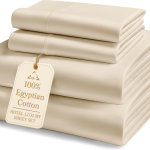
Standard cotton and Egyptian cotton both use longer-staple fibers than budget cotton blends, giving a softer, more durable result, but the “Egyptian cotton” label alone doesn’t guarantee commercial performance if the weave and thread count aren’t specified.
Standard cotton is a broad category that includes any fabric made from cotton fiber regardless of weave, so its commercial performance varies significantly depending on whether it’s woven as percale, sateen, or something else. When a supplier says “cotton sheets” without specifying the weave, ask directly, because that detail affects durability more than the fiber name does.
Egyptian cotton refers to extra-long-staple cotton fiber, which produces stronger, smoother yarn than shorter-staple cotton. It’s often woven in a sateen finish, giving a heavier, more lustrous drape than percale. Egyptian cotton resists pilling well and can last for years with proper laundering care, but sateen’s looser weave structure is generally less durable under harsh industrial laundering than a tight percale weave, even when the fiber quality itself is excellent.
Practical takeaway for procurement: Don’t treat “Egyptian cotton” as an automatic upgrade for high-turnover properties. If your laundry process is aggressive and your rooms turn over daily, a well-made percale weave, even from a shorter-staple cotton, may outlast a sateen-woven Egyptian cotton sheet in your specific laundry conditions. Fiber quality and weave structure are two separate variables, and both matter.
Bamboo (Rayon/Viscose and Lyocell): Softness With a Durability Trade-off
Bamboo-derived sheets, made as rayon, viscose, or lyocell, offer an exceptionally smooth, silky feel and strong moisture-wicking performance, but the fiber is more delicate than cotton percale under aggressive commercial laundering. That trade-off matters most for properties that rely on harsh institutional laundry chemistry rather than gentler, low-heat settings.
The feel: Extremely smooth and silky with a fluid, almost liquid drape, and naturally cool-to-the-touch, which makes it popular with guests who run hot at night.
Commercial durability: Moderate. Bamboo fibers are naturally moisture-wicking and gentle on skin, but they break down faster than percale under aggressive commercial bleach and high-heat industrial drying. This is the single biggest reason bamboo hasn’t become a mainstream choice for large, high-turnover hotel chains despite its guest-facing appeal.
Best fit: Boutique or eco-luxury properties catering to hot sleepers, provided the laundry facility uses gentle, low-heat commercial settings rather than the harshest industrial cycles used by high-volume chains. If your laundry contractor can’t guarantee lower-heat handling for a specific fabric category, bamboo is a riskier bulk investment than percale.
Linen: The Luxury Boutique Choice
Linen sheets offer a textured, breathable, rustic aesthetic with genuinely high raw tensile strength, but they wrinkle heavily and have a coarser initial hand-feel that some guests may perceive as unrefined rather than intentional. Linen is a deliberate brand choice, not a default commercial fabric.
The feel: Textured, airy, and relaxed, softening significantly with every wash. Linen sheets on day one feel noticeably different, and often rougher, than they will after several months of use and laundering.
Commercial durability: High raw tensile strength as a fiber, but the loose, textured weave is prone to severe wrinkling, and the coarse initial feel can be a guest-perception risk if your brand hasn’t set the expectation that this texture is a feature, not a flaw.
Best fit: High-end boutique resort properties in warm climates where a luxury rustic aesthetic is a deliberate part of the brand identity, and where housekeeping staff are prepared for the extra time linen often takes to look presentable after laundering.
Side-by-Side Comparison for Commercial Buyers
| Fabric | Feel | Commercial Durability | Wrinkle Resistance | Best Fit |
|---|---|---|---|---|
| Cotton Percale | Crisp, cool, matte | Exceptional | Good | High-turnover business & upscale hotels |
| Egyptian Cotton (Sateen) | Soft, luminous, heavier drape | Good, less than percale | Moderate | Upscale properties prioritizing guest-facing luxury feel |
| Bamboo (Rayon/Viscose/Lyocell) | Silky, cool-to-touch | Moderate | Good | Boutique/eco-luxury with gentle laundry settings |
| Linen | Textured, airy, relaxed | High raw strength, delicate weave care | Poor | Boutique resorts with a rustic luxury brand identity |
Thread Count vs. GSM: Which Number Actually Matters
Thread count measures the number of threads woven per square inch, but it only tells part of the story for commercial buyers, since fiber quality and weave type affect durability and feel just as much as the raw number. GSM (grams per square meter), more commonly used for bamboo and some cotton blends, measures fabric density and weight instead.
For woven cotton and percale, thread count in the 200 to 300 range is generally the practical sweet spot for hospitality use. Numbers well above 400 to 600 often come from thinner, multi-ply threads counted individually, which can inflate the number without actually improving durability, and can sometimes reduce breathability. For bamboo fabrics, GSM is usually the more meaningful spec, since bamboo viscose and lyocell aren’t always marketed by thread count in the same way woven cotton is. Always ask suppliers for both the weave type and either thread count or GSM. A high thread count on a loosely constructed weave will not out-perform a moderate thread count on a tight, well-constructed percale weave under repeated commercial laundering.
OEKO-TEX and Other Certifications Worth Checking
OEKO-TEX Standard 100 certification confirms that a textile has been tested for harmful substances and is safe for direct skin contact, which matters for guest-facing hospitality linens and is increasingly requested in facility RFPs. It’s a testing certification, not a durability guarantee, so it should be evaluated alongside weave and fiber specs rather than as a replacement for them.
Other certifications worth asking suppliers about:
GOTS (Global Organic Textile Standard) for organic cotton sourcing and processing claims, relevant if your brand markets sustainability. Fair Trade or similar labor certifications, increasingly requested by corporate hospitality groups with supply chain transparency requirements. Supplier-specific durability or wash-cycle testing data, which not all suppliers provide, but which is worth requesting directly if you’re placing a large order, since it’s a much more direct predictor of real-world performance than a certification focused on chemical safety alone.
How to Choose Based on Your Property Type and Laundry Setup
The right fabric choice depends more on your laundry process than on guest preference surveys alone, since even a fabric guests love will fail quickly if your laundry conditions are too harsh for it. Work through these questions before finalizing a fabric decision:
Is your laundry in-house or off-premise/contracted? In-house laundries generally give you more control over wash temperature and chemical concentration, which matters most for more delicate fabrics like bamboo. How aggressive is your standard wash cycle? High-heat, high-bleach cycles favor tightly woven percale over bamboo or looser sateen weaves. What’s your guest turnover rate? Daily changeovers in high-volume properties put more cumulative laundry stress on inventory per month than a boutique property with lower occupancy or longer average stays. What brand experience are you selling? A luxury rustic boutique resort has a legitimate reason to choose linen despite its durability trade-offs, because the aesthetic is part of what guests are paying for. A business-traveler hotel chasing efficiency has a much stronger case for percale. Can your laundry contractor guarantee gentler handling for a specific fabric category? If not, don’t bulk-order a delicate fabric expecting it to survive your standard aggressive wash cycle.
Common Mistakes When Choosing Commercial Sheet Fabric
Choosing fabric based on a showroom sample alone. A sample always feels its best on day one; ask for a sample that’s already been through several wash cycles if possible, or commit to a small trial batch before a full order. Assuming “Egyptian cotton” or “organic cotton” automatically means better commercial durability. Fiber quality and weave structure are separate variables, and weave matters more for wash-cycle survival. Ordering bamboo sheets without confirming your laundry contractor’s wash temperature and chemical settings. Bamboo’s durability trade-off is directly tied to how gently it’s laundered. Treating thread count as the only spec that matters. Weave type, fiber staple length, and GSM (for bamboo) all affect real-world performance as much as or more than thread count alone. Not accounting for wrinkle-related labor time when choosing linen. The aesthetic appeal of linen has a real housekeeping labor cost that should be part of the decision, not an afterthought.
Cost Per Wash Cycle: The Metric That Actually Predicts ROI
Upfront price per sheet set is the wrong number to optimize for in commercial procurement, because a cheaper set that fails after 40 washes almost always costs more over time than a pricier set that survives 150. The metric that actually matters is cost divided by the number of usable wash cycles you realistically expect from that fabric and weave combination in your specific laundry conditions.
A simple way to frame this when comparing supplier quotes:
Estimate expected wash cycles to end-of-life for each fabric option based on the supplier’s stated durability claims, industry patterns for that fiber and weave, and your own laundry intensity. Divide the per-unit cost by that expected cycle count to get a rough cost-per-wash figure for each option. Compare that number across fabrics, not just the sticker price, since a percale set at a higher upfront cost can easily beat a bamboo set at a lower upfront cost once wash-cycle survival is factored in.
This calculation is only as good as your estimate of wash cycle life, which is exactly why a small trial batch tested in your real laundry conditions is worth more than any spec sheet a supplier hands you. Suppliers are motivated to quote favorable durability numbers; your own laundry contractor’s actual wash chemistry and heat settings are the real variable that determines how long a fabric lasts.
Poly-Cotton Blends: A Practical Middle Ground
Poly-cotton blends combine cotton’s breathability and feel with polyester’s resistance to shrinkage and wrinkling, and they remain one of the most common choices for budget and mid-tier hospitality properties precisely because they hold up so well to aggressive commercial laundering. A blend isn’t automatically a downgrade from 100% cotton; for high-turnover operations, it’s often the more durable and cost-effective choice.
The feel: Slightly less breathable than 100% cotton, since polyester fibers don’t absorb moisture the way cotton does, but modern blends have narrowed this gap considerably compared to older poly-cotton fabrics.
Commercial durability: Very strong. Polyester content resists shrinkage, holds color better through repeated bleaching, and reduces wrinkling, which lowers pressing labor time considerably compared to 100% cotton or linen.
Best fit: Budget to mid-scale hotels, extended-stay properties, and any operation prioritizing laundry cost efficiency and reduced housekeeping labor time over a premium all-natural fiber feel. Many properties that market themselves as offering “cotton sheets” to guests are actually using a cotton-poly blend on the guest-facing top layer while relying on the polyester content for the bulk of the fabric’s commercial durability.
A note on guest perception: Some travelers specifically look for “100% cotton” in hotel marketing and may perceive blends as lower quality, even when a well-made blend outperforms a lower-grade 100% cotton fabric in actual comfort and durability. If guest perception matters more to your brand than laundry efficiency, that’s a legitimate reason to pay more for verified 100% cotton rather than a blend, even if the blend would technically last longer in rotation.
Frequently Asked Questions
What type of sheets do most hotels use?
Most hotels, especially high-turnover business and upscale properties, use cotton percale in the 200 to 300 thread count range. Percale’s tight weave holds up better to repeated industrial laundering than looser weaves like sateen, which is why it’s the default choice across the hospitality industry rather than a brand-specific preference.
Is bamboo or percale better for hotel sheets?
Percale is generally the better choice for high-turnover commercial laundering because its tight weave resists pilling and holds up to aggressive bleach and high-heat drying. Bamboo offers a softer, cooler feel but breaks down faster under harsh industrial laundry conditions, making it a better fit for boutique properties with gentler, low-heat laundry settings.
Is Egyptian cotton better than percale for commercial use?
It depends on what “better” means for your operation. Egyptian cotton, usually woven as sateen, offers a softer and more luxurious guest-facing feel, but its looser weave generally doesn’t hold up to aggressive industrial laundering as well as a tight percale weave does, even when the fiber quality itself is excellent.
What thread count is best for hotel sheets?
A thread count between 200 and 300 is generally considered the practical sweet spot for hospitality use, balancing breathability, crispness, and durability under repeated commercial laundering. Boutique or upscale properties sometimes go up to 250 to 400 thread count for a more premium feel, but numbers well above that range don’t necessarily indicate better real-world durability.
Are linen sheets practical for a hotel?
Linen sheets are practical mainly for boutique or luxury resort properties where a textured, rustic aesthetic is a deliberate part of the brand experience. Linen has high raw tensile strength but wrinkles heavily and requires housekeeping staff to be prepared for a coarser, more relaxed presentation than crisp percale sheets.
What does OEKO-TEX certification mean for hotel linens?
OEKO-TEX Standard 100 certification means a textile has been independently tested for harmful substances and confirmed safe for direct skin contact. It’s a safety and chemical-testing certification rather than a durability guarantee, so it should be considered alongside weave type and fiber quality when evaluating a supplier, not as a substitute for those specs.
How do I know if a fabric will hold up to my commercial laundry process?
Request a sample that has already been through several wash cycles, or commit to a small trial order and run it through your actual laundry process for at least 10 to 15 cycles before placing a bulk order. Ask your supplier directly about wash temperature and chemical tolerance for the specific fabric you’re considering, since laundry conditions vary significantly between in-house and off-premise commercial laundry services.
Is a higher thread count always better for hotel sheets?
No. Thread counts well above 400 to 600 are sometimes achieved using thinner, multi-ply threads counted individually, which can inflate the number without improving durability and may even reduce breathability. Weave type and fiber staple length matter as much as thread count for real-world commercial performance.