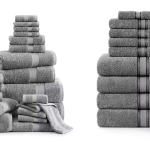
Percale duvet covers are chosen on closure design and changing time more than on the weave itself. The closure is where a cover fails first, and the time housekeeping spends fitting one multiplies across every room and every change, which usually outweighs the difference in unit price.
Percale duvet covers are usually selected based on how the fabric feels in a sample, and that is the least useful test available to a facility buyer. A cover fails at its closure long before the fabric wears out, and the minutes housekeeping spends fitting an insert repeat in every room at every change.
Percale is a reasonable starting point for properties wanting a crisp, matte, breathable presentation. Whether it suits yours depends on how the bedding is used, laundered and replaced. This guide covers what percale actually gives you and why the closure decides lifespan. It then looks at how changing time affects the real cost, what treatment oils do to the specification in spa settings, and what to confirm before placing a bulk order.
What Percale Gives You, And What It Does Not
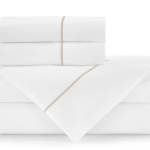
Percale duvet covers start from a plain weave, one thread over and one under, producing a matte surface and a crisp hand. The structure has no long floats sitting on the face, so less yarn is exposed to abrasion from handling and industrial washing than in a sateen of comparable quality.
For a spa or wellness property that reads as a presentation choice. Percale looks fresh on a made bed and holds a press, which suits properties selling calm and order, and it feels cooler than sateen in warm relaxation suites.
What percale does not do is solve durability on its own. Yarn quality, fabric weight and finishing decide how a cover wears.
Info: Ask for fabric weight in GSM alongside thread count. For duvet covers it is the better indicator, because a cover is handled, stuffed and pulled far harder than a flat sheet and the fabric carries that load.
The Closure Decides How Long A Duvet Cover Lasts
The closure gives out before the fabric does on almost every duvet cover, and the four common designs each fail in their own way.
| Closure | How it fails | Suits |
|---|---|---|
| Buttons | Threads work loose in industrial laundry, buttons detach and are lost | Properties with in-house sewing capacity |
| Ties | Fray and snap, and staff skip tying them when rushed | Lower-turnover settings |
| Zip | Teeth distort or the slider fails, usually ending the cover’s life | Gentler laundry, lower change frequency |
| Envelope or hotel flap | No hardware to fail, though the insert can shift without internal ties | High-turnover properties and care settings |
Why Hardware Is The Weak Point
Anything mechanical goes through the same wash, extraction and drying cycle as the fabric, and it wears faster. A jammed zip makes a cover unusable while the fabric is still sound, and few laundries repair them.
Envelope closures avoid hardware entirely, which is why they dominate hospitality and care settings. The trade is that without internal corner ties the insert migrates inside the cover.
Ask What Can Be Repaired
Find out which failures a supplier expects and whether any can be fixed rather than replaced. A detached button is repairable in a property with a sewing machine. A failed zip usually is not.
Changing Time Is The Cost Nobody Quotes
Percale duvet covers take considerably longer to change than a flat sheet, and that difference repeats in every room at every changeover. Across a season it can exceed the difference in unit price between two products.
Three design features affect how long a change takes.
- Internal corner ties hold the insert in position, so housekeeping fits it once rather than redistributing filling every change
- Opening width determines whether an insert can be fed in from the end or has to be fought through a narrow gap
- Fabric slip affects how easily the insert slides into place, and a very crisp finish can grip rather than glide
Ask whether corner ties are included as standard, since they are frequently an option rather than a default. On a property changing bedding daily, they pay for themselves in labour long before the cover wears out.
Note: Time a change during your sample trial. Have housekeeping fit two or three covers and record how long each takes, then multiply by your rooms and your change frequency. That figure is usually more decisive than the quoted price.
Setting-Specific Requirements
Percale duvet covers do not carry one specification across every environment, and spa properties in particular face a demand that hospitality does not.
Treatment Oils In Spa And Wellness Settings
Massage and body oils transfer readily to bedding and resist ordinary washing. Residue then builds up over repeated cycles. It affects colour retention and can leave fabric feeling weighted rather than crisp.
Oil-contaminated linen needs careful laundry handling, which is worth raising with your laundry provider rather than assuming a standard programme copes. Where covers sit in or near treatment areas rather than overnight rooms, discuss both the fabric specification and the wash process with your supplier before ordering.
Some properties keep separate stock for treatment areas and guest rooms, replacing the treatment-area covers on a shorter cycle.
Long-Term Care And Senior Living
Requirements differ across care levels, and assuming one cover suits all of them is the common error.
| Setting | What tends to matter most |
|---|---|
| Independent living and retirement suites | Presentation and comfort, laundry closer to hospitality |
| Assisted living | Ease of changing, varied bed sizes across rooms |
| Long-term and nursing care | Wash tolerance, frequent changes, straightforward replacement |
| Group homes | Mixed bed types, flexible order quantities |
Bed sizes are rarely uniform in assisted living and group homes, so establish what is in the building before standardising on one size.
What To Confirm Before A Bulk Order
Several practical details decide whether an order of percale duvet covers arrives usable, and each is easier to settle in advance than afterwards.
Size The Cover To The Insert
Duvet covers are sized to the insert, not the bed, and a queen insert from one manufacturer can differ from a queen cover made by another. Measure the inserts you own, and ask what allowance the cover carries.
If inserts and covers will be replaced at different times, confirm the dimensions of both. Covers wear faster, and buying them separately lets each follow its own cycle.
Test Before Committing
Run sample covers through your own laundry at its normal settings, fitted to your own inserts. Check shrinkage, closure condition, colour against an unwashed control, and changing time.
Supply, Custom Work And Documentation
For a property in Gatineau or elsewhere in Quebec, ask whether documentation and communication can be provided in French, and confirm what the labelling carries.
Then settle the supply. Ask where stock is held and what the reorder lead time is from that location. Ask too whether the item is a stocked line or made to order, since those behave very differently on a repeat order.
Multi-site operators running properties in Vancouver, Surrey, Burnaby or Richmond alongside eastern locations should confirm how consistently a specification reaches each site. Ask too whether an approved specification is retained between orders.
Ask about custom sizing, colours and private labelling at the same time, since those decisions affect lead times.
Final Thoughts
Percale duvet covers are decided by construction and handling rather than by the weave. The closure is where a cover fails first, so establish which design a supplier uses and what happens when it goes. Envelope closures remove the hardware behind most failures, and internal corner ties address the insert shift that design introduces.
Time changes before comparing prices, because minutes per room repeated daily outweigh a modest difference in unit cost. Then match the specification to the setting. Treatment oils place real demands on bedding near spa treatment areas, and requirements across independent living, assisted living and nursing care differ enough that one cover rarely suits all.
Northern Linens manufactures commercial bedding in house, holds approved specifications between orders and warehouses in Canada. Request samples and fit them to your own inserts before placing a bulk order.
Frequently Asked Questions
Are Percale Duvet Covers Suitable For Spa And Wellness Properties?
Often. Percale gives a crisp, matte, breathable presentation that suits properties selling calm and order, and it feels cooler than sateen in warm rooms. Suitability still depends on fabric construction, the laundry process and whether the covers are used near treatment areas.
What Is The Most Common Point Of Failure On A Duvet Cover?
The closure rather than the fabric. Buttons detach in industrial laundry, ties fray and snap, and zips distort or jam, usually ending the cover’s usable life while the fabric is still sound. Envelope closures avoid hardware entirely, which is why hospitality and care settings favour them.
Why Do Internal Corner Ties Matter?
They hold the insert in position so it does not migrate inside the cover. Without them, housekeeping redistributes the filling at every change, which adds minutes per room repeated daily. Corner ties are frequently an option rather than standard, so ask.
How Should Percale Duvet Covers Be Sized?
Against the insert rather than the bed, since a queen insert from one manufacturer can differ from a queen cover made by another. Measure the inserts you own, and ask what allowance the cover carries so the filling neither bunches nor strains the seams.