Custom and private label pillowcases let hotel chains and retail brands put their own identity on a product guests and shoppers touch every single day. Hotels usually want subtle branding that survives commercial laundering. Retailers usually want shelf-ready packaging, varied fabrics, and a design that photographs well online.
This guide walks through the branding options available for both buyer types, the fabric and closure choices that matter most, and the production steps Northern Linens follows to move a private label pillowcase program from concept to warehouse-ready inventory.
What Counts as Custom vs Private Label Pillowcases
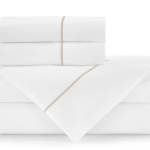
Custom pillowcases start with an existing base product and add a buyer’s branding, such as an embroidered logo or a printed care label. Private label pillowcases go further. The buyer controls the fabric, thread count, closure style, packaging, and labeling from the start, and the finished product carries only the buyer’s brand.
Hotels most often choose custom branding on a proven, durable base fabric. Retailers more often choose full private label development, since packaging and fabric variety directly affect how the product sells.
Both approaches rely on the same foundation: consistent fabric sourcing, accurate specifications, and quality checks before a single case ships.
Hotel Chains vs Retail Brands: Different Priorities
Hotels and retailers are ordering the same general product for very different reasons. A hotel operations manager cares about how a pillowcase performs after hundreds of industrial wash cycles. A retail buyer cares about how it performs on a product page and a store shelf.
| Priority | Hotel Chains | Retail Brands |
|---|---|---|
| Durability | High, must survive frequent commercial laundering | Moderate, tied to consumer wash habits |
| Branding style | Subtle embroidery or woven label | Visible woven label, hangtag, or printed branding |
| Fabric focus | High-GSM cotton percale or sateen, durable blends | Wider variety, including silk, linen, and organic cotton |
| Packaging | Minimal, functional | Branded boxes, hangtags, dust bags for shelf appeal |
| Closure style | Envelope closure for easy laundering | Envelope, zipper, or Oxford border depending on price point |
| Compliance focus | Fiber content and wash-care labeling | Fiber content labeling plus retail barcode readiness |
Understanding which column applies to your program early on shapes every decision that follows, from fabric selection to how Northern Linens’ Production & Manufacturing team plans the run.
Branding & Customization Options
Every branding decision affects cost, lead time, and how the finished pillowcase performs in its actual use case. The sections below cover the main choices buyers weigh before placing a private label order.
Logo Application Methods
Logo placement is usually the first branding decision a buyer makes, and the right method depends on how the pillowcase will be used and cleaned.
- Thread embroidery: Holds up to repeated commercial laundering, making it a common choice for hospitality programs.
- Woven side-seam labels: Give a clean, understated look that suits retail packaging and product photography.
- Printed or heat-transfer branding: Works for retail runs where design detail or full-color logos matter more than long-term wash durability.
Closure Styles
Closure style affects both how the pillowcase looks and how easily it fits into a laundering or fulfillment workflow.
- Envelope closure: The standard choice for hotels because it is fast to process through commercial laundry equipment.
- Hidden zipper closure: Common in retail programs where a tailored, finished look matters.
- Oxford border: Adds a decorative edge often used in higher-end hotel suites or premium retail lines.
Fabric Selection for Hospitality vs Retail
Fabric choice drives both feel and cost, and hotel and retail buyers tend to land in different places.
- Cotton percale or sateen: A dependable base for hotel programs that need to balance softness with wash durability.
- Linen-cotton blends: Suit hospitality brands that want a slightly more textured, upscale feel.
- Silk or silk-blend fabrics: More common in retail and wellness-focused lines, where the pillowcase is marketed on comfort and skin or hair benefits rather than laundering frequency.
[INTERNAL LINK: suggested anchor text “wholesale pillowcase fabric options”]
Retail Packaging & Presentation
For retail brands, the pillowcase itself is only part of the sale. Packaging shapes the first impression on a shelf or a product page.
- Branded hangtags and insert cards that communicate fabric and care details at a glance.
- Eco-friendly boxes or reusable dust bags that support a sustainability message.
- Barcode-ready packaging so the product moves through retail checkout systems without manual entry.
Compliance, Labeling, and Certifications
Every private label pillowcase needs a care label that states fiber content and washing instructions, regardless of buyer type. This is a compliance requirement, not just a branding choice.
Northern Linens’ products are OEKO-TEX certified, and that certification is referenced only for the products and processes it currently covers. Buyers building a private label program can request labeling that reflects this certification accurately, rather than as a blanket claim across an entire product catalog.
How Northern Linens Builds a Private Label Pillowcase Program
Moving from an idea to a finished, warehouse-ready pillowcase program follows a consistent sequence. Below is the general process Northern Linens’ teams follow for hotel and retail private label orders.
- Consultation and specification: The Wholesale Account Management team works with the buyer to confirm fabric, GSM, closure style, sizing, and branding method based on whether the order is for hospitality use, retail sale, or both.
- Sample development: The Private Label & Custom Development team produces samples matching the agreed specification, including labeling and packaging mockups where relevant.
- Buyer approval: The buyer reviews samples and signs off before full production begins, catching any fabric, fit, or branding adjustments early.
- Batch production: Production & Manufacturing runs the order to the approved specification, with fabric batches tracked to avoid inconsistencies between production runs.
- Quality control: The Quality Control team checks finished units against the original sample before the order is cleared to ship.
- Packaging and labeling: Units are finished with the agreed branding, care labels, and retail or hospitality packaging.
- Warehousing and fulfillment: Finished inventory moves through Northern Linens’ warehouses in Canada and the USA, positioned for regional restocking cycles.
How Northern Linens’ Team Handles This
Private label programs usually fail at one of two points: the sample does not match what ships months later, or a restock order arrives with subtle fabric or color differences from the original run. Northern Linens’ Private Label & Custom Development team keeps the approved sample as the reference standard for every reorder, and Quality Control checks each new batch against it before release. This is designed to catch drift early, so a hotel group or retailer is not the one discovering a mismatch after a shipment already arrived.
Common Challenges When Sourcing Custom Pillowcases
Buyers sourcing custom or private label pillowcases at scale tend to run into the same handful of problems, regardless of whether they are outfitting a hotel chain or launching a retail line.
Inconsistent fabric batches. Fabric sourced from multiple mills, or even different runs from the same mill, can vary slightly in color or hand feel. Northern Linens’ Production & Manufacturing team sources fabric with batch tracking in mind, so reorders are checked against the original approved sample rather than assumed to match.
MOQ mismatches. A minimum order quantity built for a single-property boutique hotel does not fit a national chain, and the reverse is also true. Northern Linens works with flexible MOQs so a program can be sized to the buyer’s actual rollout, whether that is a single pilot location or a multi-property launch.
Slow or unpredictable restocking. Hospitality and retail buyers both need predictable restocking, especially around seasonal demand. Warehousing in both Canada and the USA is built to support faster regional fulfillment for repeat orders, once a program is established.
Labeling and compliance errors. A missing fiber content label or an inaccurate certification claim can hold up a shipment or create a compliance issue after the fact. Quality Control reviews labeling as part of the same check applied to fabric and construction, rather than as a separate afterthought.
Choosing the Right MOQ and Production Timeline
There is no single correct MOQ for a custom or private label pillowcase program. A boutique hotel testing a new suite line has very different needs than a national retail chain launching across hundreds of stores.
A few factors typically shape the right starting order size:
- Whether the program is a pilot at one property or store versus a full rollout.
- How many fabric and branding variations are needed at launch.
- How quickly the buyer expects to reorder once the first batch sells through or is placed into service.
Northern Linens’ flexible MOQ structure is designed to let buyers start at a size that matches where their program actually is, then scale future orders as demand becomes clearer, rather than requiring a large upfront commitment before the concept is tested.
Sustainability and Certification Considerations
Sustainability has moved from a nice-to-have to a standard question buyers ask before signing off on a private label program, particularly for retail brands positioning themselves around eco-conscious values.
Northern Linens holds OEKO-TEX certification and follows eco-friendly production practices aimed at reducing supply chain waste. When a buyer wants to communicate certification on retail packaging or hospitality marketing materials, it is important that the claim matches what is actually certified for that specific product line, rather than applied as a general statement across an entire catalog.
[INTERNAL LINK: suggested anchor text “OEKO-TEX certified bedding manufacturing”]
Frequently Asked Questions
What is the difference between custom and private label pillowcases?
Custom pillowcases add a buyer’s branding, such as embroidery or a woven label, to an existing base product. Private label pillowcases are developed from the ground up around the buyer’s chosen fabric, construction, and packaging, with no shared branding from the manufacturer.
What is the minimum order quantity for private label pillowcases?
Minimum order quantities vary based on fabric choice, branding method, and packaging complexity. Northern Linens works with flexible MOQs so buyers can size a first order around a pilot rollout or a larger launch without being locked into one fixed minimum.
Which fabric is best for hotel pillowcases?
Hotels generally do best with high-GSM cotton percale or sateen, or durable linen-cotton blends, since these fabrics balance guest comfort with the ability to withstand frequent commercial laundering.
Can retail brands order small design runs to test the market?
Yes. Retail buyers often start with a smaller run across one or two fabric or branding variations before committing to a larger production order, which lets them gauge demand before scaling up.
How long does a private label pillowcase order take from sample to delivery?
Timelines depend on fabric availability, branding complexity, and order size. Northern Linens structures production and warehousing to support reliable turnaround, though exact timelines are confirmed per order rather than promised as a fixed standard across every program.
Is OEKO-TEX certification available on custom pillowcase orders?
Northern Linens holds OEKO-TEX certification for its qualifying products and processes. Buyers should confirm certification status for their specific fabric and product line rather than assuming it applies across every possible customization.
What packaging options work best for retail pillowcase launches?
Common options include branded hangtags, insert cards, eco-friendly boxes, and reusable dust bags. The right choice depends on price point and whether the product is sold in-store, online, or both, since barcode readiness matters more for in-store retail placement.