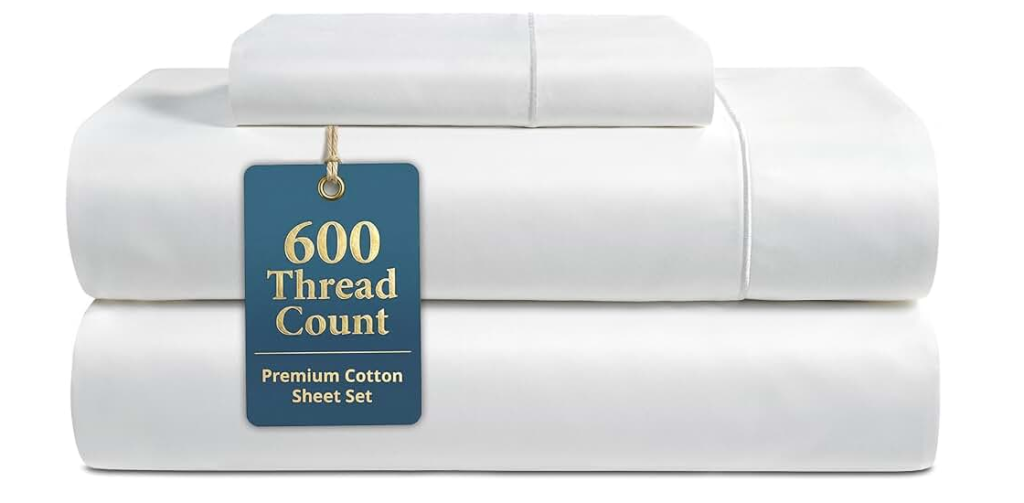
Retail buyers should specify cotton sheets against the things that cause returns: pocket depth, shrinkage, pilling and colour variation between orders. Fibre and weave decide how a set feels, but fit and dimensional stability decide whether it comes back, and returns cost more than specification upgrades.
A retail buyer purchasing cotton sheets is not buying a fabric. They are buying a returns rate, a review score and a reorder relationship, and the specification decisions that drive those three are not always the ones suppliers lead with. A set can feel excellent in a showroom and still generate complaints, because the customer discovers after two washes that it no longer fits their mattress.
Fibre and weave shape how a product feels and how it is positioned on a shelf. Fit, dimensional stability and lot-to-lot consistency decide whether it stays sold and whether a second order is worth placing. This guide covers specifying against the causes of returns, how to handle thread count as a merchandising problem rather than a quality one, building an assortment without a SKU explosion, working out landed cost instead of unit cost, meeting Canadian labelling requirements, and sampling before a first order.
What A Retail Buyer Is Actually Purchasing
Every other reader of a bedding specification will sleep on the product. A retail buyer will not, which changes what the specification needs to protect against.
A hotel discovers a weak sheet through its own laundry over months, and absorbs the result quietly. A retailer discovers it through a customer who washed the set twice, found it no longer fits the bed, posted a two-star review and asked for a refund. The cost arrives faster, publicly, and with shipping attached.
That shifts the priority order. Softness and hand-feel sell the first unit. Dimensional stability, fit and consistency determine whether the product keeps selling and whether the second order is worth placing. Specify for the second one.
Specifying Against The Causes Of Returns
Bedding returns cluster around a small number of causes, and all of them can be addressed at the specification stage rather than the customer service stage.
Pocket Depth And Fit
Fit is the largest single driver of bedding returns. Mattress depths vary widely, and toppers and protectors add more. A customer whose fitted sheet will not stay on the corners returns it, and no amount of fabric quality prevents that.
Two decisions follow. Specify a pocket depth generous enough for the mattresses your customers actually own, including a topper, and state that depth prominently on the packaging rather than burying it in the specification panel. A stated depth converts a return into a purchase decision the customer made correctly.
Where a range serves two very different mattress populations, a second depth option is worth the extra SKUs.
Shrinkage
A set that fits at first wash and not at the fifth generates a delayed return and a poor review, and the customer blames the product rather than the laundering.
Ask suppliers for finished dimensions measured after laundering, not before, along with a stated shrinkage allowance over a defined number of washes. Compacted or pre-shrunk finishes reduce cumulative shrinkage. A supplier quoting cut dimensions without a shrinkage figure has left the risk with you.
Pilling
Pilling appears after several washes, which places it squarely in review territory rather than return territory, and reviews carry further than a single refund.
The property that governs it is staple length. Long-staple and extra-long-staple cotton spin into yarn with fewer fibre ends protruding from the surface, and it is those ends that migrate and tangle into pills. Short-staple cotton pills regardless of thread count or finish.
Specify staple classification rather than accepting a general claim about cotton quality. Our guide to Egyptian cotton sheet sets covers why origin names and staple length are not the same thing.
Colour Variation Between Orders
A customer buying a matching pillowcase six months later, or a retailer receiving a reorder that sits on the shelf beside existing stock, will see a shade difference that looked negligible on a swatch.
Ask directly how lot-to-lot variation is controlled, whether an approved specification is retained between orders, and whether a single production run can cover an initial buy. This is the failure most likely to affect a repeat customer, who is also the one worth keeping.
Thread Count Is A Merchandising Problem, Not A Quality One
Retail buyers face a version of this question that institutional buyers do not, because the number is printed on the box and the customer compares it on the shelf.
How High Counts Are Produced
A yarn can be spun as a single strand or as two or more finer strands twisted together. Where a fabric is woven from multi-ply yarn, some suppliers count each ply, so a fabric with 300 actual threads per inch is advertised at 900.
The inflated fabric is not better. Finer plies twisted together are weaker than one thicker single-ply yarn of equivalent mass, and densely woven fine yarns trap heat, which produces the complaint that expensive sheets sleep hot.
The Position Retailers Are Put In
A store stocking an honest 400-count product next to a competitor’s 1800-count product is losing a comparison the customer is making on the only number they understand.
There are two ways out and both are legitimate. Compete on the number, accept that the product is comparable or worse, and price accordingly. Or reframe the comparison on the packaging and at the point of sale, leading with staple length and single-ply construction and treating thread count as one specification among several.
The second route needs support. Staff have to be able to explain it in a sentence, and the packaging has to carry it. A retailer who chooses the honest product without changing how it is presented will lose the sale and conclude the product was wrong.
What To Ask Every Supplier
- What is the thread count, and is the yarn single-ply or multi-ply?
- What is the staple classification of cotton?
- What is the fabric weight in GSM?
A supplier who will not answer the second question has answered it.
Building An Assortment Without A SKU Explosion
Bedding multiplies faster than most categories, and the arithmetic catches buyers out after the range is committed.
A line offered in four sizes, six colours and two weaves is 48 SKUs. Add a second pocket depth and it is 96. Each one occupies warehouse space, ties up working capital and carries its own risk of being the one that does not sell.
Narrowing At The Specification Stage
Decide the axes that matter for your customers and cut the rest.
- Sizes. Twin, Twin XL, Full, Queen and King are not all equally needed in every market. Sell-through data from an existing category will tell you which to drop.
- Colours. Neutrals carry the most volume in bedding. A seasonal accent colour is a smaller commitment than a permanent range extension.
- Weaves. Percale is matte, crisp and breathable. Sateen is smoother, warmer and reads as more luxurious. Stocking both serves different customers, though a single weave across more colours is often the better first commitment.
- Depths. Only add a second depth if your customer base genuinely splits.
Info: Ask a prospective supplier what the minimum order quantity is per SKU rather than per order. A low overall minimum spread across 48 SKUs is not a low commitment, and this is where a flexible manufacturer differs from an importer clearing container quantities.
Work Out Landed Cost, Not Unit Cost
Unit price is the number quoted and the smallest part of what a set actually costs to have on a shelf in Canada.
Landed cost adds freight, duty, customs brokerage, insurance and inland transport, and for Canadian retailers buying from overseas it adds currency exposure. A quote in US dollars is a quote that changes between order and payment, and on a large buy that movement can exceed the margin negotiated on unit price.
Lead time carries its own cost. A container ordered four months ahead of a season commits capital early and leaves no room to respond if a colour outsells forecast or a competitor undercuts the range. Stock held in a Canadian warehouse can be reordered in a fraction of that time, which lets a buyer place a smaller first order and restock what sells rather than forecasting the whole season.
Ask any supplier:
- Is the quote in Canadian or US dollars, and when is the rate fixed?
- Does the price include freight and duty, or is it ex-works?
- Where is stock held, and what is the reorder lead time from that location?
- What is the minimum reorder quantity, and does it differ from the first order?
A supplier warehousing in Canada removes two variables from that list. That is worth quantifying against a lower overseas unit price rather than assuming the cheaper quote wins.
Packaging And Canadian Labelling
Retail bedding carries obligations that institutional bedding does not, and getting them wrong after stock has landed is expensive to fix.
Mandatory Label Content
Canadian requirements for consumer textile products include fibre content and the identity of the dealer, and prepackaged consumer products carry bilingual requirements in English and French. Confirm current obligations with your own compliance advisor, since requirements are specific and change.
Establish early whether the supplier produces compliant labelling as standard or whether relabelling falls to you. Relabelling a container of sheets in a Canadian warehouse is a cost nobody budgets for.
Packaging That Works On A Shelf
Packaging has two jobs: protecting the product and answering the customer’s questions without staff assistance.
The information most likely to prevent a return is the pocket depth, and it is frequently the least visible thing on the box. Alongside it, size, fibre content, weave and staple classification give a customer enough to choose correctly.
For private label programs, confirm what the supplier can produce: custom packaging, your own branding, barcodes applied at source, and shelf-ready formats. Applying barcodes in your own warehouse is a labour cost that recurs with every order.
Sampling Before A First Order
Assess samples the way a customer will, not the way a buyer does in a showroom.
Wash them. Domestic machine, normal detergent, the cycle a customer would actually choose, at least ten times. Measure the set before and after, fit it to a real mattress with a topper on it, and check the surface for pilling against an unwashed control set kept aside.
A set that feels excellent unwashed and fits poorly after five domestic washes will generate returns no merchandising can offset.
On certifications, ask which specific products a certification covers. OEKO-TEX Standard 100 tests finished textiles for substances harmful to health. GOTS certifies organic fibre content and processing, which is a different claim entirely. Both are product-specific rather than company-wide, so confirm the certificate applies to the line you are buying before it appears on your packaging.
Final Thoughts
Retail buyers specify against returns and reviews rather than their own experience of the product, which moves fit and dimensional stability ahead of hand-feel. Pocket depth causes more bedding returns than anything else, shrinkage produces a delayed version of the same complaint, and pilling shows up in reviews where it travels further than a refund. Staple length governs pilling, so specify it rather than accepting a general quality claim.
Thread count is a shelf problem before it is a quality problem, and competing honestly means changing how the product is presented, not only what is in the packaging. Then work the arithmetic. SKUs multiply faster than buyers expect, and landed cost sets margin, not the unit price on the quote.
Northern Linens manufactures in house, holds approved specifications between orders and warehouses in Canada for fast reordering. Request samples and wash them before placing a first order.
Frequently Asked Questions
What Should Retailers Look For In Premium Cotton Sheets?
Staple classification, fabric weight, finished dimensions measured after laundering, stated shrinkage allowance and pocket depth. Fibre and weave determine how a set feels, while fit and dimensional stability determine whether it is returned, and returns cost more than any specification upgrade.
Is A Higher Thread Count Better For Cotton Sheets?
Not reliably. Counts above roughly 600 are commonly produced by counting individual plies within a yarn, so a fabric with 300 actual threads can be advertised at 900. Finer plies are weaker than a single thicker yarn, and dense fine weaves trap heat.
What Causes Most Bedding Returns?
Fit. Mattress depths vary and toppers add more, so a fitted sheet that will not hold the corners is returned regardless of fabric quality. Stating pocket depth prominently on packaging, rather than in a specification panel, converts a likely return into a correct purchase decision.
What Is The Difference Between Percale And Sateen For Retail?
Percale is a plain over-under weave that is matte, crisp and breathable, suiting customers who sleep warm. Sateen floats threads across the surface for a smoother, slightly lustrous finish that feels warmer. They serve different customers rather than representing different quality levels.
How Many SKUs Does A Bedding Line Create?
More than buyers expect. Four sizes across six colours in two weaves produces 48 SKUs, and adding a second pocket depth doubles that to 96. Each occupies warehouse space and working capital, so narrowing the range at specification stage protects capital more than negotiating unit cost.
What Is Landed Cost For Imported Bedding?
Unit price plus freight, duty, customs brokerage, insurance and inland transport, with currency exposure added where the quote is in US dollars. Lead time carries a cost too, since capital committed months ahead of a season leaves no room to respond to what actually sells.