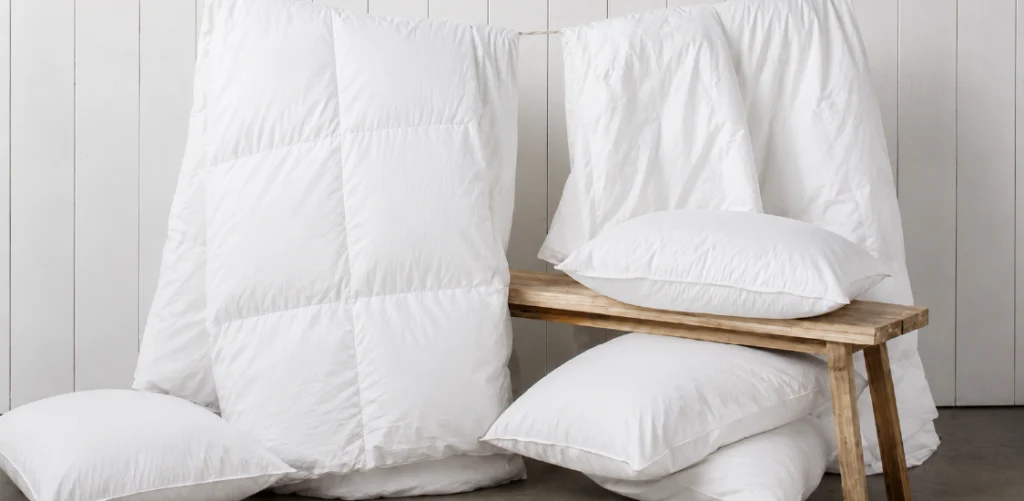
Down duvet inserts deliver the lightest, highest-loft luxury feel but need specialized commercial laundering, down-alternative inserts are fully hypoallergenic and built for frequent high-heat industrial washing, and wool inserts regulate temperature best across seasonal swings but require careful, less frequent care. For commercial buyers, the right fill choice depends on guest allergy risk, laundering capability, and how often the insert will realistically go through industrial wash cycles.
Hotels, healthcare facilities, and distributors sourcing duvet inserts at scale cannot treat fill type as a style preference. It is a procurement decision that affects hygiene compliance, housekeeping labor, and how long an insert lasts before it needs replacing. Northern Linens manufactures duvet inserts across multiple fill types, which gives buyers a way to match fill choice to the operational reality of their property rather than defaulting to whatever looks most premium in a catalog photo.
What Determines the Right Duvet Insert Fill for Commercial Use
The right duvet insert fill for a commercial property depends on three factors working together: guest or patient allergy risk, how often the insert must be laundered, and how much warmth the climate and room conditions actually require.
No single fill type wins across all three factors at once. Down wins on luxury feel but loses on laundering convenience. Down-alternative wins on hygiene and laundering ease but loses some loft compared to natural down. Wool wins on temperature regulation but needs more careful handling than either of the other two.
Buyers who choose fill type based on price or appearance alone, without weighing these three factors against their actual property operations, often end up with inserts that wear out early or create housekeeping bottlenecks.
Down Duvet Inserts: Performance, Maintenance, and Best Fit
Down duvet inserts use the soft under-plumage of ducks or geese to create an exceptionally warm, lightweight fill with a fluffy, high-loft appearance associated with luxury hospitality.
Performance. Down offers the best warmth-to-weight ratio of any common duvet fill. A down insert feels dramatically lighter than a wool or down-alternative insert delivering the same level of warmth, which is why it remains the standard fill for five-star and boutique hotel presentation.
Maintenance. Down requires specialized commercial laundering or dry cleaning rather than standard high-heat industrial washing. Improper washing can clump the fill and destroy its loft permanently, which raises long-term housekeeping costs compared to fills built for routine industrial cycles.
Allergy considerations. Down is not hypoallergenic. Guests or patients with feather or dust allergies can react to down inserts, even when the insert is covered by a duvet cover, since fine particles can still trigger sensitivities over prolonged contact.
Best commercial fit. Down suits high-end boutique hotels and luxury suites where guest perception of ultra-lightweight opulence outweighs the added laundering complexity and cost. It is a poor fit for healthcare settings or any property with frequent turnover and standard industrial laundering equipment.
Down-Alternative Duvet Inserts: Performance, Maintenance, and Best Fit
Down-alternative duvet inserts use engineered polyester or microfiber fill designed to mimic the loft and softness of natural down without using animal-derived materials.
Performance. Down-alternative fill replicates much of the fluffy, soft feel guests associate with down, though it typically needs slightly more fill volume to reach the same warmth level as natural down at an equivalent weight.
Maintenance. This is where down-alternative pulls ahead decisively for commercial use. The synthetic fill withstands frequent industrial washing and high-heat drying cycles without clumping or losing loft the way down can, which makes it far easier to keep sanitized on a routine schedule.
Allergy considerations. Down-alternative fill is fully hypoallergenic, since it contains no animal-derived material that commonly triggers feather or dust allergies. This makes it the safer default fill for any property serving guests or patients with unknown or sensitive allergy status.
Best commercial fit. Down-alternative fits high-turnover hotels, standard hospitality properties, and any budget-conscious operation that needs a low-maintenance fill able to handle frequent, high-heat laundering without degrading quickly.
Wool Duvet Inserts: Performance, Maintenance, and Best Fit
Wool duvet inserts use natural wool fiber fill, valued for its temperature-regulating and moisture-wicking properties rather than for the ultra-light loft that defines down.
Performance. Wool naturally regulates temperature in both directions, helping guests stay warm in cool conditions and cooler than they would under down or synthetic fill during warmer nights. This makes wool especially useful in regions with significant seasonal or nightly temperature swings.
Maintenance. Wool inserts are denser and heavier than down or down-alternative, with a flatter drape rather than a high-loft appearance. Some modern wool constructions are machine washable, but many traditional wool inserts require specialized, less frequent care rather than routine high-heat industrial washing.
Allergy considerations. Wool is naturally resistant to dust mites due to its moisture-wicking structure, which can benefit guests sensitive to dust mite allergens specifically. However, wool is not a substitute for down-alternative in cases involving wool or animal-fiber sensitivities, which are a separate allergy category buyers should account for.
Best commercial fit. Wool suits eco-conscious properties and regions with pronounced seasonal temperature swings where hot-sleeping complaints are common under down or synthetic fill. It is a less practical fit for properties needing frequent, fast, high-heat laundering turnaround.
Full Comparison Table: Down vs Down-Alternative vs Wool
| Factor | Down | Down-Alternative | Wool |
|---|---|---|---|
| Warmth-to-weight ratio | Highest | Moderate to high | Moderate |
| Loft and appearance | High-loft, fluffy luxury feel | Mimics down loft closely | Flatter drape, less loft |
| Hypoallergenic | No | Yes | Partial, dust-mite resistant only |
| Industrial wash compatibility | Low, needs specialized care | High, built for frequent high-heat cycles | Variable, depends on construction |
| Temperature regulation | Warm-leaning, less adaptive | Warm-leaning, less adaptive | Regulates in both directions |
| Weight | Lightest | Light to moderate | Heaviest |
| Upfront cost | Highest | Lowest to moderate | Moderate to high |
| Best property type | Luxury and boutique hotels | High-turnover hotels, budget hospitality | Eco-conscious properties, variable climates |
| Healthcare suitability | Not recommended | Strongly recommended | Situational, check specific sensitivities |
Hypoallergenic Requirements for Healthcare Buyers
Healthcare facilities should default to down-alternative duvet inserts unless a specific clinical reason justifies a different fill, since hypoallergenic performance and frequent high-heat laundering compatibility both matter directly to patient safety.
Patients in healthcare and institutional settings often have unknown or undisclosed allergy status, which makes a naturally hypoallergenic fill the safer baseline choice across an entire facility rather than assessing fill risk room by room. Down-alternative fill removes feather and down allergy risk entirely while still holding up to the frequent, high-temperature laundering that infection control protocols typically require.
Wool offers partial benefit here through natural dust mite resistance, but it does not eliminate animal-fiber sensitivity risk the way down-alternative does, and many wool constructions are not built for the wash frequency healthcare settings need. Down should generally be avoided in healthcare procurement altogether, given both its allergy profile and its incompatibility with routine industrial laundering.
How Northern Linens’ Team Handles This
Northern Linens’ Production team manufactures down-alternative duvet inserts specifically suited to frequent industrial laundering, giving healthcare and institutional buyers a hypoallergenic option that holds up under routine high-heat wash cycles. The Wholesale Account Management team can walk healthcare buyers through fill specifications in detail, confirming hypoallergenic performance and laundering compatibility before an order is placed rather than after a facility discovers a mismatch.
Warmth Ratings and Fill Power Explained
Fill power measures how much space a given weight of down or down-alternative fill occupies, and higher fill power generally means more warmth for the same weight of material.
Down fill at a given fill weight is generally warmer and lighter than wool at the same weight, since down’s structure traps air more efficiently per gram of material. Down-alternative fill needs a greater volume of synthetic material to reach a comparable warmth level to natural down, which is why down-alternative inserts sometimes feel slightly heavier or denser than a down insert offering similar warmth.
Wool does not follow the same fill power logic, since its warmth comes from moisture-wicking and temperature regulation rather than pure loft and air-trapping capacity. A wool insert can feel warm without matching the loft numbers of a down or down-alternative insert at the same weight.
For commercial buyers, warmth rating should be matched to the climate and season the property serves most heavily:
- Warm-climate or year-round moderate properties can generally use a lighter fill weight across all three fill types.
- Cold-climate properties with consistent low temperatures benefit most from down or a higher fill-weight down-alternative.
- Properties in regions with wide seasonal or nightly temperature swings often see the best guest comfort outcomes from wool, due to its two-directional temperature regulation.
Durability Under Repeated Commercial Laundering
Durability under repeated laundering varies significantly by fill type, and this is often the deciding factor for high-turnover commercial properties even when fill feel and warmth are similar across options.
Down-alternative fill holds up best under frequent, high-heat industrial laundering, since the synthetic fibers resist clumping and loft loss far better than down does under the same wash conditions. This is the primary reason down-alternative dominates in high-turnover hospitality and healthcare settings despite down’s superior initial loft.
Down fill can clump and lose loft permanently if washed with standard high-heat commercial cycles rather than specialized down-appropriate laundering, which shortens its usable life significantly in properties that cannot dedicate separate laundering protocols to down inserts specifically.
Wool durability depends heavily on construction. Machine-washable wool constructions can withstand moderate laundering frequency reasonably well, but many traditional wool inserts require lower-heat, less frequent care, making them a weaker fit for properties needing fast, frequent turnaround.
How Northern Linens’ Team Handles This
Northern Linens’ Quality Control team batch-tests duvet insert fill consistency before shipment, which helps buyers understand how a specific fill and construction will perform under their property’s actual laundering frequency rather than relying on general fill-type assumptions alone. Buyers uncertain which fill fits their laundering setup can raise wash frequency and equipment type with the Wholesale Account Management team before finalizing an order.
Matching Fill Type to Property Type: A Quick Decision Guide
Property type, laundering capability, and guest population are the three inputs that should drive fill selection, more so than price alone.
Luxury and boutique hotels prioritizing guest-perceived opulence should lean toward down, provided the property has access to specialized laundering or dry-cleaning services rather than only standard industrial equipment.
High-turnover hotels and budget-conscious hospitality operations should lean toward down-alternative, since it withstands frequent high-heat washing without the loft degradation risk down carries under the same conditions.
Healthcare and institutional buyers should default to down-alternative for its hypoallergenic profile and laundering compatibility, reserving other fill types only for situations with a specific clinical justification.
Eco-conscious properties or those in climates with wide seasonal swings should consider wool, particularly if guest feedback has flagged overheating complaints under down or synthetic fill.
Short-term rental operators with in-house or limited laundering access generally do best with down-alternative, given its combination of low maintenance and consistent performance across a range of laundering setups.
Common Mistakes When Selecting Duvet Insert Fill
Most fill selection mistakes in commercial procurement come from prioritizing one factor, usually cost or luxury appearance, while overlooking laundering compatibility or allergy risk entirely.
- Choosing down for a high-turnover property without specialized laundering access, leading to early loft loss and higher replacement frequency than expected.
- Assuming wool is automatically hypoallergenic, when it only addresses dust mite resistance and not broader animal-fiber sensitivities.
- Selecting down-alternative purely on price without checking fill power and warmth rating against the property’s climate.
- Using down inserts in healthcare settings without accounting for both allergy risk and laundering frequency requirements.
- Failing to confirm construction details for wool inserts, since washability and care requirements vary significantly between different wool duvet products.
Frequently Asked Questions
Should I get a down or down-alternative duvet insert for my hotel?
Choose down for luxury or boutique properties with access to specialized laundering, since it offers the lightest, highest-loft feel. Choose down-alternative for high-turnover properties needing frequent, high-heat industrial washing, since it holds up better under those conditions without losing loft.
What duvet inserts do hotels typically use?
Luxury and boutique hotels commonly use down inserts for their high-loft, premium feel, while standard and high-turnover hotels more often use down-alternative inserts for easier, more frequent laundering. The choice generally follows each property’s laundering capability and guest positioning.
Is down-alternative the same as a duvet insert made from polyester?
Down-alternative duvet inserts are typically filled with engineered polyester or microfiber designed to mimic natural down’s loft and softness. The term describes the fill type specifically, not a different product category from a duvet insert overall.
Is wool better than down for temperature regulation?
Wool regulates temperature in both directions, helping guests stay warmer in cool conditions and cooler in warm conditions, while down leans warmer overall without the same two-directional adjustment. Properties in climates with significant seasonal or nightly swings often see fewer hot-sleeping complaints with wool.
Which duvet insert fill is best for hot sleepers?
Wool tends to perform best for hot sleepers due to its moisture-wicking and two-directional temperature regulation. Down-alternative in a lighter fill weight can also work well for hot sleepers, particularly in properties without wool available in their bedding program.
Are down duvet inserts hypoallergenic?
No. Down is not hypoallergenic and can trigger reactions in guests or patients with feather or dust sensitivities, even when covered by a duvet cover. Down-alternative is the hypoallergenic option among the three common fill types.
How often can a down-alternative duvet insert be washed without losing loft?
Down-alternative fill is specifically built to withstand frequent, high-heat industrial washing without clumping or losing loft the way down can under the same conditions, which is why it fits high-turnover commercial laundering schedules well. Exact wash frequency tolerance can vary by specific product construction, so buyers should confirm laundering guidance for the specific insert they are sourcing.
Can wool duvet inserts go through standard commercial laundry equipment?
Some modern wool duvet insert constructions are machine washable and can handle moderate laundering frequency, but many traditional wool inserts require lower-heat, less frequent, specialized care. Buyers should confirm the specific construction and washability of a wool insert before assuming it fits a standard high-frequency commercial laundering schedule.