A fitted sheet that pops off a corner mid-shift isn’t just an annoyance, it’s a housekeeping callback, a guest complaint, or in a healthcare setting, a real safety and hygiene issue. The single biggest cause of that failure is buying by bed size name instead of actual mattress depth. This guide breaks down what “deep pocket” and “extra deep pocket” actually mean, how those depths apply differently to hotel pillow-top mattresses versus healthcare and adjustable bed setups, and how to buy correctly the first time instead of re-ordering after a fit failure.
What “Deep Pocket” Actually Means
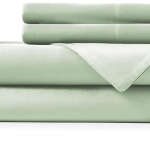
A deep pocket sheet is a fitted sheet cut with extra fabric in the corner seams so it stretches over a thicker mattress than a standard fitted sheet can accommodate. The exact depth ranges vary somewhat between suppliers, but the general categories are consistent enough to use as a starting framework.
Across multiple sizing guides, the categories generally break down like this:
- Standard pocket: roughly 7 to 12 inches deep, built for thin innerspring mattresses or basic healthcare mattresses without toppers.
- Deep pocket: commonly cited as 13 to 17 inches deep, though some sources describe this range as 11 to 15 inches, or even up to 18 inches. This is the range most modern hotel and consumer mattresses fall into.
- Extra deep pocket: generally 18 to 25 inches deep, designed for pillow-top mattresses, thick memory foam layers, or specialty overlays, though some suppliers extend “deep pocket” language up to 21 to 24 inches without a separate “extra deep” label at all.
Why the ranges don’t match exactly across sources: there’s no single regulated industry standard for where “deep pocket” ends and “extra deep pocket” begins, so different manufacturers set their own cutoffs. Rather than treating any one number as gospel, the practical move for commercial buyers is to always request the exact pocket depth in inches from a supplier rather than relying on the “deep” or “extra deep” label alone.
The Only Measurement That Actually Matters: Total Mattress Height
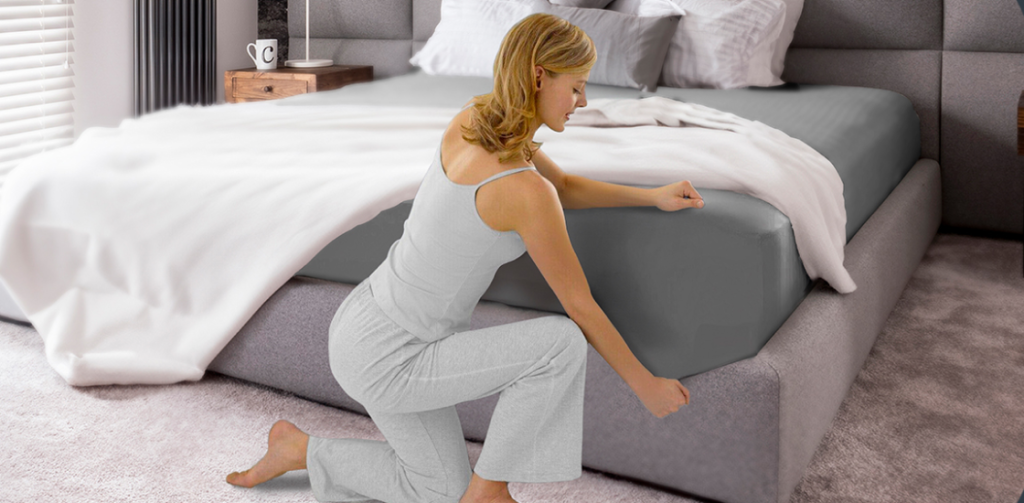
The label on a fitted sheet package doesn’t matter nearly as much as the actual depth of your mattress including everything on top of it. Getting this measurement wrong is the single most common reason bulk orders arrive and don’t fit.
How to measure correctly:
- Stand a tape measure or ruler flush against the side of the mattress, from the floor-facing bottom edge to the top surface.
- Include any mattress protector, topper, or pad that stays on the bed permanently, since the fitted sheet has to stretch over all of it, not just the bare mattress.
- Add 2 to 3 inches to your measured total as a buying buffer, since a pocket that’s exactly the same depth as your mattress will fit too tightly and pull loose faster than one with a small margin.
- For cotton fitted sheets specifically, account for an additional 3% to 5% shrinkage after the first several hot commercial wash cycles, and round your pocket depth requirement up accordingly.
A quick mattress depth reference for common settings:
| Mattress Type | Typical Total Height | Recommended Pocket Depth |
|---|---|---|
| Basic innerspring, no topper | 8–12 inches | Standard (7–12″) |
| Modern hotel mattress, light topper | 12–16 inches | Deep pocket (13–17″) |
| Hotel pillow-top or hybrid mattress | 14–18 inches | Deep to extra deep (16–20″) |
| Thick pillow-top plus topper | 18–24+ inches | Extra deep pocket (18–25″) |
| Standard hospital bed, no overlay | 6–9 inches | Standard, healthcare-specific cut |
| Hospital bed with therapeutic overlay | 12–16+ inches | Deep pocket, stretch-knit construction |
Hotel Mattresses: Why Pillow-Tops Push You Into Extra Deep Territory
Commercial hospitality mattresses commonly run 14 to 18 inches thick once a pillow-top layer is factored in, which means a standard or even mid-range deep pocket sheet frequently isn’t enough for a modern hotel bed. Buying based on the mattress’s nominal size (queen, king, and so on) without accounting for pillow-top height is one of the most common procurement mistakes in hospitality linen ordering.
- Properties running pillow-top or hybrid mattresses should generally plan for an 18-inch minimum pocket depth to survive heavy guest turnover without slipping loose partway through a stay.
- Housekeeping speed depends on this being right the first time. A fitted sheet that’s borderline too shallow takes longer to wrestle onto the bed and is more likely to need re-tucking mid-shift, which adds labor time across hundreds of rooms.
- Don’t assume all rooms in a property have identical mattress depths. Renovated wings, suite categories, or newer mattress replacements often have different heights than older inventory, so a single blanket sheet order across an entire property can leave some rooms under-fitted.
Healthcare Beds: A Different Depth Problem Entirely
Standard hospital bed mattresses are typically much thinner than hotel mattresses, usually only 6 to 9 inches deep, but therapeutic air-loss systems, foam overlays, and specialty pressure-relief surfaces can push the total height well past 14 inches. This creates a sizing mismatch that’s easy to miss if you’re ordering sheets based on the bed frame’s nominal size rather than the actual surface currently on it.
- Standard hospital beds without overlays generally need only a standard-depth fitted sheet, typically cut specifically to the 36″ x 80″ frame with a 6 to 8 inch pocket, as covered in our sizing guide for hospital bed linens.
- Beds with therapeutic air-loss or foam overlay systems need meaningfully deeper pockets, and because these overlays often have irregular or uneven surfaces, a stretchy knit or jersey-style fitted sheet frequently performs better than a rigid woven cotton sheet, since the stretch fabric can conform to the overlay’s shape rather than fighting against it.
- Reassess pocket depth whenever a facility changes overlay or mattress vendors. A therapeutic surface upgrade that adds even 2 to 3 inches of height can be enough to make an existing fitted sheet inventory stop fitting securely.
Split King and Adjustable Bed Sheets: Depth Plus Independent Movement
Adjustable beds, whether in a hospital, long-term care facility, or a split king hospitality suite, need fitted sheets that solve two problems at once: enough pocket depth for the mattress, and independent movement so one side of the bed can raise or lower without pulling the sheet loose on the other side. A single king fitted sheet, regardless of pocket depth, cannot do this on a true split frame.
What a proper split king or split adjustable sheet set includes:
- Two separate Twin XL fitted sheets (39″ x 80″ each), so each half of the adjustable base moves independently without dragging or bunching the opposite side.
- One king-size flat sheet spanning both halves.
- Matching pillowcases, typically two king-size.
Pocket depth still matters just as much on split configurations. Extra deep pocket split king and split adjustable sets commonly range from 15 to 24 inches depending on the mattress and overlay combination, and the same measure-your-actual-height rule applies exactly as it does for a standard king mattress.
Elastic and Grip Construction: The Detail That Determines Whether Depth Even Matters
A correctly sized pocket depth still won’t stay in place through a full shift of use if the elastic construction is weak, which is why grip quality deserves as much attention in a bulk order as the depth number itself. This matters even more on beds that move, whether that’s guest movement in a hotel bed or frame articulation in a healthcare adjustable bed.
- Look for continuous, all-around perimeter elastic rather than corner-only elastic bands. Corner-only elastic is common in cheaper sheet construction and is far more likely to let a corner pop loose under repeated stress or industrial laundering.
- Some higher-end commercial and adjustable-bed-specific sheets add reinforced grip bands or anchor straps at the corners in addition to standard elastic, which further reduces slippage risk on frames that articulate frequently.
- Elastic degrades faster than the fabric itself under aggressive industrial laundering. A fitted sheet with worn-out elastic will fail even if the pocket depth was correctly sized when new, so elastic condition should be part of your linen replacement inspection criteria, not just visible wear on the fabric.
How to Order Correctly: A Step-by-Step Checklist
Follow this sequence before placing a bulk deep pocket sheet order to avoid the most common and most expensive fit mistakes:
- Measure actual mattress height, including any topper, protector, or overlay, on a representative sample of beds across your property or facility, not just one reference bed.
- Add a 2 to 3 inch buying buffer to your measured height before matching it to a pocket depth category.
- For cotton fabrics, add an additional shrinkage allowance of roughly 3% to 5% on top of your buffer, since hot commercial laundering will shrink the pocket over time.
- Confirm the supplier’s exact pocket depth in inches, not just the “deep” or “extra deep” label, since these terms aren’t standardized across manufacturers.
- For adjustable or split frames, confirm the set includes two independent Twin XL fitted sheets, not a single oversized king fitted sheet.
- Check elastic construction specifically, asking whether it’s continuous all-around elastic or corner-only, and whether any additional grip or anchor features are included.
- For healthcare overlays with irregular surfaces, consider stretch-knit or jersey fitted sheets instead of rigid woven cotton, since they conform better to uneven surface shapes.
- Order a small trial batch and test it on your actual beds through several laundering cycles before committing to a full bulk order, since shrinkage and elastic wear only show up after repeated washing, not on the first use.
Common Mistakes That Lead to Sheets Popping Off Mid-Shift
- Ordering by nominal bed size instead of measured mattress height. A “queen” fitted sheet sized for a 12-inch mattress will not work on a queen pillow-top running 18 inches.
- Ignoring topper and overlay height. The fitted sheet has to stretch over everything on the mattress, not just the mattress itself.
- Assuming every room or bed in a facility has identical mattress depth. Renovated areas, different mattress vendors, or overlay upgrades can create depth inconsistencies within the same property.
- Buying a single king fitted sheet for a split adjustable frame. It cannot move independently with two separately articulating mattress halves.
- Choosing corner-only elastic construction for high-movement settings. Continuous perimeter elastic holds up significantly better under repeated articulation or guest movement.
- Not accounting for cotton shrinkage over the linen’s usable life. A pocket that fits perfectly new can become too shallow after enough hot commercial wash cycles.
Fabric Choice and Fit: Why Material Affects How “Deep” Feels in Practice
Pocket depth on a label describes the seam-to-seam measurement, but how snugly a sheet actually holds on a mattress also depends on the fabric’s stretch and weight, which is why two sheets with an identical labeled pocket depth can perform differently in the field. Buyers evaluating deep pocket options should weigh fabric type alongside the depth number itself, not as a separate, unrelated decision.
- Woven cotton and cotton-poly blends offer minimal stretch, so the pocket depth needs to be accurate or generously sized, since the fabric won’t flex to compensate for a slightly-too-shallow cut. This is the standard choice for hotel bedding where a crisp, structured look matters.
- Microfiber is lighter, more wrinkle-resistant, and often more budget-friendly than cotton, and tends to grip mattress corners slightly better due to its texture, though it doesn’t breathe as well.
- Bamboo and cooling blends offer a soft, elastic hand-feel and are popular for hot sleepers, but as covered in our fabric comparison guide, these fibers are more delicate under aggressive commercial laundering, which is a relevant consideration if deep pocket bamboo sheets are being ordered for high-turnover use rather than boutique-style lower-intensity laundering.
- Stretch-knit or jersey construction, most relevant for healthcare overlays and irregular surfaces, behaves differently from woven fabric entirely, since the whole sheet body has some give, not just the elastic band. This can make a nominally shallower pocket work acceptably on a soft, uneven surface where a rigid woven sheet at the same labeled depth would not.
Practical takeaway: when a specific fabric and pocket depth combination is new to your procurement process, treat the labeled depth as a starting point and confirm real-world fit with a small trial batch, since fabric stretch characteristics aren’t captured by the pocket depth number alone.
The Real Cost of Getting Pocket Depth Wrong at Scale
A single ill-fitting fitted sheet is a minor inconvenience. The same mistake repeated across a full property’s linen inventory becomes a recurring labor and reordering cost that’s larger than most procurement teams initially expect. It’s worth thinking through the full cost picture before finalizing a bulk order, not just the per-unit price.
- Housekeeping labor time increases when staff have to repeatedly re-tuck or wrestle a too-shallow fitted sheet into place, and that extra time compounds across hundreds of rooms turned over daily.
- Guest complaints and negative reviews tied to a sheet that’s visibly come loose from a corner are a real, if hard-to-quantify, reputational cost for hospitality properties.
- In healthcare settings, a fitted sheet that slips during a patient repositioning or bed articulation is not just an inconvenience but a potential hygiene and fall-risk issue, which raises the stakes for getting sizing right well beyond guest comfort alone.
- Reordering a full bulk purchase after a sizing mistake wastes both the original order’s cost and the staff time spent identifying the problem, on top of the delay in getting correctly sized replacements into rotation.
- A small trial order tested against your actual mattress depths and laundry process costs far less upfront than any of the above outcomes, which is why it’s worth treating as a mandatory step rather than an optional nice-to-have for any order beyond a handful of beds.
Frequently Asked Questions
What is considered a deep pocket versus an extra deep pocket sheet?
Deep pocket sheets are generally cut for mattresses in the roughly 13 to 17 inch depth range, though some suppliers describe this range as 11 to 15 inches or up to 18 inches. Extra deep pocket sheets typically cover mattresses from about 18 up to 24 or 25 inches deep. Because these labels aren’t standardized industry-wide, it’s worth confirming exact pocket depth in inches with any supplier rather than relying on the label alone.
How do I know what pocket depth I need?
Measure your mattress from the floor-facing bottom edge to the top surface, including any topper or protector that stays on the bed, then add 2 to 3 inches as a buying buffer. If you’re ordering cotton sheets, add another small allowance for shrinkage after repeated hot commercial washing, since a pocket that fits exactly on day one can become too shallow after months of laundering.
Do hospital beds need deep pocket sheets?
Standard hospital bed mattresses are usually only 6 to 9 inches thick and generally don’t need deep pocket sheets. However, beds fitted with therapeutic air-loss systems, foam overlays, or specialty pressure-relief surfaces can reach 14 inches or more in total height, which does require a deeper pocket, often in a stretch-knit fabric that conforms better to an uneven overlay surface than rigid woven cotton.
Can I use a regular king fitted sheet on a split king or adjustable bed?
No. Split king and adjustable bed setups use two independently articulating mattress halves, and a single king fitted sheet can’t move with both sides at once without pulling loose or bunching. These setups need a set with two separate Twin XL fitted sheets instead, paired with one king flat sheet.
Why do deep pocket sheets keep popping off the corners?
The most common causes are a pocket depth that’s too shallow for the actual mattress height (including toppers), corner-only elastic instead of continuous all-around elastic, or elastic that has degraded after repeated industrial laundering. Checking all three, not just the labeled pocket depth, usually identifies the actual problem.
What pocket depth do hotel pillow-top mattresses need?
Hotel mattresses with pillow-top or hybrid layers commonly reach 14 to 18 inches in total height, which generally calls for an 18-inch minimum pocket depth to hold securely through heavy guest turnover. Always measure your specific mattress model rather than assuming a standard deep pocket sheet will be sufficient, since pillow-top thickness varies significantly between manufacturers.
Are stretch-knit sheets better than woven cotton for irregular mattress surfaces?
For mattresses with uneven or irregular surfaces, such as healthcare overlays or specialty foam systems, stretch-knit or jersey fitted sheets generally conform better than rigid woven cotton, since the fabric can flex around variations in the surface rather than fighting against them. Woven cotton remains a stronger choice for standard flat mattress surfaces where crispness and durability under commercial laundering matter more than stretch.