Microfiber bedding is the default fabric choice for hotels, rental operators, and institutions running large room counts, but “microfiber” on a spec sheet covers a wide quality range — from fabric that holds up for years to fabric that pills and thins out within a few months. This guide explains what actually determines microfiber quality, how sets compare to piecemeal sourcing, and what to check before placing a bulk order. Northern Linens supplies wholesale microfiber bedding sets built to commercial laundering standards.
What Is Microfiber Bedding, and Why Does It Dominate Commercial Sourcing?
Microfiber bedding is made from synthetic fibers — typically polyester, or a polyester-nylon blend — engineered to a diameter finer than one denier, which is thinner than a strand of silk. That fine, split-fiber construction is what gives microfiber its soft hand feel and low cost relative to cotton, which is why it’s the volume fabric choice for hospitality, student housing, and short-term rental operators.
Compared to cotton, microfiber offers three practical advantages at scale:
- Wrinkle resistance, reducing the need for ironing or steaming between turnovers
- Fast drying times, which matters for high-turnover laundry operations
- Lower and more stable unit cost, since it isn’t subject to cotton price volatility
The trade-off is breathability — microfiber traps more heat than cotton, which is a factor worth weighing for warm-climate properties or premium room tiers.
How Do You Judge Microfiber Quality for Bulk Purchasing?
Microfiber quality is measured in GSM (grams per square meter), not thread count — thread count is a cotton metric and doesn’t meaningfully apply to synthetic fiber. For commercial bedding, a GSM in the 90–120 range is the generally accepted quality band; fabric under 90 GSM is considered lower-grade and more prone to tearing and pilling under repeated washing.
| GSM Range | Quality Tier | Best Fit |
|---|---|---|
| Below 90 | Lower grade | Not recommended for commercial laundering cycles |
| 90–120 | Standard commercial quality | Balanced durability and breathability for most properties |
| 130–160 | Heavier, warmer weight | Cooler-climate properties prioritizing durability over breathability |
GSM alone doesn’t guarantee quality, though. Some suppliers inflate perceived weight using a thicker but lower-grade base layer instead of genuine split-fiber construction and weave type, which increases fabric weight without improving how it washes or wears. Buyers sourcing at volume should ask suppliers directly about split-fiber construction and weave type, not just the GSM number on a spec sheet.
Additional quality checks worth requesting before a bulk order:
- Weave type — a tight, flat weave distributes laundering stress more evenly than a loose or waffle weave
- Colorfastness testing — confirms colour holds through repeated industrial wash cycles, not just a handful of home washes
- Pilling and tensile strength test results — standard textile testing metrics a manufacturer should be able to provide
- OEKO-TEX Standard 100 certification — confirms the fabric has been independently tested and is free of harmful substances
Do Bedding Sets Actually Reduce Procurement Complexity Compared to Piecemeal Sourcing?
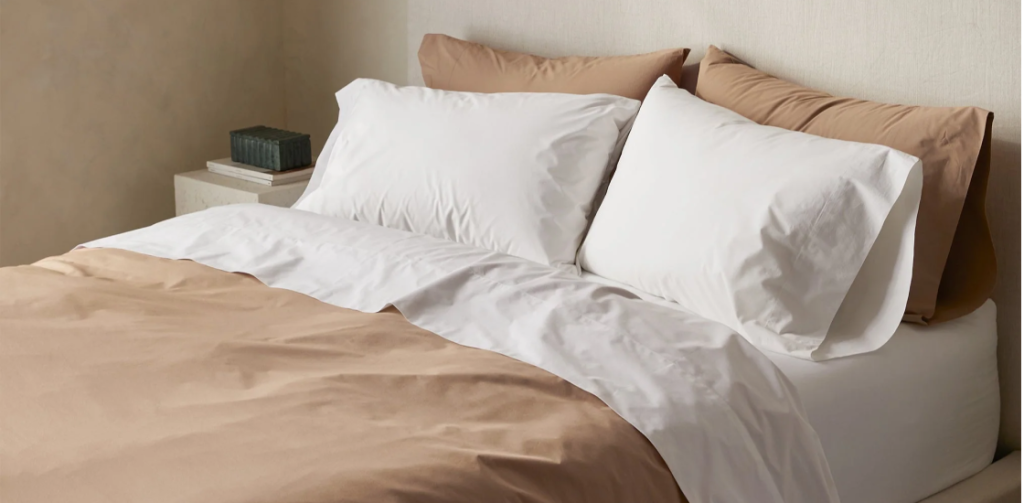
Yes — sourcing fitted sheets, flat sheets, and pillowcases as a matched set reduces the number of SKUs a buyer manages and removes the risk of colour or sizing mismatches across a property or product line. This matters more at scale than it does for a single household, where mismatches are a minor inconvenience rather than a guest-facing quality issue.
Practical benefits of set-based procurement for multi-property or multi-unit buyers:
- Fewer purchase orders and reorder points to track across a portfolio
- Reduced risk of dye-lot or fabric mismatches between components
- Simpler staff training, since housekeeping teams work with one standardized configuration
- Easier storage and distribution planning across properties
The trade-off is flexibility — a fixed set locks in a specific pillowcase-to-sheet ratio, so buyers with variable room configurations (single vs. double occupancy, for example) should confirm a supplier can adjust set composition rather than forcing a one-size configuration.
How Should Buyers Think About the True Cost of Wholesale Microfiber Bedding?
The real cost of commercial bedding is lifecycle cost — unit price divided by the number of wash cycles the fabric holds up through — not the sticker price per set. A cheaper set that needs replacing twice as often costs more over a year than a slightly pricier set with better fabric grading.
A simple way to frame this for budget planning:
- Unit price tells you the upfront cost
- Expected wash-cycle life tells you how long that cost is spread over
- Lifecycle cost = unit price ÷ expected number of commercial wash cycles before replacement is needed
Buyers evaluating two supplier quotes should ask for expected wash-cycle durability data, not just per-unit pricing, before assuming the lower quote is the better deal.
What Should Be Confirmed Before Placing a Wholesale Microfiber Order?
Before confirming volume pricing, buyers should verify GSM and weave specs in writing, request colorfastness and pilling test data, and confirm OEKO-TEX certification — verbal assurances about “commercial-grade” fabric aren’t a substitute for documented specs.
Pre-order checklist:
- Confirm GSM range and weave type in the written spec, not just a marketing description
- Request colorfastness, pilling, and tensile strength test results
- Confirm OEKO-TEX Standard 100 certification (or equivalent) for the specific fabric batch
- Ask about standard wash-and-care instructions to confirm no specialized laundering equipment is required
- Clarify set composition (sheets-to-pillowcase ratio) and whether it can be adjusted for your occupancy mix
Frequently Asked Questions
What GSM should commercial microfiber bedding be?
Look for a GSM of 90–120 for a balance of durability and breathability suited to most commercial laundering schedules; fabric under 90 GSM is more likely to tear or pill with frequent industrial washing.
Is microfiber durable enough for hotel or institutional use?
Yes, when the fabric meets a commercial-grade GSM range and passes standard colorfastness and tensile strength testing. Durability depends more on weave quality and fiber construction than on GSM alone.
Why buy bedding as a matched set instead of individual pieces for a bulk order?
Set-based sourcing reduces the number of SKUs and reorder points a buyer manages and avoids colour or sizing mismatches between fitted sheets, flat sheets, and pillowcases across a property or portfolio.
Does microfiber bedding require special washing equipment?
No — standard commercial wash cycles are sufficient for quality microfiber, though avoiding high heat and fabric softeners helps preserve the fabric’s finish and lifespan over repeated laundering.
How is microfiber quality measured if thread count doesn’t apply?
Microfiber quality is measured in GSM (grams per square meter), which reflects fabric density and weight, along with denier (fiber fineness) and weave type — not thread count, which is a metric specific to cotton.
What’s the difference between cheap and quality microfiber for bulk buyers?
The difference usually comes down to GSM, split-fiber construction, and weave — lower-cost microfiber often uses a thicker but lower-grade base layer to inflate perceived weight without improving actual wash durability, which is why buyers should request test data rather than relying on GSM figures alone.
How should buyers compare cost between two wholesale bedding suppliers?
Compare lifecycle cost — unit price divided by expected wash-cycle durability — rather than unit price alone, since a cheaper set that wears out faster typically costs more over a year of use.