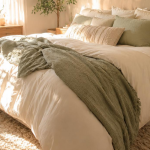
Guests and customers judge a business by what they can touch. A thin, pilled, or scratchy throw blanket tells them you cut corners — even if everything else about your space is polished. Sourcing wholesale throw blankets from a manufacturer built for commercial use solves that problem while lowering your long-term cost per unit.
This guide covers what separates commercial-grade throws from consumer ones, how to match a throw to your space, what to check before placing a bulk order, and the questions buyers ask most often.
What Makes a Throw Blanket “Commercial Grade”?
A commercial-grade throw is built to survive industrial laundering, daily handling, and heavy rotation without losing its shape, softness, or color. Consumer throws are made for occasional home use and typically break down within months under that kind of demand. Understanding commercial hotel sheet fabric standards can help you apply the same scrutiny to throws.
The practical differences show up in a few places:
Fabric weight and weave density — heavier, tighter weaves resist pilling and thinning after repeated washes. Colorfastness — dyes rated for commercial detergents and high-heat drying don’t fade after a season of use. Stitching and hem construction — reinforced edges hold up to machine washing at scale instead of fraying. Certification — fabric that’s independently tested and certified free of harmful substances (such as OEKO-TEX Standard 100) protects both guests and staff who handle the linens daily.
If a supplier can’t speak to these four points with specifics, the throw likely wasn’t designed for commercial use, no matter how it looks in a photo.
Why Bulk Sourcing Beats Buying One at a Time
Buying throws individually or from a general retailer is slower, more expensive per unit, and harder to keep consistent across a property or store chain. Wholesale sourcing solves all three problems at once. Working with a bulk bedding supplier also gives you a single point of contact for consistent reordering.
Lower cost per unit as order volume increases, since you’re buying direct from the manufacturer rather than through a retail markup. Inventory consistency across every room, floor, or store location, so a guest in room 204 gets the same quality as a guest in room 118. Fewer emergency reorders, because you’re holding enough stock to cover peak occupancy or seasonal demand instead of scrambling mid-season. Predictable replacement cycles, which makes budgeting for housekeeping and facilities easier to plan a year out.
The tradeoff is that bulk orders require more upfront planning — you need a rough sense of your annual volume, storage space, and reorder timeline before you commit. Good warehousing solutions for inventory make that planning far easier, and that planning pays off within the first replacement cycle.
Hotels and Hospitality: Why the Throw Matters More Than You’d Think
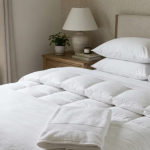
In hospitality, a throw blanket is a touchpoint, not just an accessory. It sits at the foot of the bed, over a lounge chair, or folded in a spa waiting area — often the first soft surface a guest touches after check-in. Many properties reference a hotel bedding buying guide when standardizing throws alongside their sheets.
That touchpoint carries weight because:
Guests form a quality impression within seconds of physical contact with linens, and that impression colors how they perceive the rest of the room. Inconsistent quality across rooms — one floor with worn throws, another with newer stock — is noticeable to repeat guests and can surface in reviews. Housekeeping efficiency depends on fabrics that dry quickly and resist wrinkling, which reduces turnaround time between guests. Peak-season shortages force last-minute purchases at retail prices, which erodes the cost savings bulk buying was supposed to provide.
Hotels that standardize on one commercial-grade throw across their property avoid all four of these issues at once, and it simplifies staff training since housekeeping only needs to learn the care requirements of a single product line.
Retail and Commercial Spaces: Matching Quality to Price Point
Retailers selling throws face a different challenge: customers physically handle the product before buying, and they can tell within seconds whether the feel matches the price tag. A throw that looks premium on a shelf but feels thin in hand damages trust immediately — and that mismatch is one of the fastest ways to lose a repeat customer. Retailers building out a broader wholesale bedding programs lineup often add throws as a natural extension of their sheet and duvet offering.
For commercial spaces — wellness studios, corporate lounges, event venues — the priority shifts slightly toward low-maintenance durability. You want a throw that creates a warm, inviting atmosphere without demanding constant replacement or special-care laundering.
A few practical guidelines for either use case:
| Use Case | Priority | Fabric Consideration |
|---|---|---|
| Retail resale | Feel matches price point | Consistent hand-feel across the batch |
| Hotel guest rooms | Durability + consistent look | Heavier weave, colorfast dye |
| Spa / wellness | Softness, calm aesthetic | Lightweight, breathable fibers |
| Corporate lounge | Low maintenance | Wrinkle- and stain-resistant finish |
| Outdoor / patio seating | Insulation, weather tolerance | Heavier weight, tighter weave |
How to Choose the Right Throw for Your Space
Start with your environment and your customer, not the product catalog. The right throw depends on climate, use frequency, and how often it gets washed. Browsing a premium bedding options catalog first can help you settle on a palette and fabric weight before requesting throw samples.
Match weight to climate and setting. Colder climates or outdoor seating need heavier, more insulating fabric. Spa or wellness settings do better with lighter, softer weaves. Check your laundering frequency. Daily commercial washing requires fabric tested for shape and softness retention over hundreds of cycles — ask your supplier for that data specifically. Align with your brand palette. A neutral, classic palette suits most hotel programs; retail and seasonal displays can support bolder colors and patterns. Request samples before committing to volume. Texture and weight are hard to judge from a photo or spec sheet — a physical sample avoids a costly reorder. Confirm minimum order quantities and lead times up front. These vary by supplier and directly affect how you plan inventory around peak seasons.
Questions to Ask a Wholesale Bedding Supplier Before You Order
Before signing off on a bulk order, get clear answers on:
Is the fabric independently certified (e.g., OEKO-TEX) and can they provide documentation? Do they manufacture in-house, or resell from a third party? In-house production generally means tighter quality control. What’s the minimum order quantity, and does pricing scale with volume? Where is inventory warehoused, and what’s the realistic lead time for a reorder? Can they support private label or SKU-level customization if you need brand-specific packaging?
A supplier that answers these clearly and specifically — rather than vaguely — is a good signal they’re set up for commercial accounts, not just one-off retail sales.
Frequently Asked Questions
What’s the difference between wholesale and retail throw blankets?
Wholesale throws are purchased directly from a manufacturer in bulk, usually at a lower per-unit cost, and are typically built with commercial-grade fabric rated for frequent washing. Retail throws are sold individually through stores and are generally made for occasional home use.
How many throws should a hotel keep in inventory?
This depends on room count, occupancy rates, and how often housekeeping rotates linens for cleaning versus replacement. A common approach is to hold enough stock to cover a full linen cycle plus a buffer for peak occupancy periods, so you’re not placing rush reorders mid-season.
What fabric holds up best to commercial washing?
Heavier-weight cotton and verified cotton-blend fabrics with tight weaves generally hold their shape and softness best under repeated industrial washing. Comparing microfibre vs cotton bulk options is a useful next step. Ask any supplier for their specific durability testing data rather than relying on the fabric name alone.
Can I get custom colors or branding on wholesale throws?
Many wholesale bedding manufacturers offer private label and SKU-level customization, including fabric choice, color, and packaging. Availability and minimum order requirements vary by supplier, so confirm this before finalizing a quote.
What certifications should I look for in commercial bedding?
OEKO-TEX Standard 100 is a widely recognized certification confirming that a textile has been tested and found free of harmful substances. It’s a useful baseline to ask about when vetting any commercial bedding supplier.
How long does a wholesale bedding order typically take to arrive?
Lead times vary by supplier, order volume, and whether the items are in-stock or made to order. Suppliers that warehouse bestselling SKUs domestically can generally fulfill reorders faster than those manufacturing each order from scratch.
Is it cheaper to buy throws in bulk than one at a time?
Per-unit cost is typically lower when buying in bulk directly from a manufacturer, since it removes retail and distributor markups. The savings are more significant at higher volumes, so it’s worth requesting a volume-based quote rather than assuming a flat discount rate.
How do I know if a throw blanket is right for an outdoor or patio setting?
Look for a heavier weight and tighter weave for better insulation and durability against outdoor conditions. Confirm with the supplier whether the fabric is rated for outdoor or semi-outdoor use, since not all commercial throws are.