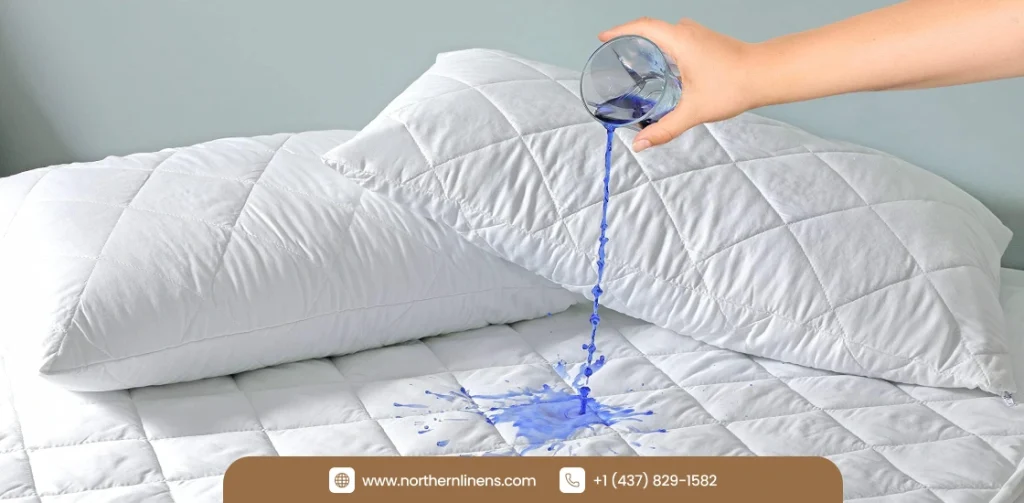
A quilted mattress protector adds a layer of padding and keeps dust and surface wear off the mattress. A waterproof protector stops liquid reaching it. One spill tells you which you needed, and if you run a Vancouver hotel at 300 room nights a week, the spill arrives in the first month. The choice between the two is not about comfort against protection, because a modern waterproof protector carries a quilted or terry face. The choice is about whether the mattress underneath is a capital item you expect to keep for seven years.
In this guide, we compare the two on what they protect against, how they feel and launder, and how long they last and what they cost over that life.
What Each Protector Does and Does Not Do
The two products share a name and a position on the bed, and almost nothing else. The quilted protector is a pad. The waterproof protector is a barrier.
The Quilted Protector: A Pad, Not a Barrier
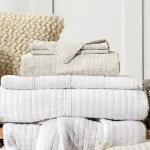
A quilted protector is a layer of polyester or cotton fill quilted between two fabric faces, fitted over the mattress with an elastic skirt. The pad adds a thin layer of softness, keeps dust, skin and surface soiling off the mattress, and launders with your sheets. What it does not do is stop liquid. A spill, sweat or incontinence passes through the quilting into the mattress, and the quilted protector is then a wet pad on a wet mattress.
- Adds light padding and a soft surface under the sheet
- Keeps dust, skin and surface soiling off the mattress
- Launders on the linen cycle at high temperature
- Does not stop liquid, and holds it against the mattress once wet
The Waterproof Protector: A Barrier With a Face
A waterproof protector is a polyurethane or thermoplastic membrane bonded to a fabric face, fitted or encased. The membrane stops liquid completely. The face, which is terry, jersey or a quilted layer on a hospitality product, gives the softness and the quiet surface. A breathable membrane passes vapour so the bed does not sweat, which is the difference between a commercial waterproof protector and the plastic sheet it is sometimes confused with.
- Stops liquid completely, with the membrane rated to a stated hydrostatic head
- Breathable, so the bed does not feel hot or clammy
- Available with a terry, jersey or quilted face, so the feel matches a quilted pad
- Launders at 60 to 71 degrees, with the membrane rated for a stated number of cycles
The Comparison on Six Points
| Quilted protector | Waterproof protector | |
|---|---|---|
| Liquid protection | None | Complete, to the rated hydrostatic head |
| Dust and allergen barrier | Partial | Complete, when encased |
| Feel under the sheet | Soft, padded | Soft with a terry or quilted face, firmer with a smooth face |
| Breathability | High | High with a breathable membrane, low with a film |
| Laundering | Linen cycle, high heat | 60 to 71 degrees, medium dryer heat to protect the membrane |
| Lifespan | 2 to 3 years, loses loft | 12 to 18 months under monthly laundering, inspected for delamination |
Feel, Laundering and Cost Over the Protector’s Life
The three objections you will hear to waterproof protectors are that they feel hot, launder badly and cost more. Each was true of an older product, and each is tested rather than assumed on a current one.
Feel: The Membrane Decides It
A waterproof protector with a non-breathable film feels hot and crinkles, and that product belongs in a domestic cupboard. A commercial protector with a breathable polyurethane membrane under a terry or quilted face feels like a quilted pad. The face is the same and the membrane passes vapour. Your guest or your resident does not feel the barrier. Your housekeeping team sees it, once, when a spill stays on top of the sheet.
Laundering: The Dryer Decides It
A quilted protector goes through the linen cycle at full heat and comes back. A waterproof protector washes at the same temperatures and is dried on medium, because high dryer heat is what delaminates the membrane. If your laundry cannot separate protectors from sheets for the dryer, it shortens the waterproof cycle, and you want to know that before the order. Where the laundry can hold the dryer setting, the membrane reaches its rated cycles.
Cost: The Mattress Decides It
A quilted protector costs you less per unit and lasts longer per unit. A waterproof protector costs more and is replaced sooner. Neither figure is the one that matters to your budget.
| Illustration, one room over 5 years | Quilted | Waterproof |
|---|---|---|
| Protector cost over 5 years | Two units at $18, $36 | Four units at $28, $112 |
| Mattress spills reaching the core in 5 years at hotel occupancy | Several | None |
| Mattress replaced early after a spill, one in five rooms | One $900 mattress per five rooms, $180 per room | Nil |
| Total per room | About $216 | About $112 |
The waterproof protector costs three times as much in protectors and half as much in total, because the mattress it saves is the largest number in the room. The arithmetic holds at any mattress price above a few hundred dollars and at any occupancy above a few nights a week.
Which Protector Belongs on the Bed in Each Commercial Property
The answer is the same in every setting where you have a mattress worth keeping, and the detail is what changes.
Hotels and Inns
A fitted waterproof protector with a terry or quilted face goes on every bed you run, changed with the linen and replaced on a 12-to-18-month cycle. The quilted pad is not needed on a bed with a topper, because the topper provides the softness and the protector provides the barrier over it. A hotel in Vancouver or Toronto that runs quilted pads is protecting its mattresses from dust and nothing else.
Healthcare and Hospitals
A full waterproof encasement with a wipeable surface stays on the mattress, and a fitted waterproof protector over it is changed with the linen. A quilted pad has no place on a healthcare bed, because it absorbs fluid and holds it. Infection control inspects the encasement for an intact membrane at every strip.
Retirement and Senior Living
A breathable waterproof protector, fitted or encased, with a soft face for skin integrity, changed as often as the resident needs. Quilted pads are used in some homes for comfort over the waterproof layer, and they are laundered with the linen, never in place of the barrier.
Vacation Rentals and Airbnb
A fitted waterproof protector on every bed, because your short-term rental has no housekeeping between the guest’s spill and the next check-in, and you rarely see the mattress. A quilted face keeps the feel the review mentions. The protector is changed every turnover and replaced on inspection.
| Property | On the bed | Quilted pad |
|---|---|---|
| Hotels and inns | Fitted waterproof, terry or quilted face, under a topper | Not needed with a topper |
| Healthcare and hospitals | Waterproof encasement plus fitted waterproof protector | Never |
| Retirement and senior living | Breathable waterproof, fitted or encased | Over the barrier only, for comfort |
| Vacation rentals and Airbnb, Vancouver, Toronto, Calgary | Fitted waterproof with a quilted face | Not needed |
| Student housing | Fitted waterproof, twin XL | Not needed |
Our mattress protectors and pads are supplied in both forms. The waterproof range carries a breathable membrane under a terry, jersey or quilted face, in sizes from twin through king including twin XL.
Put a Waterproof Protector on Every Commercial Bed, and Choose the Face for the Setting
The question in the title has one answer for any property that expects its mattresses to last. The choices that remain are about the face, the fit and your laundry.
- Waterproof on every bed, because the mattress is the capital item and liquid is what shortens its life
- A breathable membrane, so the bed feels like a quilted pad and does not sweat
- A terry or quilted face in hotels and rentals, a smooth wipeable face in healthcare
- Fitted where it changes with the linen, encased where it stays on the mattress
- Medium dryer heat and a 12-to-18-month cycle, inspected for delamination
Send us your bed count, mattress sizes, laundering temperatures and the settings you run. Northern Linens will return bulk pricing on the waterproof specification for each, and samples your laundry can wash and dry before you order. Request a quote or samples and they ship from our Canadian stock.
Frequently Asked Questions
Can I use a quilted pad over a waterproof protector for extra comfort?
Yes, and some senior living homes do. The waterproof protector goes directly on the mattress and the quilted pad over it, with both laundered on their own cycles. On a hotel bed with a topper the pad is redundant, because the topper gives the softness.
Will guests notice a waterproof protector?
Not a commercial one with a breathable membrane and a terry or quilted face. The surface is the same fabric a quilted pad uses, the membrane passes vapour, and there is no crinkle. What guests notice is the film product sold for cribs and domestic use, which is why the specification states the membrane.
How often does a waterproof protector need replacing in a hotel?
Every 12 to 18 months under monthly laundering, sooner on a high-occupancy floor, and on inspection at any time. Check the membrane for delamination and the skirt for failed elastic at each laundering, and retire any protector that fails either regardless of age.
Does a waterproof protector protect against bed bugs?
A fitted protector does not. A full zippered encasement with a bed bug rated zipper does, because it seals the mattress completely. Properties with a bed bug protocol run the encasement on the mattress and a fitted waterproof protector over it for the linen change.
What dryer setting should our laundry use?
Medium heat. High heat is what delaminates the membrane and ends the protector’s life early. Separate protectors from sheets for the dryer, and the membrane reaches the cycle count it was rated for.