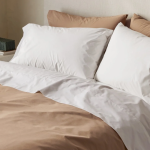
A hotel mattress is replaced every three to seven years depending on the property’s tier, and the topper on it is replaced two or three times in that span. The topper is the cheaper of the two by a wide margin, and it is the layer the guest feels first. For a Mississauga hotel budgeting a refit, that makes the topper the line where comfort is bought and the mattress’s life is extended. The cycle has to be planned rather than left to housekeeping to notice.
In this guide, we cover what a hotel mattress topper does and how to specify it, and the replacement cycle and how to cost it per occupied night. We then cover how bulk buying changes the price for a hotel, a care home, a short-term rental portfolio or a student residence.
What a Hotel Mattress Topper Does for the Mattress and the Guest
A topper is a two-to-four-inch layer of comfort material in its own cover, placed on the mattress under the protector and the sheet. The topper does two jobs at once, and a property that buys it for only one of them underspecifies it.
Comfort the Guest Notices on the First Night
The topper is the surface the guest’s weight meets. A hotel mattress is built firm to survive nightly use, and the topper is where the plush feel comes from. Memory foam gives the slow, contouring feel associated with upscale rooms. Fibre-fill, usually a down alternative in a baffled cover, gives a lighter, cooler, hotel-classic feel and launders more easily. Latex gives a responsive, cooler surface at a higher price. Your choice decides how the bed reads in a review, and it is the one bedding decision a guest can feel through the sheet.
Protection the Mattress Needs to Reach Year Seven
The mattress underneath is a capital item, and the topper absorbs the compression, the body heat and the moisture that would otherwise reach it. A mattress under a topper is rotated head-to-foot every three to six months like any other, but it wears from a smaller load and a drier surface. The topper takes the wear, and the topper is what you replace.
- Comfort: the surface feel, set by the material and the depth
- Protection: compression and moisture absorbed before they reach the mattress
- Consistency: every room feels the same when every topper is the same specification
- Economy: a topper replaced at $90 keeps a mattress replaced at $900 in service longer
How to Specify a Topper for Commercial Use
A domestic topper fails in a hotel within a year, because it was built for one sleeper and a wash every few months. A commercial topper is specified on four points.
| Specification | What to ask for | Why it matters in a hotel |
|---|---|---|
| Material and depth | Memory foam at 2 to 3 inches, fibre-fill at 3 to 4 inches, or latex at 2 inches | Sets the feel and the recovery after each guest |
| Density or fill weight | Foam density and fill weight stated per topper, not per range | A light fill flattens in months under nightly use |
| Cover | Removable, zippered, launderable at commercial temperatures | The cover is washed on the linen cycle, the core is not |
| Fit and anchoring | Sized to the mattress, with straps or a fitted skirt | A topper that migrates is a topper housekeeping reseats every day |
Our mattress toppers and protectors are built to those four points, in standard sizes from twin through king including twin XL. The cover specification is held on file so your second order matches the first.
Replacement Cycles and the Cost per Occupied Night
A topper does not fail on a date. The topper fails when it stops recovering, and the cycle you budget for is the one that replaces it before a guest notices.
The Cycle by Property Type
| Property | Mattress cycle | Topper cycle | What drives it |
|---|---|---|---|
| Luxury and full-service hotel | 3 to 5 years | 2 years | Guest expectation of a plush, consistent surface |
| Mid-range and select-service hotel | 5 to 7 years | 2 to 3 years | Nightly turnover and laundering frequency |
| Extended-stay and short-term rental | 2 to 4 years | 18 months to 2 years | Longer stays and heavier use per booking |
| Senior living and care home | 5 to 7 years | 2 years, or on soiling | Moisture exposure and infection control |
| Student residence | 5 to 7 years | Between tenants, or annually | Variety of body types and seasonal turnover |
Inspect at every deep clean and retire on condition, not only on date. A topper that has lost its loft, holds a body impression after an hour, or shows a stain the cover did not catch is retired whatever the calendar says.
Costing the Topper per Occupied Night
The invoice price of a topper tells you little. The number that belongs in your budget is the cost per occupied room night, and it changes with your occupancy and your cycle.
| Illustration, one queen room | Figure |
|---|---|
| Topper, commercial fibre-fill, bulk price | $90 |
| Cycle | 3 years |
| Occupancy | 70 percent, about 256 occupied nights a year |
| Occupied nights over the cycle | About 767 |
| Cost per occupied night | About 12 cents |
| Mattress replacement deferred by one year on a $900 mattress | About $130 a year of capital cost avoided |
At 12 cents a night, the topper is the cheapest thing in the room the guest can feel. The mattress year it buys is worth ten times its own cost. A cheaper topper on a shorter cycle rarely beats that arithmetic, because the second purchase and the second installation cost more than the saving.
What Shortens the Cycle and What Extends It
Three things decide whether your toppers reach the cycle you budgeted.
- Laundering: the cover washed on the linen cycle at the temperature the fabric allows, the core aired and spot-cleaned, never machine-washed unless specified
- Protection: a waterproof protector over the topper on every bed, so the core never takes a spill
- Rotation: toppers rotated and flipped with the mattress, so the wear spreads
Bulk Buying Toppers for Hotels, Senior Living, Short-Term Rentals and Student Housing
A single topper is bought at retail. A hundred are bought on a specification, and the specification is where the price is set.
What Changes When You Buy in Volume
Bulk buying changes four things beyond the unit price. The specification is agreed once and held, so every room gets the same topper and the replacement two years later matches it. The sizes are cut to your mattresses, including twin XL for student housing and the deeper hotel mattress. Delivery is phased to your refit schedule rather than shipped as one pallet. The covers are ordered in the same run as the toppers, so replacements for a stained cover are on the shelf.
- Unit price set by quantity, with the quote returned on your room count
- Specification held on file for the reorder
- Sizes to your mattresses, standard or custom
- Delivery phased to floors or buildings
- Spare covers in the same run
The Right Topper by Segment
| Segment | Topper | Why |
|---|---|---|
| Hotels and inns, Mississauga and Toronto | Fibre-fill 3 inches or memory foam 2 inches, launderable cover | Consistent feel across floors, cover on the linen cycle |
| Retirement and senior living | Fibre-fill with a waterproof-backed cover, replaced on soiling | Moisture control and a surface that is easy to change |
| Vacation rentals and short-term rentals, Vancouver and Ottawa | Memory foam 2 inches under a waterproof protector | Review-driven comfort with protection against heavier use per stay |
| Student housing and residences | Fibre-fill 2 to 3 inches in twin XL, replaced between tenants | Low unit cost on a short cycle, sized to residence beds |
Samples, Then the Order
A topper is tested on a bed, not in a showroom. We send samples so your housekeeping team can wash the cover, dry it, and put the topper under a sheet for a week. You commit to a property’s worth only after that. The specification that passes is the one the bulk order is cut to, and it is the one on file when the cycle comes round.
Request a quote or samples with your room count, mattress sizes and the feel you want, and pricing, lead times and samples come back from our Ontario warehouse.
Budget the Topper on Its Cycle, Then Order on a Specification
The topper is where the guest’s comfort and the mattress’s life meet, and both are decided by the cycle you plan and the specification you hold.
- Plan a two-to-three-year topper cycle inside the mattress’s three-to-seven, and retire on condition
- Cost it per occupied night, and count the mattress year it buys
- Specify material, depth, density and cover for commercial use, not domestic
- Protect every topper with a waterproof protector and launder the cover on the linen cycle
- Buy on a held specification so the reorder matches, and phase delivery to the refit
Send us your room count, mattress sizes and the feel you want for the bed. Northern Linens will return bulk pricing, lead times from stock, and samples your housekeeping team can test before you order.
Frequently Asked Questions
Do I need a topper if the mattress is new?
Yes, for two reasons. The topper sets the feel the guest notices, and a firm hospitality mattress reads as hard without it. The topper also takes the compression and moisture that would otherwise reach the new mattress, which is how the mattress reaches the far end of its cycle.
Can the topper be laundered, or only the cover?
The cover, on the linen cycle at the temperature its fabric allows. The core is aired, spot-cleaned and protected by a waterproof protector. A fibre-fill topper with a washable core exists, and we specify it where a property wants the whole unit laundered, at a shorter cycle.
What depth should a hotel topper be?
Two to three inches of memory foam or three to four inches of fibre-fill for a hotel. Deeper feels plusher on the first night and loses loft faster, and it changes the fit of your fitted sheets. Match the depth to the pocket depth of the sheets you already run.
How do I keep every room feeling the same?
Buy every topper to one held specification, replace them on one cycle by floor rather than one at a time, and keep spare covers in the same run. A room refitted in year three with a topper from the same specification as year one feels the same.
Does a topper replace a mattress protector?
No. The protector is the waterproof layer over the topper that stops a spill reaching the core. The topper is comfort and compression. Both go on every bed, with the protector washed between guests and the topper’s cover washed on the linen cycle.