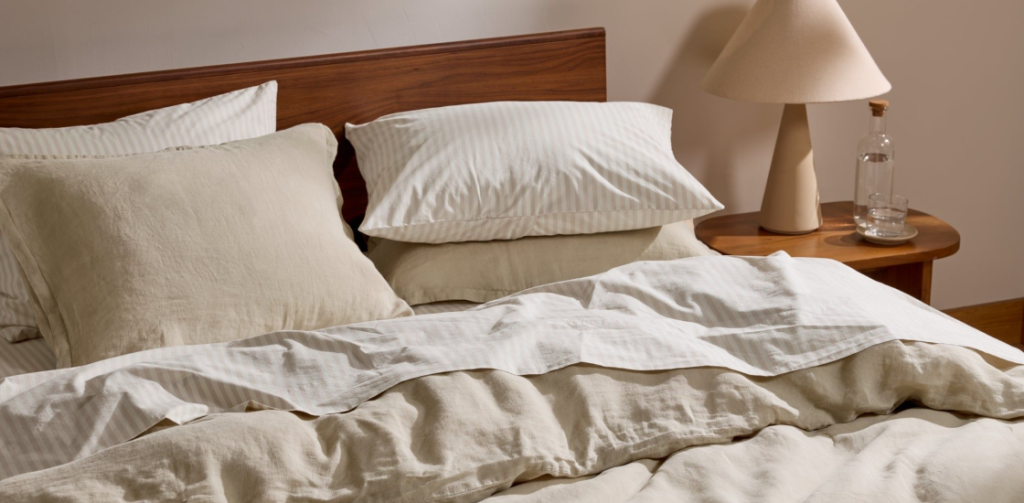
Twin XL is the standard mattress size in North American dormitories, yet it’s still one of the more mismanaged categories in wholesale bedding — sized wrong, sourced late, or built from mismatched suppliers. This guide is for retail purchasing managers, student housing procurement teams, and eCommerce operators who need Twin XL sets that fit correctly, survive a full academic year, and match what an 18–24 year old buyer actually wants on their bed.
Back-to-college spending reached roughly USD 88.8 billion in 2025, the second-highest total on record, and the broader dormitories market is projected to grow from USD 15.98 billion in 2025 to USD 17.64 billion in 2026. Bedding sits inside a category that isn’t shrinking — the risk for wholesale buyers isn’t demand, it’s getting sizing, timing, and assortment wrong.
What Is the Actual Difference Between Twin XL and Standard Twin?
A Twin XL mattress measures 38 x 80 inches, five inches longer than a standard twin’s 38 x 75 inches, and that extra length is why universities standardized on it for taller students. The size gap looks small on a spec sheet, but it’s large enough that a standard twin fitted sheet will pull off the corners on a Twin XL mattress within days. Buyers who want the full breakdown of dimensions across every bed category can reference this commercial bed sheet sizing guide.
The mismatch isn’t limited to the fitted sheet:
A Twin XL duvet cover on a standard twin comforter leaves excess fabric bunching at the foot of the bed A standard twin duvet cover on Twin XL fill leaves the mattress exposed Flat sheets sized to standard twin come up short on tuck depth for a Twin XL mattress
Every piece in a dorm set — fitted sheet, flat sheet, duvet or comforter — needs to be specified and confirmed as Twin XL. Buyers assembling a range from multiple suppliers should treat this as a line-item check on every spec sheet, not an assumption.
What Should Buyers Check Before Placing a Bulk Twin XL Order?
Before confirming a bulk order, buyers should verify pocket depth, elastic construction, and that every component in the set is dimensioned to Twin XL rather than standard twin. These four checks catch most of the fit complaints that surface after a set ships. For a deeper look at how pocket depth and elastic construction affect fit over time, see this deep pocket sheet fitting guide.
| Check | Standard Spec | Notes |
|---|---|---|
| Stated size | 38″ x 80″ explicitly, not just “twin” | Some spec sheets use “twin” loosely — confirm in writing |
| Fitted sheet pocket depth | 12″ minimum | 14–16″ if the mattress has a foam topper, common in dorms |
| Elastic construction | Full-perimeter | Holds up better than corner-only elastic under regular dorm use |
| Duvet/comforter sizing | Listed as Twin XL dimensions | Not standard twin dimensions relabeled |
Which Fabric Works Best for Dorm Bedding — Microfibre or Cotton Percale?
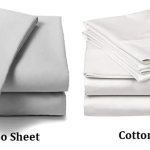
Microfibre and cotton percale dominate the dorm bedding segment because they serve two different price points and buyer priorities rather than competing for the same customer. Most retailers stock both to cover the full range from one supplier relationship. A closer comparison of how the two fabrics perform in bulk sourcing is covered in this microfibre vs cotton bulk guide.
Microfibre remains the volume driver. It delivers a strong softness-to-cost ratio, machine-washes easily at standard temperatures, and resists wrinkling — practical for a student who isn’t ironing sheets between laundry loads. Retailers sourcing at scale can review current options in this wholesale microfibre sheets 2026 overview.
Cotton percale is the premium tier gaining ground in dorm ranges. Its breathable, crisp weave appeals to students who run warm or want a more elevated setup than a standard microfibre set offers.
| Feature | Microfibre | Cotton Percale |
|---|---|---|
| Price point | Lower, higher volume | Premium tier |
| Feel | Soft immediately | Crisp, softens with washing |
| Breathability | Moderate | High |
| Best fit | Value-driven student buyer | Buyer wanting a natural-fiber upgrade |
What Colours and Patterns Are Selling in Dorm Bedding Right Now?
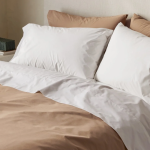
Dorm rooms are increasingly styled as personal spaces rather than purely functional sleeping quarters, and muted, earthy tones have displaced the brighter block colours that defined the category through the 2010s. Students planning a room ahead of move-in tend to reference social platforms first, which is part of what’s driving the shift. Retailers building out coordinated ranges may find this guide to matching bedding with curtains useful for planning cohesive colourways.
What’s performing well in current dorm ranges:
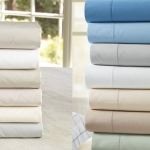
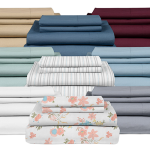
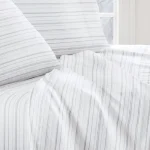
Neutral earth tones — sage green, dusty blue, warm terracotta Subtle geometric or textured patterns that read as intentional without polarizing buyers A focused core assortment of four to six colourways, refreshed with seasonal accents
Large florals and maximalist prints tend to have narrower appeal in this segment — worth knowing before committing shelf space or SKU count to a pattern-heavy range.
What Should Be Included in a Complete Twin XL Wholesale Set?
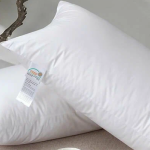
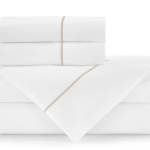
At minimum, a complete Twin XL set should include a fitted sheet, a flat sheet, and at least one pillowcase, all specified to Twin XL dimensions — anything less isn’t really a complete set, even if it’s priced and marketed as one.
Should comforter-inclusive sets be part of the range? Bundling in a comforter or duvet cover raises the price point but removes a purchase decision for the student or parent, which can support stronger conversion at retail. The detail to get right is fill weight: a weight suited to a well-heated northeastern dorm runs too warm in an air-conditioned building and too cold in an older, poorly heated one. Stocking light, medium, and all-season fill options lets retailers match assortment to the regional climate they’re actually selling into. Buyers assembling bundled ranges can reference this premium sheet sets wholesale guide 2026 for current bundling approaches.
How Should Retailers Time Their Twin XL Bedding Orders?
Dorm bedding demand follows a tight, predictable window, and missing it costs the sale entirely rather than just delaying it — move-in day doesn’t wait for a backordered shipment. The primary buying window runs roughly June through August, with a smaller secondary replenishment window around January. Buyers looking to lock in reliable lead times ahead of peak season can consult this bulk bedding supplier guide.
Planning checklist for wholesale buyers:
Confirm inventory position before the June–August window opens; starting once it’s underway is generally too late to secure volume Ask suppliers for confirmed lead times on peak-season orders specifically, not just list pricing Consider a standing order or annual supply agreement for recurring institutional or multi-season programs, to remove the yearly re-sourcing scramble
Frequently Asked Questions
What size is a Twin XL mattress, and how is it different from a regular twin?
A Twin XL mattress measures 38 x 80 inches, five inches longer than a standard twin’s 38 x 75 inches. Universities adopted Twin XL as the dormitory standard to accommodate taller students, which is why a standard twin fitted sheet won’t fit a dorm mattress properly.
What pocket depth should Twin XL fitted sheets have?
Look for a minimum 12-inch pocket depth, closer to 14–16 inches if the mattress has a foam or memory foam topper, which is common in dorm settings. Full-perimeter elastic holds more securely through a semester of regular use than elastic at the corners only.
Is microfibre or cotton percale better for dorm bedding?
Neither is universally better — microfibre offers the strongest softness-to-cost ratio and drives volume in this segment, while percale cotton serves as a breathable, natural-fiber premium tier. Many dorm ranges stock both to cover different price points from one supplier.
When should wholesale buyers place orders for dorm bedding?
The primary demand window runs roughly June through August, tied to move-in season, with a smaller secondary window around January. Buyers should confirm inventory and lead times well ahead of June, since a missed shipment during peak season typically means a lost sale, not a delayed one.
What colours are currently popular in dorm bedding?
Muted, earthy tones — sage green, dusty blue, and warm terracotta — have largely displaced the brighter colourways common through the 2010s. A core range of four to six colourways, refreshed seasonally, tends to outperform a wide but shallow assortment.
What should a complete Twin XL bedding set include at minimum?
At minimum: a fitted sheet, a flat sheet, and at least one pillowcase, all specified to Twin XL dimensions. Comforter-inclusive sets can improve conversion by reducing separate purchase decisions, but fill weight needs to match the regional climate the set is sold into.
Can retailers order Twin XL sets in mixed colourways within one wholesale order?
Many suppliers allow colour mixing within a single order as long as per-colour quantities meet minimum thresholds. This is worth confirming at the quoting stage — it’s useful for testing a new colourway alongside established sellers without committing to full monocolour volume.
Is the dorm bedding market still growing, or is demand flattening?
It’s still growing. Back-to-college spending reached an estimated USD 88.8 billion in 2025 — the second-highest total on record — and the broader dormitories market is projected to grow at a double-digit rate into 2026, driven by continued enrollment growth and campus housing expansion.