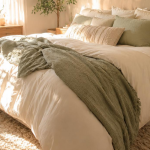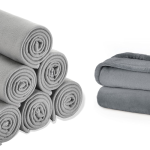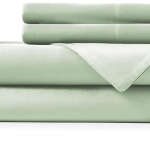
Bedding is the one product category a retail customer judges you on every single night. A pilled sheet set, a comforter that goes flat after one season, or a quilt that loses its shape after ten washes doesn’t just come back as a return — it costs you the customer who bought it. This guide covers the specifications that actually separate durable, sellable bedding from bedding that generates complaints, so wholesale retailers building a premium bedding Canada range know exactly what to look for and what to ask a manufacturer before placing an order.
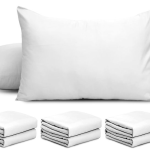
What Should Retailers Look for in Wholesale Sheet Sets?
Sheet set quality comes down to two things: the yarn and weave construction, and the pocket depth relative to modern Canadian mattresses. Both are specifications you can verify before you buy — not marketing claims you have to take on faith.
Fabric and Yarn: Matching Weave to Retail Positioning
Sheet sets are the bedding item customers touch the most and wash the most often, which is exactly why yarn quality determines whether the product still performs a year in. Different weaves suit different retail price points and customer expectations, so stocking more than one gives you flexibility across your range.
| Fabric/Weave | Thread Count | Best For |
|---|---|---|
| Percale | 300–400 | Crisp, breathable, everyday retail — softens with washing |
| Sateen | 400–500 | Smooth, lustrous finish that photographs well online |
| Egyptian cotton | 500–600 | Flagship tier with the strongest margin and quality story |
| Bamboo blend | Varies | Temperature-regulating, hypoallergenic — fits eco-conscious buyers |
A useful rule for wholesale buying: thread counts published above 600 in mass-market sheet sets are almost always achieved through multi-ply yarn twisting rather than genuine fiber density, and multi-ply construction typically feels less soft and breathes worse than a well-made single-ply sheet in the 300–600 range.
Pocket Depth: The Spec That Causes the Most Returns
Pocket depth matters because modern mattresses are deeper than the sheets many retailers still stock, and a mismatch is one of the most common — and most avoidable — reasons a customer returns a sheet set. Canadian mattresses regularly reach 15 to 18 inches once you account for pillow-top and memory foam layers, so a standard 12-inch pocket simply won’t stay on.
What to specify:
- Queen fitted sheet: 60″ x 80″, with a deep-pocket option up to 18″
- King fitted sheet: 76″ x 80″, same deep-pocket range as queen
- Full-perimeter elastic, not just corner elastic, so the sheet stays anchored overnight
- Generous flat sheet dimensions that allow tucking on all sides without pulling tight
What Makes One Comforter Perform Better Than Another?
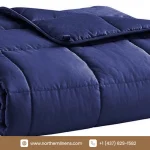
Comforter performance comes down to fill type, fill weight or fill power, and shell construction — and the gap between a well-made comforter and a low-cost one shows up specifically after repeated washing, not on day one. This is the category where cutting corners is easiest to hide at the point of sale and hardest to hide six months later.
Choosing a Fill Type for Your Customer Base
Different fill types serve different segments of the Canadian retail market, and stocking a mix lets you serve allergy-sensitive households, natural-fiber shoppers, and premium buyers from the same range.
- Down alternative (polyester): the highest-volume fill in Canadian retail, machine-washable, allergy-friendly, typically specified between 200–400 GSM for light to heavyweight warmth
- White goose down: the flagship fill, priced at the top of the range, specified by fill power between 600–800 for genuine warmth-to-weight performance
- Bamboo fill: temperature-regulating and hypoallergenic, growing in demand alongside bamboo sheet sets
- Cotton fill: breathable and natural, suited to warm sleepers and customers who prefer natural fiber throughout the bed
Why Shell Construction Determines Whether a Comforter Holds Its Shape
A comforter’s shell fabric and stitch construction control whether the fill stays evenly distributed or migrates toward the edges after repeated use. This is a durability issue, not a cosmetic one — a comforter with fill bunched in the corners has also lost warmth performance across the rest of the surface.
- Baffle box construction: internal fabric walls create individual chambers that stop fill migration and keep warmth distribution even — this is the construction to specify for anything sold at a mid-to-premium price point
- Box stitch without baffle: a lower-cost method where layers are stitched straight through; workable for lighter fills, but prone to shifting at higher GSM
- Shell GSM: shell fabric under 100 GSM allows fill to work through the fabric over time — a common failure point in low-cost supply
- Corner loops and button ties: let the comforter anchor inside a duvet cover without bunching; a small detail that’s also the single most common functional complaint when it’s missing
Where Do Quilts Fit in a Wholesale Bedding Range?
Quilts fill the gap between a light sheet set and a heavy comforter, working as a standalone layer in warmer months and a mid-layer underneath a comforter in winter. For Canadian retailers dealing with genuine seasonal swings, that flexibility gives quilts strong sell-through across a full twelve-month cycle rather than just one season.
Quilting Styles and What They Signal to Customers
- Channel quilting: parallel stitch lines, clean and linear — suits modern, minimalist interiors
- Diamond quilting: diagonal stitching, a geometric look that works across both contemporary and traditional bedrooms
- Patchwork quilting: coordinated fabric panels assembled before quilting — positions the product as decorative as well as functional, with strong gifting appeal
Consistent, controlled stitch density across any of these styles is what prevents fill shift and keeps the quilted pattern visible after repeated washing — inconsistent stitching is often the first sign of a lower-quality production run.
Fill Weight for Genuine Year-Round Use
| Fill Weight (GSM) | Best For |
|---|---|
| 150–200 GSM | Warmer months, temperature-controlled bedrooms, standalone use |
| 250–300 GSM | The optimal range for most Canadian climates year-round |
Down alternative fill is the most practical choice for quilts specifically, since a top layer gets laundered more often than a comforter and needs to be machine-washable at home without special care.
Comparison Table: Sheet Sets vs. Comforters vs. Quilts
| Category | Primary Role | Wash Frequency | Key Spec to Verify |
|---|---|---|---|
| Sheet sets | Direct skin contact, base layer | Weekly | Yarn quality, pocket depth |
| Comforters | Primary warmth layer | Seasonal / with a duvet cover | Fill power/weight, baffle construction |
| Quilts | Light standalone or mid-layer | More frequent than a comforter | Fill weight, stitch density |
Frequently Asked Questions
What thread count should I specify for premium wholesale sheet sets?
Specify single-ply, long-staple cotton between 300 and 600 thread count. Numbers above 600 in mass-market sheet sets are almost always the result of multi-ply yarn twisting rather than genuine fabric density, and that construction typically feels less soft than a well-made sheet lower in the range. Asking your supplier for the yarn specification alongside the thread count lets you verify the claim before committing to a bulk order.
What fill power should I look for in a premium comforter?
For down comforters, fill power of 600 to 800 supports genuine luxury positioning — higher fill power means more warmth per unit of fill weight, which produces a lighter comforter without sacrificing warmth. For down alternative comforters, fill weight in GSM is the relevant number instead, with 300 to 400 GSM covering the medium-to-heavyweight range most Canadian customers expect.
Why do quilts at 250–300 GSM work for year-round Canadian bedrooms?
That fill weight range delivers enough warmth for winter without causing overheating once the bedroom is at standard indoor temperature, and it remains comfortable as a standalone layer in spring and fall. Combined with machine-washable down alternative fill, it’s a practical spec for a product that gets laundered more often than a heavier comforter.
Why does pocket depth matter so much for the Canadian market specifically?
Canadian consumers increasingly sleep on pillow-top, euro-top, and memory foam mattresses that reach 15 to 18 inches in depth once all the layers are accounted for. A standard 12-inch pocket won’t stay on a mattress that deep, which makes pocket depth one of the most common — and most preventable — sources of post-purchase complaints in the sheet set category.
What is baffle box construction, and is it worth paying more for?
Baffle box construction uses internal fabric walls sewn between the top and bottom shell to create separate chambers that hold fill in place. It prevents the fill migration toward edges and corners that happens with simpler box-stitch construction over time, so for anything priced at mid-tier or above, it’s generally worth the extra cost to protect the product’s performance through a full season.
How can I verify bedding quality will stay consistent across repeat wholesale orders?
Ask for documented production specifications per SKU, confirm the fabric inputs are OEKO-TEX certified and don’t vary between production runs, and find out whether quality is inspected during production or only on finished goods. A manufacturer that controls fabric sourcing, yarn inputs, and fill specification directly — rather than reselling from multiple third-party mills — is generally in a better position to guarantee that order ten matches order one.
Is private label bedding a realistic option for a mid-size retailer?
Yes, provided the manufacturer offers a private label program that scales down to mid-size volumes rather than requiring enterprise-level minimums. Look for custom woven labels, branded packaging, and certified documentation you can use in your own product claims, managed through a single point of contact from specification through production sign-off.