Author name: fiaz_ezaccounts

Wholesale Cooling Blankets for Hotels
Bedding

Wholesale Cooling Blankets for Hotels: Bedding Solutions for Warmer Climates

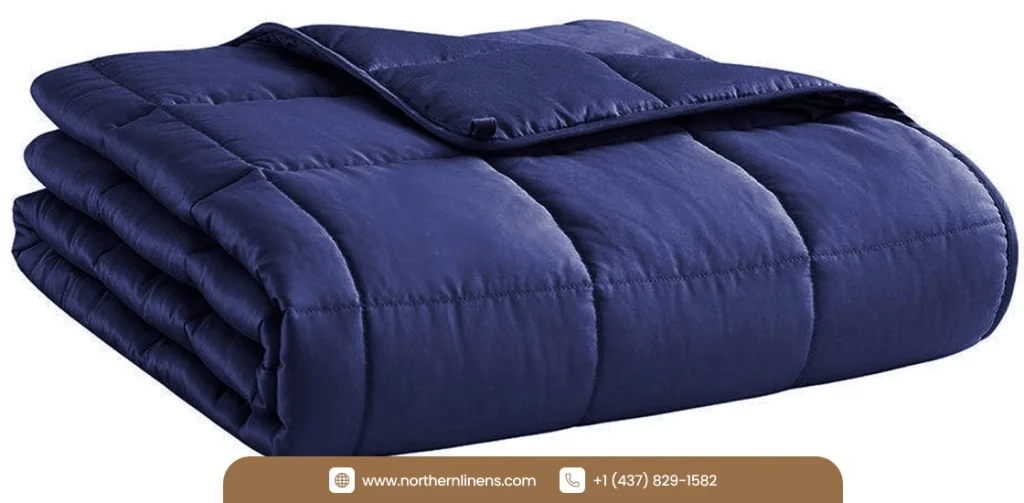
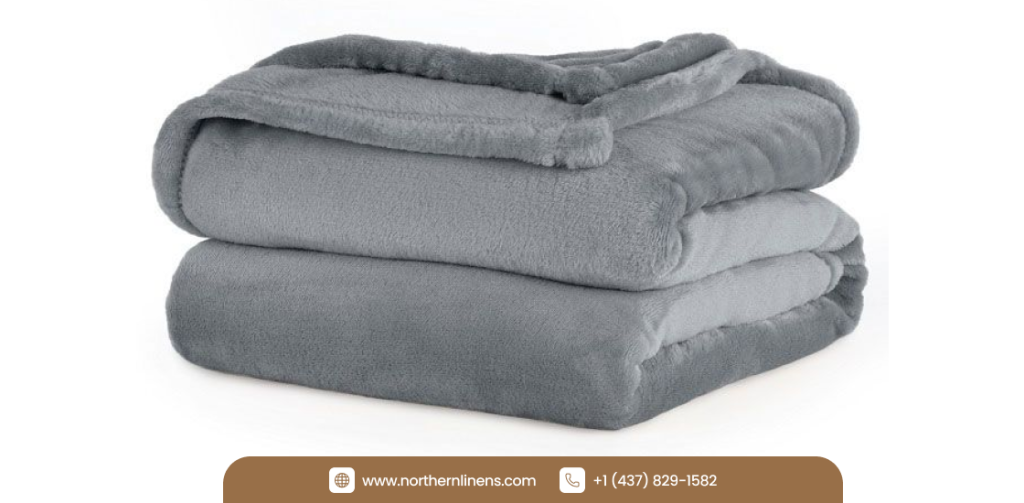
Warmer weather can change what guests expect from their bedding. Hotels, inns, vacation rentals, and other accommodation providers may need lighter blanket options that suit room temperatures without compromising comfort or appearance. Choosing wholesale cooling blankets requires more than selecting a product labelled “cooling.” Buyers should compare fabric, weight, construction, care requirements, and supplier reliability before placing a bulk order. For hospitality businesses preparing for seasonal changes, a practical selection process can help standardise guest rooms, simplify purchasing, and make better use of the bedding budget. 1. Why Hotels Need Lightweight Blanket Options for Warmer Weather Guest comfort depends on several factors, including room temperature, ventilation, air conditioning, personal preferences, and the type of bedding provided. A thick blanket that works well during colder months may feel unnecessarily warm in a room with higher temperatures. Wholesale cooling blankets can be worth considering when reviewing seasonal bedding for hotels and inns. Lightweight options may provide suitable coverage without the added weight of heavier bedding, depending on the material and construction. Before choosing a product, consider: The property’s typical indoor temperatures during warmer months. Whether rooms have reliable air conditioning or adjustable temperature controls. Guest expectations for blanket weight and softness. The cleaning process used between guest stays. Whether the property needs one standard option or different seasonal choices. The goal is to choose bedding that suits the room and its operating requirements rather than assuming every guest will prefer the same blanket. 2. Compare Fabric, Weight, and Construction Before Buying Wholesale Cooling Blankets Not every blanket marketed as a cooling option offers the same feel or performance. Material, fabric structure, weight, and finishing all influence how a blanket feels during use. When comparing wholesale cooling blankets, review the full product specification instead of relying on marketing descriptions alone. Feature What buyers should check Why it matters Fabric composition Fibre content and surface texture Influences comfort and care requirements Blanket weight Product weight and intended use Helps determine whether the blanket suits warmer rooms Construction Weave, stitching, and edge finishing Helps assess workmanship and appearance Dimensions Finished measurements and bed compatibility Supports consistent room presentation Care instructions Washing and drying requirements Helps determine suitability for the property’s laundry process Cotton, polyester, microfiber, and blended fabrics have different characteristics. However, no fibre automatically guarantees a cooling effect. Performance depends on the finished product, including its construction and weight. Note: Ask for documented specifications before making claims about cooling technology, moisture management, or temperature regulation. These features should not be assumed simply because a product is lightweight. 3. Check Laundry Requirements and Durability for Commercial Use Hospitality bedding may be cleaned frequently, so maintenance requirements should be part of the purchasing decision. A blanket that feels comfortable initially may not be suitable if its care instructions conflict with the property’s laundry facilities. Before ordering wholesale cooling blankets, review the manufacturer’s care guidance and ask the supplier about the product’s construction and quality checks. Pay particular attention to: Recommended washing and drying methods. Stitching, seams, and edge finishing. Potential changes in dimensions or appearance after washing. Colour consistency and surface condition. Availability of the same specifications for future orders. Where samples are available, test one using the intended care process. Inspect it afterward for changes in shape, loose stitching, surface wear, and overall appearance. This practical step helps buyers evaluate the actual product rather than relying entirely on product photographs or broad durability claims. 4. Plan Seasonal Blanket Quantities Before Requesting Bulk Pricing Ordering the right quantity requires more than counting guest rooms. Hotels must also consider spare stock, laundry turnaround, replacement needs, and storage capacity. A simple starting formula is: Initial blanket requirement = blankets per room × number of rooms + planned spare stock For example, a 50-room hotel requiring one blanket per room would need 50 blankets for its initial room allocation, before accounting for spares or additional requirements. Before requesting wholesale cooling blankets, prepare the following details: Number of rooms and beds. Required blanket dimensions. Preferred material, weight, and colour. Initial order quantity and planned spare stock. Delivery location and required timeframe. Providing this information helps suppliers understand the order and give more relevant pricing and availability details. It also makes it easier to compare quotations on a like-for-like basis. 5. Evaluate Wholesale Cooling Blanket Suppliers Before Ordering A competitive price matters, but it should not be the only consideration when sourcing wholesale cooling blankets. Buyers should also evaluate product suitability, sample availability, order requirements, and the supplier’s ability to maintain consistent specifications. Use this checklist when comparing suppliers: Are complete product specifications available? Can the buyer request a sample before committing to a larger order? What minimum order quantities apply? Is bulk pricing available for the required quantity? What are the current stock levels and estimated lead times? Can the supplier confirm specifications for repeat orders? Are delivery arrangements suitable for the property’s location? For businesses purchasing bedding seasonally, documenting the approved product specifications can help simplify future replenishment. It also gives procurement teams a clear reference when comparing replacement orders. 6. Test Blanket Samples Before Your Next Seasonal Purchase A sample gives your team an opportunity to assess a blanket before approving a larger quantity. When evaluating wholesale cooling blankets, check the product’s feel, dimensions, weight, stitching, and suitability for the intended guest rooms. Follow the care instructions during any washing test, then inspect the blanket for changes in shape, texture, colour, and construction. Compare the sample with your purchasing requirements and record the approved specifications. This process can help identify unsuitable products early and reduce the risk of committing to bedding that does not meet your property’s needs. Frequently Asked Questions About Wholesale Cooling Blankets What should hotels look for in wholesale cooling blankets? Hotels should compare fabric composition, weight, construction, dimensions, care instructions, sample quality, pricing, and availability. The right choice depends on room conditions, guest expectations, and the property’s laundry process. Which materials are suitable for cooling blankets? Material suitability depends on the finished product
Wholesale Quilts for Hotels
Bedding

How to Choose Wholesale Quilts for Hotels, Resorts & Student Housing

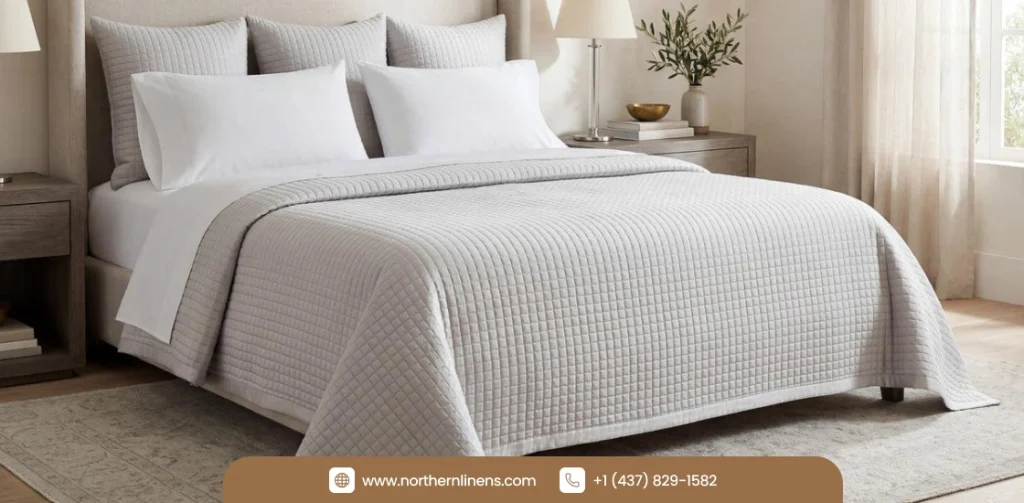
Choosing the right bedding for a hotel, resort, or student residence involves more than finding a comfortable design at a competitive price. Buyers must consider durability, maintenance, bed sizes, guest expectations, and the cost of replacing products over time. Purchasing wholesale quilts can help properties standardise their bedding and manage larger orders more efficiently, provided the products meet their operational needs. Whether you manage a hotel in Toronto, a resort in Vancouver, or student accommodation in Montreal, understanding what to look for before ordering can help you make a more informed purchasing decision. 1. Identify Your Property’s Bedding Requirements Before Buying Wholesale Quilts Different properties have different bedding requirements. A hotel may prioritise guest comfort and a consistent room appearance, while student housing may place greater emphasis on practical maintenance and predictable replacement costs. Before comparing wholesale quilts, consider the following factors: Property type: Hotels, resorts, student residences, and vacation rentals may require different levels of warmth, presentation, and maintenance. Climate and room temperature: Consider the local climate, seasonal changes, and the property’s heating and cooling arrangements. Bed dimensions: Confirm mattress sizes and the finished quilt dimensions needed for suitable coverage. Laundry facilities: Check whether the quilt’s care instructions match your property’s laundry process. Purchasing budget: Compare initial prices alongside expected care and replacement requirements. These details create a clear purchasing specification, making it easier to compare products and request accurate bulk pricing from suppliers. 2. Compare Quilt Materials, Fill, and Construction Quality Material and construction influence how a quilt feels, looks, and performs during regular use. When comparing wholesale quilts, review the complete product specification rather than choosing based on appearance alone. Feature What to evaluate Why it matters Shell fabric Fibre content, texture, and care instructions Helps determine comfort and maintenance requirements Fill material Type of fill, distribution, and weight Influences warmth, loft, and overall feel Quilting pattern Stitch consistency and fill stability Helps assess construction quality Seams and binding Finishing, loose threads, and seam strength Supports a consistent appearance and helps identify potential weaknesses Finished dimensions Length, width, and bed compatibility Helps provide appropriate mattress coverage Cotton, polyester, microfiber, and blended fabrics can offer different combinations of texture, care requirements, and cost. The right choice depends on the property’s priorities and the specifications of the individual product. Note: Do not assume that a particular fibre is automatically the most durable or easiest to maintain. Review the manufacturer’s care instructions and test the actual quilt before placing a large order. 3. Check Durability and Laundry Requirements for Commercial Use Quilts used in accommodation settings may need regular cleaning, so maintenance should be part of the buying decision from the beginning. When evaluating wholesale quilts, check whether the care instructions align with the property’s washing and drying procedures. A product that requires a specialist care process may not suit a facility with a standardised laundry operation. Ask the supplier about: Recommended washing and drying methods. Construction details that may affect long-term performance. Whether the product’s dimensions or appearance may change after washing. Available specifications and quality-control procedures. Whether the same product can be reordered using the original specifications. Where samples are available, wash one according to its care label and inspect the stitching, shape, surface, and overall appearance afterward. This provides more useful evidence than relying on product photography or general durability claims. 4. Calculate Bulk Quilt Quantities Before Requesting a Quote Ordering too few quilts can create operational problems when products are being cleaned, replaced, or added to new rooms. Ordering too many can tie up storage space and purchasing budgets. Start with a simple calculation: Initial quilt requirement = quilts needed per room × number of rooms + planned spare stock For example, a property with 60 rooms that needs one quilt per room would start with a requirement of 60 quilts, before adding any spare stock. The final quantity should reflect laundry turnaround, replacement needs, storage capacity, and expected occupancy. Before requesting wholesale quilt pricing, prepare the following information: Number of rooms or beds. Required bed sizes and quilt dimensions. Initial order quantity and any planned spare stock. Preferred material, fill, colour, and construction. Delivery location and required delivery timeframe. Providing these details helps suppliers understand the order and respond with more relevant pricing and availability information. 5. Evaluate Wholesale Quilt Suppliers Before Placing an Order A competitive unit price is important, but it should not be the only factor when comparing wholesale quilts suppliers. Product suitability, clear specifications, availability, and repeat-order consistency also matter. Use this checklist when evaluating a potential supplier: Can the supplier provide complete product specifications? Are samples available for evaluation before a larger purchase? What minimum order quantities apply? Is volume pricing available for the planned quantity? What are the current stock levels and estimated lead times? Can the supplier confirm product specifications for future reorders? Are delivery arrangements suitable for the property’s location? For hotels, resorts, and student residences that purchase bedding repeatedly, keeping an approved product specification can make future purchasing decisions easier. It also helps procurement teams compare replacement orders against the original requirements. 6. Test Quilt Samples Before Approving a Large Order A sample gives your team an opportunity to assess a product before committing to a larger purchase. When reviewing wholesale quilts, check the feel, finished dimensions, stitching, colour, and suitability for the intended room setup. If the property uses a regular laundry process, follow the quilt’s care instructions and inspect the sample afterward. Record any observations and confirm the approved specifications with the supplier before ordering. This process can help identify mismatches early and reduce the risk of receiving a large quantity of bedding that does not meet the property’s needs. Frequently Asked Questions About Wholesale Quilts What should hotels look for when buying wholesale quilts? Hotels should compare quilt dimensions, fabric, fill, stitching, care instructions, sample quality, bulk pricing, and product availability. The best option is one that suits the property’s comfort expectations, maintenance process, and budget. Which quilt material is best for

Private Label Throw Blankets for Hotels & Hospitality Brands
Bedding

Private Label Throw Blankets for Hotels & Hospitality Brands: Bulk Sourcing Guide

Private label throw blankets carry your hotel’s name instead of ours. We make them to your spec, and your guests only ever see your brand. We’ll walk through fabric, branding, minimum orders and the Canadian labelling rules you need to know before you place a bulk order. What private label throw blankets are With private label, you pick the fabric, colour, size, trim and packaging. We source the material, run production, check every batch and sew your label in before anything ships. Compare that with a wholesale catalogue throw. The hotel down the street can order the exact same one next week. Why boutique and luxury hotels go private label Guests in a boutique hotel notice small things, like whether the throw on the bed matches the cushions on the chair. When it’s in your house colour with your name on the tag, the room feels finished. There’s a revenue angle too. Plenty of hotels sell the same throw at the front desk or on their website, and guests who loved the room buy one to take home. Private label vs custom vs stock Option What you control Pick it if Stock wholesale Quantity only You need throws fast and branding doesn’t matter Custom Size, fabric and colour Your rooms need a size or fabric nobody stocks Private label Spec, branding and packaging You want a throw that only your guests will see Choosing materials for private label throw blankets A throw that feels lovely at the sample stage can come back from its tenth hot wash thinner, fuzzier and a shade lighter. So judge fabric by how it handles your laundry, whether that’s in-house or an outside service. Common fabrics compared Fabric Feel and look In a hotel or rental Cotton (knit, waffle or woven) Breathable and natural Washes well; ask for pre-shrunk fabric Acrylic Soft, wool-like, holds bright colours Low cost and colourfast, but pills with time Wool or wool blend Warm and textured Looks expensive; needs a gentler cycle Polyester fleece or sherpa Plush Tough and dries fast, but runs warm We recommend cotton or a wool blend for boutique and luxury rooms. Rental operators washing after every checkout get better value from acrylic or fleece. Size, weight and edges Most throws are about 50 by 60 inches. That’s enough to fold across the foot of a queen bed or drape over an armchair, but a king bed or a deep lounge sofa looks better with something bigger. Ask for the fabric weight on every quote. Heavier feels richer in the hand, though your laundry bill goes up with every extra minute in the dryer. Skip loose fringe. It knots in commercial machines, and housekeeping ends up trimming it. Safety and certification Our fabrics are OEKO-TEX certified, which means they’re tested for harmful substances. We’ll send the certificates for your compliance file. Got your own fire safety requirements? Put them in your spec before we sample. Our blankets and throws range is a good place to start building that spec. Branding options for private label throw blankets Luxury properties tend to brand quietly, with a small tag that guests find when they pick the throw up. A family resort or rental brand can afford to be louder. Method What guests see Good fit for Woven label A small sewn-in tag with your name Upscale rooms where less is more Embroidery Your logo stitched into one corner Resorts and brands that want recognition Custom colour Fabric dyed to match your palette Rooms built around a specific colour scheme Retail packaging A branded band, bag or box with a barcode Gift shops and online stores Keeping reorders consistent Getting the first shipment right is easy for most suppliers. Trouble tends to show up on the third or fourth order, when the grey is slightly off and housekeeping has to sort throws by shade. We avoid that by keeping your approved spec on file: colour, size, trim and barcode. When you reorder in two years, we make it to the same record. How bulk sourcing works for private label throw blankets If you’re timing an order around a soft opening or a room refresh, these are the steps to plan for. The sourcing process Send us your brief. Fabric, size, colours, branding, packaging and rough quantities are enough to start. Get a quote. We come back with bulk pricing, your minimum order and a production timeline. Test the samples. Put them through your own laundry a few times. A throw can feel great on day one and look tired after 15 washes. Sign off the spec. We lock in colour, size and label details and keep them on file. Production. Your run is made to order, and we confirm a firm delivery date before accepting it. Delivery. We ship from whichever warehouse is closest to you. Regular reorders can go on a fixed schedule. Minimum order quantities Private label minimums sit higher than stocked items because we’re setting up a run just for you. They’re still flexible enough that a single boutique hotel can trial a range before rolling it out to the whole group. Your exact number depends on fabric and branding. Request a quote with your quantities and we’ll tell you. Canadian labelling rules Selling throws in a lobby shop or online? Then the Textile Labelling Act applies, and each label must show: Fibre content as percentages, in English and French Your business name and postal address, or a CA identification number A CA number saves you printing your full address on every tag. Canadian companies that make, import or sell textiles can apply for one through the Competition Bureau. Private label throw blankets by business type A throw that’s perfect for a 20-room boutique hotel would be the wrong buy for a rental company turning over units every weekend. Boutique and luxury hotels Start with feel and colour. Cotton or a wool blend in your house colour, with a small woven label, suits most boutique rooms.

Wholesale Throw Pillows for Hotels: Commercial Styles, Sizes & Bulk Sourcing
Bedding

Wholesale Throw Pillows for Hotels: Commercial Styles, Sizes & Bulk Sourcing

Wholesale throw pillows for hotels need to look good and work hard. In a Vancouver hotel room, they set the look of the bed. They also take a beating every day. Guests toss them on the floor. Housekeeping moves them every stay. A pillow made for a home sofa won’t last. This guide shows you which throw pillows work for hotels. You’ll see commercial styles, standard sizes and how bulk ordering works. Ready to compare options? Request a quote from Northern Linens. Why hotels buy wholesale throw pillows Retail pillows are made for light home use. Hotel pillows face daily handling and frequent washing. You need a product built for that. Commercial vs retail throw pillows Feature Retail pillow Commercial pillow Cover Often sewn shut Zips off for washing Fabric Picked for looks Picked to survive many washes Insert Goes flat fast Springs back into shape Colour Changes batch to batch Matches order to order Supply Whatever is in stock Reordered to the same spec Clean covers build guest trust Guests know you don’t change throw pillows like sheets. Some guests won’t touch them for that reason. Use covers that come off. Wash them on a set schedule. Keep the insert in a cover at all times. Every room should match You may buy 200 pillows at once. Pillow 200 should match pillow one. Next year’s order should match too. A manufacturer can keep your spec on file. A store can’t. Ask us to save your spec with your first order. Commercial throw pillow styles for hotels Pick the cover first. Then pick the fill. Your laundry setup should guide both. Cover fabrics Polyester blends: keep their colour after many washes. They suit busy hotels and rentals. Cotton canvas and twill: a natural look with a strong weave. Linen blends: soft texture for boutique and coastal rooms. Velvet: rich colour for luxury suites. Use it where pillows get gentle use. Ask for OEKO-TEX certified fabric. The OEKO-TEX STANDARD 100 label means the fabric was tested for harmful substances. Your guests rest their faces on these pillows. Inserts and fill Polyester fibre fill: low cost and hypoallergenic. Down alternative: soft and full, with no feathers. Feather and down: the most luxury feel. It needs more care. Styles by property type Property type What works Boutique and luxury hotels One or two bold pillows in velvet or texture, in your brand colour Full-service hotels and inns Neutral, durable blends that match the room Vacation rentals and Airbnb Washable covers in simple colours that look good in listing photos Retailers and bedding stores Seasonal colours and private label lines Choose your pillows with your bedding. Match them to your duvet covers so the bed looks planned. Send us your colour scheme with your quote request. Standard hotel throw pillow sizes Most hotels use a few standard sizes. Standard sizes make your reorders easy. Common sizes and where they go Size Shape Best for 18″ x 18″ Square Chairs, sofas and smaller beds 20″ x 20″ Square Queen and king beds 22″ x 22″ or 24″ x 24″ Square Big statement pillows at the back of a king bed 12″ x 20″ Lumbar One accent pillow at the front of the bed 14″ x 36″ Long lumbar One pillow across a king bed Pick an insert one to two inches bigger than the cover. Your pillow looks full. A same-size insert looks flat after a few washes. How many throw pillows per room Bed or seating Pillows Twin or double 1 lumbar or square Queen 1 to 2 King 1 long lumbar, or 2 to 3 squares Sofa or accent chair 1 to 2 Fewer pillows save housekeeping time. Your guests have less to move. Some hotels use one lumbar pillow per bed. Order spare covers Buy extra covers with your pillows. One set stays on the bed. The other goes to the laundry. Your rooms never sit undressed. Ask for spare covers on your quote. Bulk sourcing wholesale throw pillows in Canada Unit price is only part of your cost. A reorder that doesn’t match costs you more. So does a late shipment or a faded cover. What to ask your supplier Ask this Why it matters What’s the minimum order? Stocked lines often sell by the carton. Custom runs need more. Can we get samples? A washed sample tells you more than a photo. What’s the lead time? Stocked items ship in days. Custom work needs a set date. Do you keep our spec on file? Your reorders match without new samples. Can you do custom sizes and colours? Your brand colour may need a custom run. Where do you ship from? A nearby warehouse cuts freight cost and wait time. Wash-test your samples Don’t judge a sample by touch. Wash it the way your laundry does. Repeat that several times. Then check the colour, the shrinkage and the zipper. Custom and private label pillows Boutique hotels often want their exact brand colour. Retailers and bedding stores often want their own label. Both need a custom run. You set the colours, sizes and packaging. Our guide to private label duvet covers shows how a custom run works. Delivery across Canada We hold stock in Canadian warehouses. Stocked items usually reach you within a few business days. That covers hotels in Vancouver, Calgary, Toronto and Mississauga. Planning a refit? We can ship floor by floor to match your schedule. Caring for hotel throw pillows Good care keeps your pillows looking new. It also tells you when to reorder. Washing covers Wash covers on a set schedule. Wash them sooner if you see a mark. Follow the care label. Velvet and linen need a gentle cycle. Close zippers before you wash. Open zippers snag other linen. They also break sooner. Caring for inserts Hotels rarely machine wash inserts. Spot clean them. Air them out. Keep them inside a cover at all times. When to replace Replace a pillow or cover when you see:

Waterproof vs Quilted Mattress Protectors:
Bedding

Waterproof vs Quilted Mattress Protectors: Which Is Best for Commercial Properties?

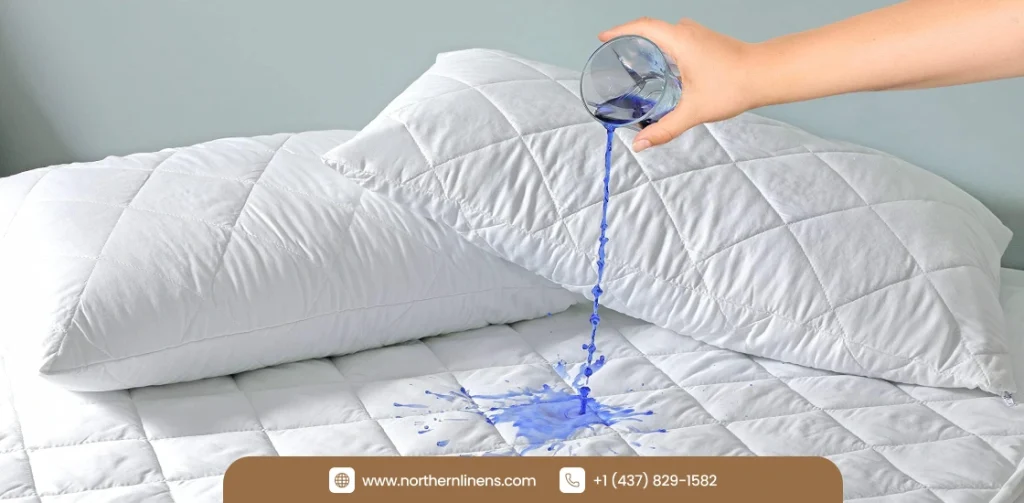
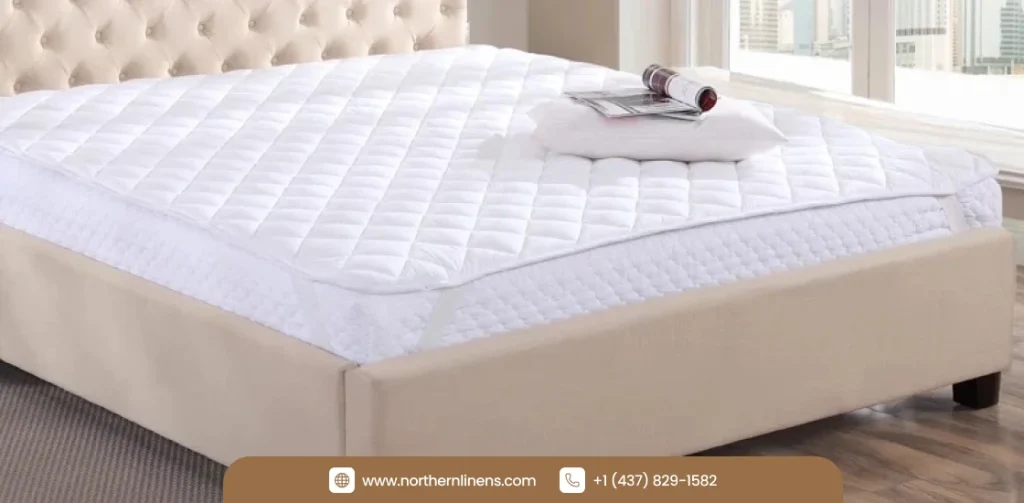
A quilted mattress protector adds a layer of padding and keeps dust and surface wear off the mattress. A waterproof protector stops liquid reaching it. One spill tells you which you needed, and if you run a Vancouver hotel at 300 room nights a week, the spill arrives in the first month. The choice between the two is not about comfort against protection, because a modern waterproof protector carries a quilted or terry face. The choice is about whether the mattress underneath is a capital item you expect to keep for seven years. In this guide, we compare the two on what they protect against, how they feel and launder, and how long they last and what they cost over that life. What Each Protector Does and Does Not Do The two products share a name and a position on the bed, and almost nothing else. The quilted protector is a pad. The waterproof protector is a barrier. The Quilted Protector: A Pad, Not a Barrier A quilted protector is a layer of polyester or cotton fill quilted between two fabric faces, fitted over the mattress with an elastic skirt. The pad adds a thin layer of softness, keeps dust, skin and surface soiling off the mattress, and launders with your sheets. What it does not do is stop liquid. A spill, sweat or incontinence passes through the quilting into the mattress, and the quilted protector is then a wet pad on a wet mattress. Adds light padding and a soft surface under the sheet Keeps dust, skin and surface soiling off the mattress Launders on the linen cycle at high temperature Does not stop liquid, and holds it against the mattress once wet The Waterproof Protector: A Barrier With a Face A waterproof protector is a polyurethane or thermoplastic membrane bonded to a fabric face, fitted or encased. The membrane stops liquid completely. The face, which is terry, jersey or a quilted layer on a hospitality product, gives the softness and the quiet surface. A breathable membrane passes vapour so the bed does not sweat, which is the difference between a commercial waterproof protector and the plastic sheet it is sometimes confused with. Stops liquid completely, with the membrane rated to a stated hydrostatic head Breathable, so the bed does not feel hot or clammy Available with a terry, jersey or quilted face, so the feel matches a quilted pad Launders at 60 to 71 degrees, with the membrane rated for a stated number of cycles The Comparison on Six Points   Quilted protector Waterproof protector Liquid protection None Complete, to the rated hydrostatic head Dust and allergen barrier Partial Complete, when encased Feel under the sheet Soft, padded Soft with a terry or quilted face, firmer with a smooth face Breathability High High with a breathable membrane, low with a film Laundering Linen cycle, high heat 60 to 71 degrees, medium dryer heat to protect the membrane Lifespan 2 to 3 years, loses loft 12 to 18 months under monthly laundering, inspected for delamination Feel, Laundering and Cost Over the Protector’s Life The three objections you will hear to waterproof protectors are that they feel hot, launder badly and cost more. Each was true of an older product, and each is tested rather than assumed on a current one. Feel: The Membrane Decides It A waterproof protector with a non-breathable film feels hot and crinkles, and that product belongs in a domestic cupboard. A commercial protector with a breathable polyurethane membrane under a terry or quilted face feels like a quilted pad. The face is the same and the membrane passes vapour. Your guest or your resident does not feel the barrier. Your housekeeping team sees it, once, when a spill stays on top of the sheet. Laundering: The Dryer Decides It A quilted protector goes through the linen cycle at full heat and comes back. A waterproof protector washes at the same temperatures and is dried on medium, because high dryer heat is what delaminates the membrane. If your laundry cannot separate protectors from sheets for the dryer, it shortens the waterproof cycle, and you want to know that before the order. Where the laundry can hold the dryer setting, the membrane reaches its rated cycles. Cost: The Mattress Decides It A quilted protector costs you less per unit and lasts longer per unit. A waterproof protector costs more and is replaced sooner. Neither figure is the one that matters to your budget. Illustration, one room over 5 years Quilted Waterproof Protector cost over 5 years Two units at $18, $36 Four units at $28, $112 Mattress spills reaching the core in 5 years at hotel occupancy Several None Mattress replaced early after a spill, one in five rooms One $900 mattress per five rooms, $180 per room Nil Total per room About $216 About $112 The waterproof protector costs three times as much in protectors and half as much in total, because the mattress it saves is the largest number in the room. The arithmetic holds at any mattress price above a few hundred dollars and at any occupancy above a few nights a week. Which Protector Belongs on the Bed in Each Commercial Property The answer is the same in every setting where you have a mattress worth keeping, and the detail is what changes. Hotels and Inns A fitted waterproof protector with a terry or quilted face goes on every bed you run, changed with the linen and replaced on a 12-to-18-month cycle. The quilted pad is not needed on a bed with a topper, because the topper provides the softness and the protector provides the barrier over it. A hotel in Vancouver or Toronto that runs quilted pads is protecting its mattresses from dust and nothing else. Healthcare and Hospitals A full waterproof encasement with a wipeable surface stays on the mattress, and a fitted waterproof protector over it is changed with the linen. A quilted pad has no place on a

Hotel Mattress Toppers
Bedding

Hotel Mattress Toppers: Replacement Cycles, Guest Comfort & Bulk Buying Costs

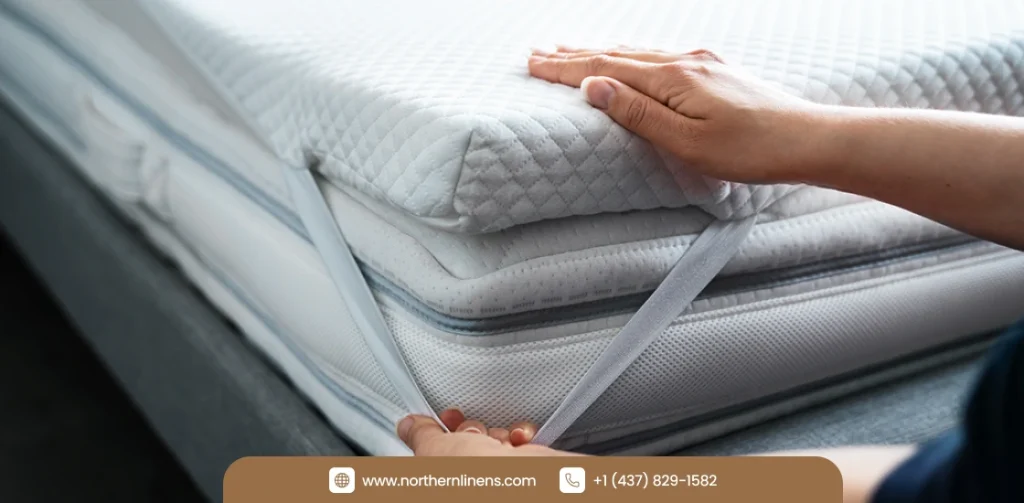
A hotel mattress is replaced every three to seven years depending on the property’s tier, and the topper on it is replaced two or three times in that span. The topper is the cheaper of the two by a wide margin, and it is the layer the guest feels first. For a Mississauga hotel budgeting a refit, that makes the topper the line where comfort is bought and the mattress’s life is extended. The cycle has to be planned rather than left to housekeeping to notice. In this guide, we cover what a hotel mattress topper does and how to specify it, and the replacement cycle and how to cost it per occupied night. We then cover how bulk buying changes the price for a hotel, a care home, a short-term rental portfolio or a student residence. What a Hotel Mattress Topper Does for the Mattress and the Guest A topper is a two-to-four-inch layer of comfort material in its own cover, placed on the mattress under the protector and the sheet. The topper does two jobs at once, and a property that buys it for only one of them underspecifies it. Comfort the Guest Notices on the First Night The topper is the surface the guest’s weight meets. A hotel mattress is built firm to survive nightly use, and the topper is where the plush feel comes from. Memory foam gives the slow, contouring feel associated with upscale rooms. Fibre-fill, usually a down alternative in a baffled cover, gives a lighter, cooler, hotel-classic feel and launders more easily. Latex gives a responsive, cooler surface at a higher price. Your choice decides how the bed reads in a review, and it is the one bedding decision a guest can feel through the sheet. Protection the Mattress Needs to Reach Year Seven The mattress underneath is a capital item, and the topper absorbs the compression, the body heat and the moisture that would otherwise reach it. A mattress under a topper is rotated head-to-foot every three to six months like any other, but it wears from a smaller load and a drier surface. The topper takes the wear, and the topper is what you replace. Comfort: the surface feel, set by the material and the depth Protection: compression and moisture absorbed before they reach the mattress Consistency: every room feels the same when every topper is the same specification Economy: a topper replaced at $90 keeps a mattress replaced at $900 in service longer How to Specify a Topper for Commercial Use A domestic topper fails in a hotel within a year, because it was built for one sleeper and a wash every few months. A commercial topper is specified on four points. Specification What to ask for Why it matters in a hotel Material and depth Memory foam at 2 to 3 inches, fibre-fill at 3 to 4 inches, or latex at 2 inches Sets the feel and the recovery after each guest Density or fill weight Foam density and fill weight stated per topper, not per range A light fill flattens in months under nightly use Cover Removable, zippered, launderable at commercial temperatures The cover is washed on the linen cycle, the core is not Fit and anchoring Sized to the mattress, with straps or a fitted skirt A topper that migrates is a topper housekeeping reseats every day Our mattress toppers and protectors are built to those four points, in standard sizes from twin through king including twin XL. The cover specification is held on file so your second order matches the first. Replacement Cycles and the Cost per Occupied Night A topper does not fail on a date. The topper fails when it stops recovering, and the cycle you budget for is the one that replaces it before a guest notices. The Cycle by Property Type Property Mattress cycle Topper cycle What drives it Luxury and full-service hotel 3 to 5 years 2 years Guest expectation of a plush, consistent surface Mid-range and select-service hotel 5 to 7 years 2 to 3 years Nightly turnover and laundering frequency Extended-stay and short-term rental 2 to 4 years 18 months to 2 years Longer stays and heavier use per booking Senior living and care home 5 to 7 years 2 years, or on soiling Moisture exposure and infection control Student residence 5 to 7 years Between tenants, or annually Variety of body types and seasonal turnover Inspect at every deep clean and retire on condition, not only on date. A topper that has lost its loft, holds a body impression after an hour, or shows a stain the cover did not catch is retired whatever the calendar says. Costing the Topper per Occupied Night The invoice price of a topper tells you little. The number that belongs in your budget is the cost per occupied room night, and it changes with your occupancy and your cycle. Illustration, one queen room Figure Topper, commercial fibre-fill, bulk price $90 Cycle 3 years Occupancy 70 percent, about 256 occupied nights a year Occupied nights over the cycle About 767 Cost per occupied night About 12 cents Mattress replacement deferred by one year on a $900 mattress About $130 a year of capital cost avoided At 12 cents a night, the topper is the cheapest thing in the room the guest can feel. The mattress year it buys is worth ten times its own cost. A cheaper topper on a shorter cycle rarely beats that arithmetic, because the second purchase and the second installation cost more than the saving. What Shortens the Cycle and What Extends It Three things decide whether your toppers reach the cycle you budgeted. Laundering: the cover washed on the linen cycle at the temperature the fabric allows, the core aired and spot-cleaned, never machine-washed unless specified Protection: a waterproof protector over the topper on every bed, so the core never takes a spill Rotation: toppers rotated and flipped with the mattress, so the wear spreads Bulk Buying

Private Label Duvet Covers for Hospitality Brands
Bedding

Private Label Duvet Covers for Hospitality Brands: Sourcing & Customization Guide

If you run a boutique hotel in Vancouver and want the duvet cover on the bed to carry your name rather than a supplier’s, the logo is the easy part. The five things underneath it are the decision. The fabric, the closure, the size, the label and the minimum order decide whether a private label line survives its first year of commercial laundering. All five are set with the manufacturer before the first sample is sewn. Get them right and the cover is a product you can sell in the room, on your website and to the guest who asks where to buy it. Get them wrong and you own 400 covers with your name on a seam that opened in month three. In this guide, we take a hospitality brand through sourcing a private label duvet cover line, from specification to the first delivery. The customization choices that matter, the Canadian labelling rules and the questions to settle with the manufacturer come in that order. What Private Label Means for a Duvet Cover Line A private label duvet cover is a cover built to your specification and finished with your brand, by a manufacturer that does not put its own name on it. For a hotel, a rental brand or a retailer, it turns a commodity linen item into a product of your own. Three Levels of Private Label Private label runs from a woven label sewn into a standard cover to a cover designed from the fabric up. Most hospitality brands sit in the middle. Level What changes Fits Labelled Your woven label and care label on the manufacturer’s standard cover A hotel that wants its name on the bed without a new specification Customized Your choice of fabric, weight, closure, sizing and trim on the manufacturer’s construction, with your labels and packaging A boutique or luxury property, or a rental brand, building a signature bed Developed A cover designed with the manufacturer from fabric sourcing to finished product, with your packaging and retail presentation A retailer or a hospitality group launching a bedding line for sale Northern Linens builds all three in its own facility, where cutting, sewing and packaging happen under one roof on OEKO-TEX certified fabric. Private label packaging is available across the full range rather than on selected lines. Why Hospitality Brands Do It A private label line earns its place in three ways. The bed becomes part of the brand, which is why boutique and luxury properties lead the category. The cover can be sold, in a room retail program, on your website or through a retail partner, at a margin a supplier’s branded product does not leave you. The specification is yours as well, so a reorder in two years is the same cover, not whatever the supplier’s catalogue has moved to. Brand presence on the item guests touch most A retail product with your margin on it A fixed specification that reorders match Control over fabric, closure and sizing instead of a catalogue choice Who Private Label Suits and Who It Does Not A single property with 20 rooms rarely reaches the minimums that make a customized line worthwhile, and a labelled cover on a standard construction serves it better. A boutique group in Vancouver or Toronto reaches them easily. So does a luxury property with a retail program, a vacation rental or Airbnb brand with 50 or more units in Montreal or Calgary, or a bedding store building its own line. The test is whether you will reorder the same cover for several years, because a private label specification pays back on the second order, not the first. Customization Choices That Decide How the Cover Performs The brand goes on last. The choices below are made first, and each one changes how the cover launders, how long it lasts and what it costs. Fabric, Weave and Weight The fabric decides the hand feel, the laundering behaviour and most of the price. Hospitality covers are built in cotton, cotton-polyester blends and microfiber, in percale or sateen weaves, at thread counts chosen for commercial washing rather than for the label. Fabric Feel and look Commercial laundering Where it fits Cotton percale, 200 to 300 thread Crisp, matte, cool Washes at high temperatures, holds up well, creases unless pressed Boutique and luxury rooms with an outsourced or on-site laundry Cotton sateen, 300 to 400 thread Smooth, slight sheen, warmer Washes well, softens with use, shows wear sooner than percale at the same weight Luxury rooms where hand feel leads Cotton-polyester blend, 50/50 to 60/40 Smooth, low crease Fast drying, holds colour, longest life in a commercial cycle Hotels and rental brands turning rooms daily Microfiber Soft, light, wrinkle-resistant Dries fastest, lowest cost, less breathable Rental units and budget rooms where turnaround leads A private label line for a boutique or luxury property usually runs percale or sateen in cotton. Where the sheet set is bamboo, the cover follows it. A rental brand turning covers daily usually runs a blend. The specification names the weave, the thread count and the weight in grams per square metre, so a reorder matches. Closure, Ties and Trim The closure is where a duvet cover fails, and the choice is the most important customization after the fabric. A hidden zipper closes fastest and holds the insert best, and a quality zipper outlasts the fabric. Buttons look traditional and slow the changeover. An envelope pocket has nothing to break and lets the insert shift. Interior corner ties hold the insert in place through a guest’s night and a housekeeper’s change, and they are the detail guests notice when they are missing. Hidden zipper for speed and security, with a zipper rated for repeated commercial washing Interior corner ties at all four corners, long enough to tie around a duvet loop Piping, hemstitch or a woven stripe as the visible brand detail, in a thread that survives the wash temperature A plain hem where the cover is sold at

Wholesale Mattress Toppers for Hotels & Guest Accommodations
Bedding

How to Choose Wholesale Mattress Toppers for Hotels & Guest Accommodations

If you manage a hotel in Toronto, the mattress topper is the one item on the bed that can make a seven-year-old mattress feel new. The same item can make a new mattress feel like a mistake. The topper is usually bought on price. A topper that is too soft bottoms out under a heavy guest. One that cannot be laundered holds every spill for its life, and one without anchoring ends up on the floor by the second night. The right wholesale mattress toppers are chosen on the job they do in your rooms, which is comfort, protection, extending the mattress, or all three. Each job points to a different fill, depth and construction. In this guide, we cover the four jobs a topper does and the fill that suits each. What the Topper Is For Decides the Fill A mattress topper sits between the mattress and the sheet, and you buy it for one of four reasons. Your reason comes first, because the fills that do each job are different products. The Four Jobs a Topper Does Comfort: softening a firm mattress, or adding a plush layer a luxury property markets as part of the bed Protection: keeping spills, sweat and allergens off the mattress, which is a protector’s job that a washable topper can share Extension: adding life to a mattress that has started to feel tired, so a room stays in service a year or two longer before replacement Consistency: giving every room the same feel when the mattresses underneath were bought in different years A hotel in Toronto or Mississauga replacing mattresses on a seven-year cycle usually buys for extension and consistency. A boutique or luxury property in Vancouver or Ottawa buys for comfort. A vacation rental or Airbnb operator buys for protection and consistency across units it did not furnish. A student housing residence or a senior living property buys for protection and extension, and chooses a topper it can launder. Fill Types and What Each Does Fill Feel Laundering Life in a commercial room Fits Polyester fiberfill, quilted Soft, cushioned, moderate support Machine washable at commercial temperatures Two to three years Hotels, rentals, residences, senior living, where washing matters Down-alternative fiber, baffle box Plush, hotel-bed feel Machine washable on a gentle commercial cycle Two to three years Boutique and luxury rooms that want the featherbed feel without feathers Featherbed, down and feather Plush, conforming, warm Professional cleaning only Three to five years with a protector over it Luxury rooms with a protector and a cleaning program Memory foam Conforming, pressure-relieving, warm Spot clean only, cover washable Three to five years at a density of 3 to 4 pounds per cubic foot Extension of a firm or tired mattress, comfort for longer stays Latex Resilient, cool, supportive Spot clean only, cover washable Five years or more Luxury and wellness rooms, allergy-sensitive guests Bamboo-fill fiber Soft, cool, moisture-wicking Machine washable Two to three years Rooms where temperature and moisture are the complaint Northern Linens builds its fiber-filled products in its own facility, with bamboo fill in the pillows and protectors that need to stay cool. The fill, depth and sizing on a topper line can be set to your specification rather than taken from a fixed catalogue. Topper or Protector, or Both A topper is not a protector, and if you buy one to do the other’s job you replace mattresses early. A waterproof protector goes directly on the mattress and stops liquid. A topper goes on the protector and adds comfort or support. A quilted fiberfill topper with a waterproof backing combines the two in one washable layer. That suits a rental, a residence or a care room where the laundry turns everything on the bed. A luxury room runs a protector, a featherbed or foam topper, and a topper cover, in three layers. Room Layers on the mattress Hotel, standard room Waterproof protector, quilted fiberfill topper Boutique or luxury room Waterproof protector, featherbed or foam topper, washable topper cover Vacation rental Waterproof protector with a fiberfill topper, or a combined waterproof topper Student residence Combined waterproof topper, or an encasement with a washable topper Senior living, independent or assisted Waterproof protector, washable fiberfill topper Senior living, long-term care Encasement, with any topper rated for barrier washing Depth, Anchoring and Laundering in a Commercial Room Three construction choices decide whether a topper performs in a room that turns daily, and they are specified rather than assumed. Depth and Fill Weight Depth is the first thing your guest feels and the first thing your housekeeping team fights with a fitted sheet. A fiberfill topper runs from 1.5 to 3 inches of loft, and a foam or latex topper from 2 to 4 inches. Under 2 inches, a fiberfill topper adds softness but little support. Over 3 inches, the fitted sheet needs a deep pocket, and a standard hotel sheet no longer reaches. The specification states the loft or the foam thickness and, for a fiberfill topper, the fill weight in grams per square metre, so a reorder matches the first delivery. Fiberfill: 1.5 to 3 inches of loft, fill weight stated per square metre Foam: 2 to 3 inches for comfort, 3 to 4 for extension of a tired mattress, with density stated Latex: 2 to 3 inches, with the firmness stated Fitted sheet pocket depth checked against the mattress plus the topper before the sheets are ordered Anchoring to the Mattress A topper without anchoring migrates, and a migrated topper is the most common bedding complaint in a hotel after a stained sheet. Three systems hold it. Elastic corner straps loop over the mattress corners and suit a topper that is washed often, because they survive the dryer. A fitted skirt in stretch knit wraps the mattress like a sheet and holds best on a thick mattress with a deep topper. A fitted cover with a zip encloses the topper and holds a foam or latex topper that is never washed itself. Anchor

Wholesale Mattress Protectors for Hotels, Healthcare & Senior Living
Bedding

How to Choose Wholesale Mattress Protectors for Hotels, Healthcare & Senior Living

A commercial mattress protector is washed at 60 to 71 degrees on every change, and under a monthly laundering schedule it is replaced every 12 to 18 months. In a Toronto hospital it is also the barrier between a patient and a mattress that will carry the next one. Staff inspect it for intact seams and an unbroken membrane at every strip. A protector bought on price alone fails one of those tests within the year, and the mattress it was meant to protect is the thing that pays for it. In this guide, we set out the five points a wholesale mattress protector is specified on and what changes between healthcare, hotels, senior living and student housing. The Five Points a Commercial Mattress Protector Is Specified On A protector is a barrier and a surface at once. Your specification has to cover both, and the five points below are what your tender or quote request lists. Barrier: Waterproof Membrane and Breathability The barrier is a polyurethane or thermoplastic membrane laminated to the fabric. A fully waterproof membrane stops liquid reaching your mattress, and a breathable one lets vapour through so the surface does not sweat. Both are measured, and your specification states them. Waterproof to a stated hydrostatic head, so a spill or incontinence does not pass Breathable to a stated vapour transmission rate, so the bed does not feel clammy Membrane bonded to the fabric, not a separate sheet, so it survives laundering Quiet in use, which rules out the crinkling film a domestic product uses Surface: Terry, Jersey or Smooth The face fabric is what your sheet lies on and what your guest or resident feels through it. Cotton terry absorbs and feels soft, and it is the hospitality standard. Polyester jersey is lighter, dries faster and suits healthcare laundering. A smooth, wipeable polyurethane surface is the long-term care and acute-care choice, because it is cleaned in place between patients without being removed. Fit: Fitted Skirt or Full Encasement A fitted protector covers the top and sides with an elastic skirt and comes off for laundering on every change. A full encasement zips around the whole mattress and stays on, which is the bed bug and infection-control standard. Healthcare and senior living usually run both, an encasement on the mattress and a fitted protector over it that is changed with the linen. Fit Changed Best for Fitted, elastic skirt With the linen Hotels, short-term rentals, student housing Full zippered encasement Rarely, on inspection Healthcare, senior living, bed bug control Encasement plus fitted protector Protector with the linen, encasement on inspection Hospitals and care homes Laundering: Temperature, Cycles and Drying A commercial protector is specified for the laundry it will go through, not the one a domestic label assumes. Ask for the maximum wash temperature, the number of wash cycles the membrane is rated for, and the drying instruction. High heat in the dryer is what delaminates a membrane before its time. Wash at 60 to 71 degrees, which is the range healthcare and hospitality laundries run Rated for a stated number of commercial cycles, with the membrane intact at the end Tumble dry on medium, because high heat shortens the membrane’s life No chlorine bleach where the membrane does not tolerate it, stated on the care label Compliance: Certification and Documentation A protector is a textile, and it sits on a mattress that is a regulated product. Health Canada’s Mattresses Regulations require every mattress sold in Canada to pass a cigarette ignition test, and a healthcare buyer’s compliance team asks what sits on top of it. Specify OEKO-TEX certification for the fabric, the flammability documentation the supplier holds, and the laundering data sheet, and have all three in the file before the order. What Changes Between Healthcare, Hotels, Senior Living and Student Housing The five points are the same everywhere. The weight each carries changes with the setting, and a procurement team buying for several settings runs more than one specification. Healthcare and Hospitals Infection prevention sets the specification. The protector or encasement has to be fully waterproof, wipeable with the disinfectant your facility uses, and intact. A cut or a worn seam lets fluid reach the mattress core, and the mattress is then condemned. Encasements are inspected at every bed strip and replaced on any damage regardless of age. Laundering runs at the top of the temperature range, and the membrane is rated for it. Full encasement with a smooth, wipeable surface Fitted protector over it, changed with the linen Membrane rated for 71 degree laundering and the facility’s disinfectant Inspection at every strip, replacement on any damage Hotels and Inns Guest feel sets the specification. The protector is fitted and changed with the linen, the surface is terry or a soft jersey the guest does not notice, and the membrane is quiet. Waterproofing matters for the mattress and the housekeeping budget, because a spill that reaches a hospitality mattress is a mattress replaced early. The cycle is 12 to 18 months under monthly laundering, shorter on a high-occupancy floor. Retirement and Senior Living Incontinence and skin integrity set the specification. The protector is fully waterproof and breathable, because a non-breathable surface holds heat and moisture against the skin. A long-term care home runs an encasement on every mattress and a fitted protector changed as often as the resident needs, and the laundry is a healthcare laundry. Replacement is on soiling and inspection rather than on a date. Student Housing and Residences Turnover sets the specification. A fitted waterproof protector goes on every bed, is laundered on the residence cycle, and is replaced annually or between tenants. If your residence beds run twin XL, as most do, a standard twin protector does not stay on. Setting Fit Surface Replace Healthcare and hospitals Encasement plus fitted protector Smooth wipeable, jersey over it On damage, inspected every strip Hotels and inns Fitted Terry or jersey 12 to 18 months Senior living Encasement plus fitted protector Breathable waterproof

How to Choose Wholesale Duvet Covers for Hotels, Resorts & Hospitality Properties
Bedding

How to Choose Wholesale Duvet Covers for Hotels, Resorts & Hospitality Properties

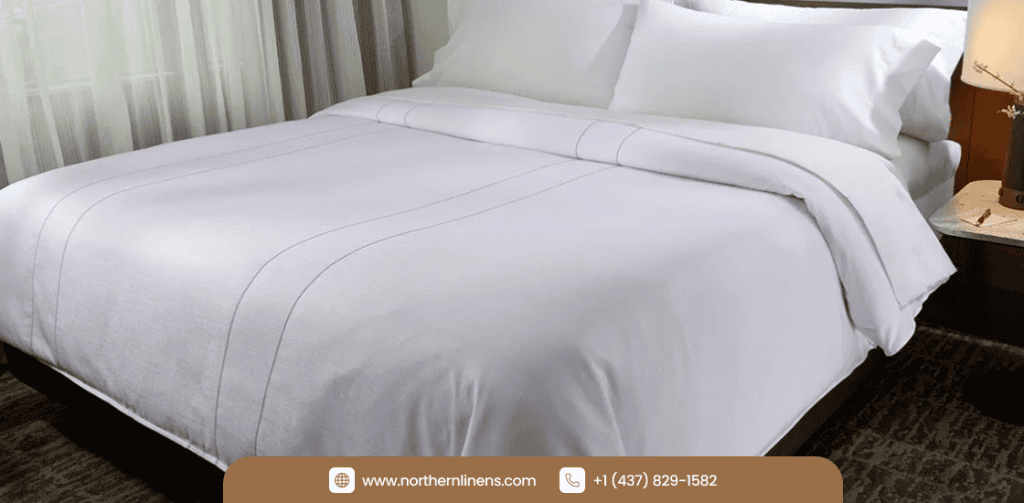
If you manage a hotel or resort in Toronto, the duvet cover is the linen item your guests see most and your laundry handles hardest. A cover that shrinks after ten washes no longer fits the insert. A closure that fails in the dryer stalls a housekeeper on every bed, and a fabric that greys makes a clean room look used. Wholesale duvet covers are bought on how they behave after fifty washes rather than how they feel on the first. The procurement decisions that decide that are fabric, closure, sizing and par level. The guide below covers the specification that survives a commercial laundry, what each property type needs from it, and how a property samples, prices and orders in bulk. Specifying Wholesale Duvet Covers: Fabric, Closure and Cut Size Three decisions decide whether a duvet cover stays in rotation for two years or goes to rags in six months. Each is made against your laundry, not your showroom. Fabric Selection and Commercial Wash Life Hotel duvet covers are cotton percale, cotton sateen, a cotton-polyester blend or bamboo viscose, and the choice is between guest feel and wash life. Long-staple cotton percale at 200 to 300 threads is the hotel standard, crisp and cool. Percale holds up to hot washing and ironing on the same rules as the hotel percale sheets used across Canadian properties. A 50/50 cotton-polyester blend shrinks less, dries faster and costs less per turn, at the price of a slightly warmer hand. Bamboo viscose suits boutique rooms where the feel is the point and the laundry is gentler. Fabric Feel Wash life at commercial temperatures Shrinkage Cost per turn Cotton percale, 200 to 300 TC Crisp, cool, matte High at 60 to 70 degrees with ironing Pre-shrunk fabric holds within 3 percent Middle Cotton sateen, 300 to 400 TC Smooth, warmer, sheen Moderate, sheen dulls with hot washing Higher without pre-shrinking Higher 50/50 cotton-polyester Slightly warmer, smooth Highest, fastest drying Lowest Lowest Bamboo viscose Soft, cool, drapes Moderate, warm wash and low heat Moderate Higher Whiteness is a fabric decision as well. A percale or blend that is optically brightened holds white through repeated hot washing. An unbrightened cotton yellows within a season under the same processing, which is the greying your guests notice before your housekeeper does. Closure Design for Housekeeping Speed and Durability The closure is where duvet covers fail. A hidden zipper is the fastest to change and the most likely to jam or catch in the dryer. A button placket is slower and outlasts the fabric. An envelope or tuck closure has nothing to break and can let the insert slip. Corner ties or loops inside the cover hold the insert in place whatever the closure. The closure design rules that apply to percale duvet covers in spas apply to every property, because changing time is a housekeeping cost paid on every room every day. Hidden zipper: fastest change, specify a heavy-gauge coil zipper with a covered pull Button placket: most durable, specify shell or resin buttons that survive hot drying Envelope or tuck: nothing to fail, specify a deep flap of at least 12 inches Corner ties: on every cover, whatever the closure, to hold the insert square Cut Size to the Duvet Insert A duvet cover is sized to the insert it will hold, and hotel inserts are oversized. A queen insert of 90 by 90 inches needs a cover cut to that insert with an allowance for shrinkage. A retail queen cover of 88 by 88 fits until the first hot wash. Measure the insert, add the fabric’s shrinkage allowance, and specify the cut size on the order. A cover that is too small bunches the insert and a cover that is too large lets it slide, and both show on a made bed. Northern Linens cuts to the insert dimension you supply, and the custom bedding programme holds that dimension on file for every reorder. Specification by Property Type A hotel, a boutique property, a rental portfolio and a student residence launder differently and are judged by different guests. The fabric, closure and par level shift with each. Property Fabric Closure Par level Colour Full-service hotel or resort Cotton percale or 50/50 blend Hidden zipper or button Three per bed White Boutique and luxury hotel Long-staple percale, sateen or bamboo Button placket Three per bed White or a signature tone Vacation rental or Airbnb 50/50 blend or percale Hidden zipper Two per bed White, or a colour that hides wear Student housing and residences 50/50 blend Hidden zipper or envelope Two per bed, or one where students launder Colour Full-Service Hotels and Resorts A hotel runs a par of three covers per bed, one on the bed, one in the laundry and one on the shelf. The hotel buys white because white is bleachable and interchangeable across every room. The cover is changed between guests and on a stay-over schedule, and the laundry, on premise or contracted, processes it at 60 to 70 degrees with ironing. A property in Toronto, Mississauga or Montreal with 150 rooms and a mix of king and queen beds buys covers cut to each insert size at three par. The property chooses percale or a blend depending on whether the laundry is its own or a contractor’s. The processing arithmetic behind that choice is set out for commercial duvet covers in a laundry and rental operation. Boutique and Luxury Hotels A boutique property buys the cover for the guest, and the laundry follows. That means long-staple percale at 300 threads, a sateen for a warmer room or bamboo viscose for a cool one. The button placket reads as a finished detail rather than a fastening, and a signature colour is used where the brand calls for it. The par stays at three, because a boutique guest notices a cover that has been on the bed a day too long. The fabric decision runs on the same reasoning as the bamboo sheet

Scroll to Top

Get In Touch