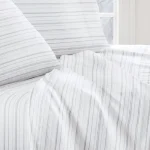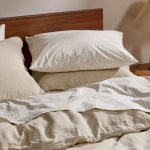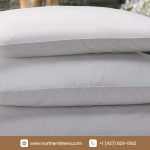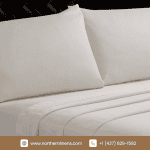
Cotton pillowcases for commercial use hold up best when sourced as a cotton-polyester blend, typically 60/40 or 55/45, woven in a T180 to T200 percale finish. This combination resists wrinkling, dries faster than pure cotton, and survives hundreds of industrial wash cycles without breaking down. Pure 100% cotton is still an option for upscale hospitality programs willing to pay for a softer hand-feel, but it requires more careful laundering to match the same lifespan.
This guide walks through the fabric decisions, thread count ratings, construction details, and bulk purchasing steps that matter most for hotels, healthcare facilities, short-term rentals, and retailers sourcing cotton pillow cases at scale.
Cotton Pillow Case vs Polyester Blend: What’s Better for Commercial Use?
A cotton-polyester blend outperforms both pure cotton and pure polyester for most commercial laundering environments. It keeps enough natural cotton fiber to feel breathable and soft against skin, while the polyester content resists shrinking, wrinkling, and fiber breakdown under repeated high-heat industrial washing.
Pure 100% cotton pillow cases offer the softest feel and the most breathable surface, which makes them attractive for boutique hotels or spa properties positioning comfort as a selling point. The tradeoff is that pure cotton wrinkles more, shrinks more over repeated washing, and needs more careful handling to hit the same wash-cycle count as a blend.
Pure polyester pillowcases resist wrinkling and shrinking almost completely, but they trade away the breathability and soft hand-feel that guests associate with quality bedding, and many hospitality buyers avoid a 100% synthetic feel on guest-facing linens.
| Fabric Type | Guest Comfort | Wrinkle Resistance | Shrink Resistance | Dry Time | Wash Cycle Durability |
|---|---|---|---|---|---|
| 100% Cotton | Highest | Lower | Lower | Slower | Moderate |
| 60/40 or 55/45 Cotton-Poly Blend | High | High | High | Faster | High |
| 100% Polyester | Lower | Highest | Highest | Fastest | Highest |
For most hotels, healthcare facilities, and rental property programs running daily or near-daily laundering, the 60/40 or 55/45 blend is the practical default. Pure cotton stays reserved for premium room categories where the softer feel justifies more careful care.
Understanding Thread Count and T-Rating for Bulk Buyers
Thread count, sometimes labeled as a T-rating on commercial spec sheets, measures how many threads are woven into one square inch of fabric. Higher thread count generally means a denser, smoother fabric, but it is not the only factor that determines durability at commercial volume.
- T180 to T200: The standard range for institutional and commercial hospitality use. Handles frequent, high-heat industrial washing well and holds up over hundreds of cycles.
- T250 to T300: A step up in feel, often chosen for upscale hospitality or premium room categories that still need to survive regular commercial laundering.
- T300 and above: Offers a noticeably more luxury hand-feel, typically reserved for boutique properties, suites, or retail lines where guests are paying a premium and laundering frequency is lower.
Buyers should treat thread count as one input alongside fiber blend and weave type, not a standalone quality signal. A T200 cotton-poly blend built for commercial laundering will often outperform a higher thread count pure cotton product that was not engineered for industrial wash cycles.
Weave Type: Why Percale Is the Commercial Standard
Percale is a tight, plain weave that produces a crisp, matte finish and stays durable through repeated industrial washing, which is why it is the most common weave specified for commercial and institutional pillowcases.
Percale fabric resists pilling, holds its shape through hundreds of wash-and-dry cycles, and dries faster than heavier weaves like sateen. This combination of durability and quick turnaround is exactly what high-frequency laundering operations need, whether that laundering happens in-house or through an outsourced commercial facility.
Sateen is a looser weave that produces a softer, slightly glossy finish. It feels more luxurious but is generally less durable under frequent industrial washing than percale, which is why it appears more often in premium retail lines than in high-turnover hospitality programs.
Construction Details That Affect Commercial Durability
Fabric choice only tells half the story. Construction details determine whether a pillowcase survives mechanical sorting, high-speed pressing, and repeated laundering without tearing at the seams.
- Bar-tacked seams: Reinforced stitching at stress points prevents seams from splitting during mechanical handling and repeated washing.
- Deep side hems: A wider hem allowance reduces fraying and extends the usable life of the pillowcase through hundreds of wash cycles.
- Consistent stitch density: Uneven stitching is one of the most common defects that causes early seam failure, and it is usually invisible until a case has already gone through several wash cycles.
These details rarely show up in a basic product listing, which is why buyers sourcing at commercial volume should request a construction spec sheet rather than relying on thread count alone.
How Northern Linens’ Team Handles This
Fabric blend and thread count are only useful numbers if the batch behind them is actually consistent, and that consistency is where a lot of bulk pillowcase orders run into trouble. A supplier can quote T200 percale on a spec sheet and still ship a batch with inconsistent weave density, seam stitching, or shrink rate if quality checks are not built into the production process itself.
Northern Linens’ Production and Quality Control teams batch-test fabric weight, weave consistency, and seam construction before an order ships, so a reorder placed six months later matches the fabric feel, durability, and sizing of the original shipment. Our Private Label and Custom Development team works with hotel groups, healthcare buyers, and retailers who need a specific blend, weight, or branded packaging configuration, and helps translate that into a repeatable SKU rather than a one-time custom run. Because Northern Linens holds OEKO-TEX certification on qualifying product lines and operates warehouses in Canada and the USA, buyers running multi-location programs can source consistent, certified cotton and cotton-blend pillowcases from one supplier with regional fulfillment built in, rather than reconciling quality differences across multiple vendors.
Standard Sizing for Commercial Pillowcases
Commercial pillowcase sizing follows a few standard categories, though buyers should always confirm exact cut dimensions against their existing pillow inventory before placing a bulk order.
| Size | Typical Flat Dimensions |
|---|---|
| Standard | Approximately 20″ x 30″ |
| Queen | Approximately 20″ x 30″ to 22″ x 33″ |
| King | Approximately 20″ x 36″ or larger |
Sizing can vary slightly between suppliers depending on hem allowance and finished versus cut measurements, so it is worth requesting a sample or a confirmed spec sheet before a first bulk order, especially if the pillowcases need to fit existing pillow protectors or duvet-matching sets.
Bulk Sourcing Strategy: How to Order Cotton Pillowcases at Scale
Follow these steps to move from initial sourcing research to a confirmed bulk order.
- Confirm your laundering setup. Determine whether laundering is in-house, outsourced, or mixed, since this affects whether a blend or pure cotton makes more sense.
- Choose your fabric blend and thread count. Match the blend to your guest tier and wash frequency using the comparison table above.
- Request a construction spec sheet. Confirm seam type, hem depth, and stitch density rather than relying on thread count alone.
- Confirm standard sizing against your pillow inventory. Order a sample where possible before committing to a full bulk run.
- Determine your order quantity and packaging format. Bulk cotton pillowcases are typically sourced in dozen packs or larger bulk cases, and packaging format can affect per-unit pricing.
- Clarify minimum order quantity and reorder timeline. Confirm MOQ and how future restocking will be handled before your first order ships.
- Confirm care and laundering instructions with your laundering team. Passing the correct wash temperature and detergent guidance protects the investment and extends usable life.
Packaging Units and Order Quantities
Commercial and wholesale cotton pillowcases are typically sourced in bulk formats rather than individual units, which affects both pricing and how orders are structured.
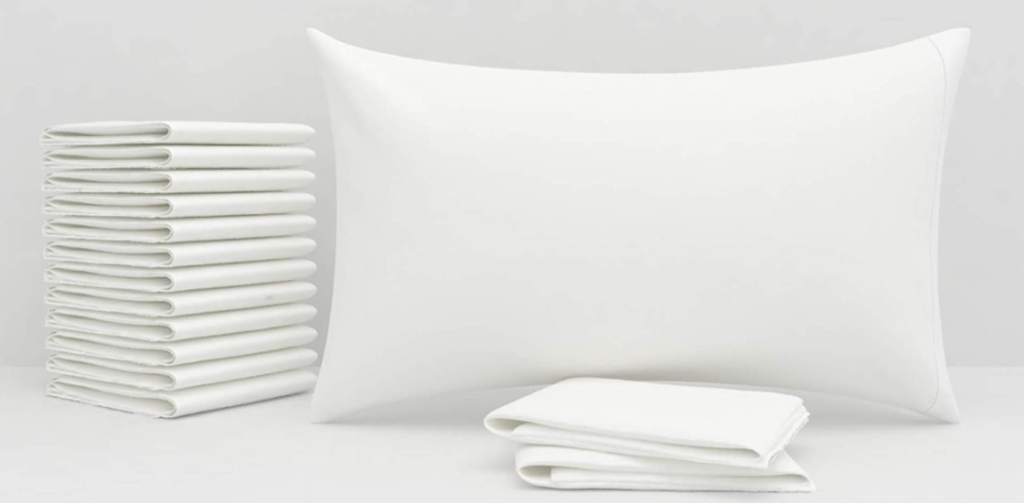
- Dozen packs (12-count): A common entry point for smaller properties or a single product line.
- Bulk cases: Often ranging from 60 to 72-count cases for larger hotel groups, healthcare facilities, or distributors placing recurring orders.
- Custom pack sizes: Available through private label and custom development programs for buyers who need packaging aligned to a specific brand presentation or retail format.
Minimum order quantities vary by supplier and product specification. Northern Linens offers flexible MOQs designed to support both smaller boutique orders and larger multi-property or distributor programs, so buyers should confirm current MOQ details directly with the Wholesale Account Management team for the specific blend, thread count, and packaging format needed.
Care Protocol for Commercial Cotton Pillowcases
Correct laundering protocol protects the fabric investment and keeps pillowcases performing consistently across hundreds of wash cycles.
- Wash in warm water using a mild, standard commercial detergent.
- Avoid heavy chlorine bleach on cotton-polyester blends, since it can weaken the polyester fiber over repeated use and shorten the pillowcase’s usable life.
- Follow standard commercial drying cycles for cotton-poly blends, which typically dry faster than pure cotton due to the synthetic fiber content.
- For pure cotton lines, expect slightly longer dry times and monitor for shrinkage over the first several wash cycles to confirm sizing stays consistent with your pillow inventory.
Frequently Asked Questions
What is the best thread count for commercial cotton pillowcases?
T180 to T200 is the standard range for commercial and institutional use, offering a strong balance between durability under frequent industrial washing and a comfortable guest-facing feel. Properties positioning a premium room category may choose T250 to T300 for a softer hand-feel while still holding up to regular laundering.
Is a cotton-polyester blend better than 100% cotton for hotels?
For most hotels running frequent industrial laundering, yes. A 60/40 or 55/45 cotton-polyester blend resists wrinkling and shrinking better than pure cotton while still retaining a soft, breathable feel, which extends the usable life of the pillowcase across hundreds of wash cycles.
What weave type is best for commercial pillowcases?
Percale is the commercial standard because it produces a crisp, durable finish that holds up well through repeated industrial washing and dries faster than heavier weaves like sateen. Sateen offers a softer, glossier feel but is generally better suited to lower-frequency laundering environments.
How do I know if a cotton pillowcase will hold up to commercial laundering?
Check the construction details, not just the thread count. Reinforced bar-tacked seams, deep side hems, and consistent stitch density are strong indicators that a pillowcase was built for repeated mechanical sorting and industrial washing, rather than residential use.
What packaging formats are available for bulk cotton pillowcase orders?
Cotton pillowcases are typically sourced in dozen packs (12-count) for smaller orders or bulk cases, often 60 to 72-count, for larger hotel groups and distributors. Custom pack sizes are also available through private label and custom development programs.
Can chlorine bleach be used on cotton-polyester blend pillowcases?
Heavy chlorine bleach is not recommended for cotton-polyester blends, since it can weaken the polyester fiber over repeated washing and shorten the product’s usable life. A mild, standard commercial detergent is generally sufficient for routine stain and hygiene maintenance.
What is the minimum order quantity for wholesale cotton pillowcases?
Minimum order quantities vary by supplier, fabric blend, and packaging format. Northern Linens offers flexible MOQs designed to support both smaller boutique orders and larger multi-property or distributor programs, so buyers should confirm current MOQ details directly with the Wholesale Account Management team.