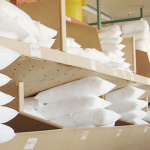
Commercial duvet covers bought for a rental or laundry programme are judged on processing cost per turn rather than unit price. A cover needing hand finishing costs labour on every cycle, and across hundreds of turns that recurring cost outweighs any difference in what the item cost to buy.
Commercial duvet covers bought for a rental programme are a different purchase from covers bought for a property’s own rooms. The operator will process the item hundreds of times and then hand it to a customer whose standards they do not control. One product has to meet two sets of requirements.
There is a terminology problem to settle first. In this trade the word linen describes flax fibre and also describes anything running through a commercial laundry, and the two carry very different care profiles. This guide covers that distinction and why the buyer is rarely the user. It then explains how processing cost per turn outweighs purchase price, what circulating stock needs to stay sortable, and what to confirm before an order.
Establish What Linen Means In The Quote
A supplier offering a linen duvet cover may mean one of two things, and the difference changes the care profile, the finishing and the price.
Linen As A Fibre
Flax linen is strong and breathable, and it takes moisture well. It also creases heavily and recovers poorly. A flax cover comes out of a laundry rumpled and stays that way unless pressed, and even then the finish does not hold.
Flax tolerates repeated folding at the same crease poorly, which matters for stock that is folded identically and stored between rentals.
Linen As A Trade Term
Used the other way, linen simply means bedding processed through a commercial laundry, whatever it is made from. A quote using the word this way tells you nothing about fibre content, so ask for the composition in writing before comparing products.
Info: Request the fibre content exactly as it appears on the product label rather than as it appears in a description. Those are not always the same, and the label governs what you can tell your own customers.
The Buyer Is Rarely The User
A hotel buying for its own rooms answers to itself. An operator buying commercial duvet covers for a rental programme answers to their processing floor and to every customer receiving the stock. Those two sets of requirements can pull in different directions.
The processing floor wants an item running through washing, extraction, drying and finishing without special handling. The customer wants a cover their residents find comfortable and their staff find quick to change.
| Requirement | Set by | What to establish |
|---|---|---|
| Wash and dry tolerance | Your processing programme | Maximum temperatures and bleach compatibility |
| Finishing method | Your equipment | Whether it can run through your ironer or needs hand work |
| Comfort and presentation | Your customer | What their residents or guests expect |
| Sizing | Your customer’s inserts | Insert dimensions in their buildings, not yours |
| Facility requirements | Your customer’s setting | Any specification their environment demands |
The last row matters most in care settings. Rehabilitation, hospice and nursing environments may carry requirements an operator cannot see from their own floor, and a cover described as premium does not automatically meet them. Confirm those with the customer.
Processing Cost Per Turn Outweighs Unit Price
Commercial duvet covers in a rental programme are processed again and again, so any handling they demand is paid for every single time.
What Adds Cost On Every Cycle
- Covers that cannot run through a flatwork ironer and need hand finishing
- Fabrics that hold creases and need pressing to look acceptable
- Closures requiring a separate step to fasten or check before folding
- Items that tangle in washing and need separating by hand
- Stock needing sorting by size or customer because it cannot be told apart quickly
Why This Changes The Comparison
A modest difference in purchase price disappears against labour repeated hundreds of times. A cover costing slightly more that runs straight through the line returns that difference quickly, then keeps returning it.
Put a figure on it during evaluation. Run samples through your own line, time any step performed by hand, then multiply by expected turns per year.
Note: Ask a supplier whether the cover is designed to run through a flatwork ironer and what finishing method they expect. A supplier who has not considered that question is selling into retail rather than into rental.
Rental Stock Has To Stay Sortable And Repeatable
Commercial duvet covers circulating between customers create two problems a property buying for itself never encounters.
Identification On The Sorting Floor
Staff sorting at speed need to tell sizes and specifications apart without unfolding anything, because folded covers look alike. Coded stitching, woven labels or edge markers earn their cost in a rental operation for exactly that reason.
Agree the coding system at the order stage and keep it consistent. A system that changes between production runs is worse than none, because staff apply the older one from memory.
Shade And Specification Drift Between Orders
Stock is bought in lots over years, so new items enter circulation beside older ones. A slight shade difference between production runs is invisible on a swatch and obvious on adjacent beds.
Ask directly whether an approved specification is retained between orders, whether future production is checked against that reference, and whether a single run can cover a customer’s full par level. Those three answers decide whether the stock stays consistent as it ages.
What To Confirm Before Placing The Order
Several details about commercial duvet covers are straightforward to settle in advance and expensive to discover after delivery.
Sizing Against The Customer’s Inserts
Duvet covers are sized to the insert rather than the bed, and inserts vary between manufacturers. Collect the insert dimensions across your customers’ buildings before standardising, and ask what allowance the cover carries.
Sample Testing Through Your Own Line
Run samples through your actual programme at your actual settings, not the supplier’s recommended ones. Measure shrinkage, seam and closure condition, finish quality after the ironer, and colour against an unwashed control.
Supply, Custom Work And Documentation
Ask where stock is held and what the reorder lead time is from that location. Ask too whether the item is a stocked line or made to order, since those behave differently on a repeat order.
For an operator based in Charlottetown or elsewhere in Atlantic Canada, confirm the schedule against your own order rather than a general figure. The same applies to operations serving Burnaby, Richmond, Victoria or Kelowna.
Settle custom sizing, colours, coded labelling and private branding at the same time, since each affects lead time.
Final Thoughts
Commercial duvet covers for a rental or laundry programme are judged on how they behave across hundreds of cycles rather than how they feel in a sample. Establish what linen means in any quote before comparing anything, since flax fibre and the trade use of the word carry entirely different care and finishing profiles.
Then price the processing rather than the product. A cover needing hand finishing costs labour on every turn, and that recurring figure overtakes a purchase price difference quickly. Build in what circulating stock needs: coded identification staff can read without unfolding, and an approved specification retained between orders so shade drift does not separate a customer’s par.
Northern Linens manufactures commercial bedding in house, retains approved specifications between orders and warehouses in Canada. Request samples and run them through your own line before committing to a bulk order.
Frequently Asked Questions
What Should Linen Rental Operators Look For In Commercial Duvet Covers?
Wash and dry tolerance matched to their processing programme, and whether the cover runs through a flatwork ironer without hand finishing. Sizing matched to customers’ inserts, identification that works on a sorting floor, and an approved specification retained so repeat orders match earlier ones.
Does Linen Mean Flax Fibre Or Laundry Textiles?
Both, depending on who is speaking, which is why quotes for commercial duvet covers need checking. Flax linen is a fibre with its own creasing and finishing behaviour, while linen in the commercial laundry sense means any bedding processed through a plant. Ask for fibre content in writing, exactly as it appears on the product label.
Why Does Processing Cost Matter More Than Purchase Price?
Because rental stock is processed hundreds of times. Any step a member of staff performs by hand is paid for on every cycle. A cover running straight through the line returns a modest price difference quickly, then keeps returning it.
How Should Rental Stock Be Kept Consistent Across Repeat Orders?
By confirming that the supplier retains an approved specification, checks future production against it, and can supply a customer’s full par level from a single run where needed. Shade differences between production runs are invisible on a swatch and obvious on adjacent beds.