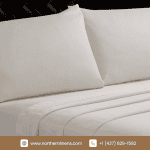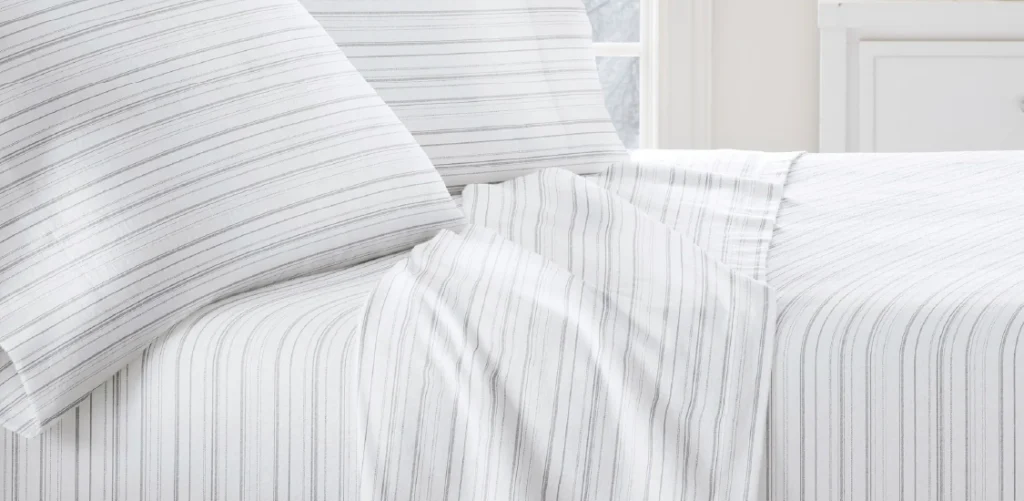
Flannel sheet sets give short-term rentals and hospitality properties a way to boost guest comfort during colder months without sacrificing durability under repeated commercial washing. The right flannel sheet set balances brushed cotton softness, a fabric weight that holds up to institutional laundering, and a deep-pocket fit that works across mismatched mattress depths common in rental portfolios.
For hosts and hospitality buyers managing multiple properties, flannel bedding is a seasonal category with year-round sourcing challenges. Northern Linens manufactures and supplies flannel sheet sets at wholesale scale, with the fabric consistency, batch testing, and regional warehousing that seasonal restocking demands.
Why Flannel Sheet Sets Matter for Short-Term Rentals and Hospitality Properties
Flannel sheet sets matter for short-term rentals because guest reviews are shaped heavily by how a bed feels the moment someone gets in it. A cold, thin sheet in a winter listing photo does not match a cold, thin sheet against skin in December.
Flannelette and brushed cotton flannel trap warmth close to the body while still allowing airflow, which is why they outperform standard percale or sateen sheets in shoulder-season and winter bookings. For hospitality operators running rooms through fall and winter occupancy, this comfort difference shows up directly in review language around “cozy,” “warm,” and “well-equipped.”
Short-term rental hosts and hotel groups also face a second pressure that residential buyers rarely deal with: turnover speed. Sheets need to go from stripped bed to washed, dried, and remade in a tight changeover window, often multiple times per week during peak season.
Flannel vs Flannelette: What the Terms Actually Mean
Flannel and flannelette both describe a brushed woven fabric, but the terms are used inconsistently across the bedding industry, which creates confusion for wholesale buyers comparing suppliers.
Flannel typically refers to a fabric brushed on one or both sides to raise short fibers from the weave, creating a soft, slightly fuzzy surface that traps air for warmth. Most bedding sold as “flannel sheets” is actually cotton flannelette.
Flannelette is the technically correct term for lightweight, brushed cotton fabric used in bed sheets. True wool or wool-blend flannel is heavier and used more in apparel than bedding.
| Attribute | Cotton Flannel (Flannelette) | Microfiber Flannel | Wool-Blend Flannel |
|---|---|---|---|
| Breathability | High | Moderate | Low to moderate |
| Warmth retention | Moderate to high | High | High |
| Commercial wash durability | High when properly woven | High | Low, requires special care |
| Typical GSM range | 150 to 190 GSM | 100 to 150 GSM | 200 GSM or higher |
| Best fit for hospitality | Yes | Situational | Not recommended |
| Pilling risk over repeat laundering | Low with double-brushed weave | Moderate | High |
For hospitality and short-term rental use, double-brushed cotton flannel in the 160 to 180 GSM range is the category buyers most often land on, because it holds warmth without adding excessive drying time between guest turnovers.
Guest Comfort in Colder Months: What Actually Drives Satisfaction
Guest comfort during colder months comes down to three things: fabric hand-feel against skin, how quickly the bed warms up once occupied, and whether the sheet still feels soft after dozens of commercial wash cycles.
A flannel sheet set that feels plush on day one but turns thin and scratchy by its twentieth wash creates a worse guest experience than a mid-range percale set that stays consistent. This is where fabric sourcing decisions made months before a guest ever checks in start to matter.
Hospitality buyers sourcing flannel for the first time often assume higher GSM automatically means a better guest experience. That is only true up to a point. Past roughly 190 GSM, flannel sheets take meaningfully longer to dry in commercial laundry cycles, which slows turnover for high-occupancy properties without adding much guest-noticeable warmth.
How Northern Linens’ Team Handles This
Northern Linens’ Production and Quality Control teams test flannel fabric batches for GSM consistency and brushed-finish quality before any order moves to cutting and sewing. Buyers get a fabric profile suited to their occupancy pattern, whether that is a boutique hotel prioritizing plush feel or a high-turnover short-term rental portfolio prioritizing fast dry times. Inconsistent batches are flagged and resolved with the mill before they reach a client’s warehouse.
Durability Under Commercial Wash Cycles
Flannel sheet sets built for hospitality need to survive far more laundering than a residential set, often 100 or more industrial wash and dry cycles per year across a single property’s linen rotation.
The weave structure of the flannel matters more than thread count when it comes to wash durability. A tightly woven base cloth with an even, double-brushed nap resists pilling and thinning far better than a loosely woven fabric with a heavier brushed finish that looks soft on day one but sheds fiber quickly.
Three factors determine how well flannel sheets hold up under repeat commercial washing:
- Fiber quality. Longer staple cotton fibers shed less and pill less over time than short-staple cotton.
- Weave tightness. A denser weave beneath the brushed nap resists thinning even as the surface fibers wear.
- Finishing process. Pre-shrinking and proper dye-setting during manufacturing reduce shrinkage and color fade across repeated hot-water commercial washes.
How Northern Linens’ Team Handles This
Every flannel production run at Northern Linens goes through in-house quality checks before shipment, including fabric weight verification and finish inspection. The Quality Control team checks for weave consistency batch to batch, which is the detail that most directly predicts how a sheet set will perform after months of commercial laundering. Buyers working with institutional or hospitality-grade wash cycles can flag their laundering frequency during onboarding so fabric selection accounts for it.
Choosing the Right GSM Weight for Your Property Type
GSM, or grams per square meter, measures fabric density and is the most reliable spec for comparing flannel sheet weight across suppliers.
- 140 to 160 GSM: Lighter flannel suited to milder climates or properties that want a flannel feel without heavy warmth, with faster dry times for high-turnover operations.
- 160 to 180 GSM: The most common range for hospitality and short-term rental use, balancing warmth, softness, and manageable laundering time.
- 180 to 200 GSM: Heavier flannel for colder climates or winter-specific inventory, with longer dry cycles to plan around.
Matching GSM to occupancy pattern, not just climate, is the detail buyers most often overlook. A property with same-day turnovers needs a fabric weight that dries fast enough to make the changeover window, even in a cold-weather market.
Queen Flannel Sheet Sets: Sizing and Fit for Rental Properties
Queen flannel sheet sets are the most requested size across short-term rental portfolios, since queen beds make up the largest share of listed rental inventory in North America.
Fit issues are one of the most common complaints hosts raise about flannel bedding, usually tied to pocket depth rather than the sheet’s overall dimensions. Rental mattresses often carry a mattress protector and topper stacked on top of the base mattress, which pushes real-world depth beyond what a standard 10 to 12 inch pocket sheet can handle.
For queen flannel sheet sets used in short-term rentals, a deep pocket of at least 15 inches with all-around elastic is the safer default. This accommodates protector and topper stacking without the fitted sheet slipping loose mid-stay, which is a recurring source of guest complaints and mid-stay maintenance visits.
How Northern Linens’ Team Handles This
Northern Linens’ Private Label and Custom Development team can adjust pocket depth on flannel sheet programs to match a buyer’s actual mattress setup, rather than defaulting to standard retail dimensions. Buyers managing mixed mattress depths across a property portfolio can also request pocket depth as a specified SKU attribute, so reorders stay consistent property to property.
Private Label and Custom Flannel Programs for Hospitality Brands
Hospitality brands and larger short-term rental operators increasingly want flannel bedding that reflects their own brand identity rather than a generic retail print or plain white set.
Private label flannel programs typically cover fabric weight, color, packaging, and in some cases woven or embroidered branding on the sheet hem or pillowcase cuff. This lets a hospitality group present a consistent, branded in-room experience across properties, which supports guest recognition and perceived quality.
Custom SKU development for flannel bedding usually starts with sample approval on fabric weight and colorway, followed by a production run sized to the buyer’s MOQ and seasonal timeline. Buyers planning winter-season inventory should start this process well before peak season, since fabric sourcing and dyeing lead times do not compress well under rush timelines.
How Northern Linens’ Team Handles This
Northern Linens’ Private Label and Custom Development team works with hospitality buyers from initial sample approval through final production, coordinating with the Production team on fabric sourcing and the Warehousing and Distribution team on seasonal delivery timing. Flexible MOQs mean smaller hospitality groups and larger regional and national distributors can both access custom flannel programs, sized to their actual order volume rather than a one-size-fits-all minimum.
Bulk Ordering, MOQs, and Seasonal Restocking for Flannel Bedding
Flannel is a seasonal category, which creates a specific sourcing challenge: buyers need enough inventory to cover a colder-weather booking surge without overstocking a fabric that sees lower demand the rest of the year.
Seasonal restocking works best when buyers place initial orders ahead of the fall booking ramp and set up a defined reorder point rather than waiting until inventory runs low. Waiting until stock is nearly depleted removes the buffer needed to absorb any production or shipping lead time.
Flexible MOQs matter especially in this category, since a short-term rental host managing a handful of units has very different volume needs than a regional distributor supplying dozens of hotel properties. A wholesale flannel supplier that only offers large-batch MOQs effectively locks out smaller hospitality buyers from accessing quality flannel inventory.
How Northern Linens’ Team Handles This
Northern Linens’ Wholesale Account Management team works with buyers to size flannel orders to their actual seasonal demand, drawing on flexible MOQs rather than forcing every buyer into the same order threshold. Warehouses in Canada and the USA support regional fulfillment, which is designed to shorten the distance between order placement and delivery as buyers ramp inventory ahead of the colder season.
Sustainability and OEKO-TEX Certification in Flannel Manufacturing
Sustainability has become a real purchasing factor for hospitality brands, not just a marketing checkbox, particularly for hotel groups and rental brands that publish sustainability commitments to guests.
OEKO-TEX certification confirms that a textile has been tested against a defined list of harmful substances and meets specific safety thresholds. For flannel bedding specifically, this matters because brushed, napped fabrics have more exposed fiber surface area than smooth-weave sheets, making fabric safety testing especially relevant.
Buyers evaluating flannel suppliers on sustainability should ask specifically which products or product lines currently hold OEKO-TEX certification, rather than accepting a general sustainability claim at face value. Certification applies to specific tested products, not automatically to an entire supplier catalog.
Northern Linens holds OEKO-TEX certification on its currently certified product lines and follows eco-friendly production practices aimed at reducing supply chain waste. Buyers can confirm certification status for a specific flannel SKU with the Wholesale Account Management team before placing an order.
Common Mistakes Hospitality Buyers Make When Sourcing Flannel Sheets
Most flannel sourcing problems in hospitality and short-term rental portfolios trace back to a handful of avoidable decisions made early in the buying process.
- Sourcing on price alone without checking GSM. Two flannel sheet sets can look identical online while differing significantly in fabric weight and wash durability.
- Ignoring pocket depth relative to actual mattress setup. Standard pocket depths often fail once a protector and topper are added.
- Ordering a single large batch with no reorder plan. This leaves properties short-staffed on linens mid-season if occupancy runs higher than expected.
- Skipping a sample order before committing to a full production run. A sample confirms hand-feel, colorfastness, and fit before hundreds of units are committed.
- Overlooking dry-time impact of heavier GSM fabric. Heavier flannel that dries slowly can quietly reduce turnover capacity during peak season.
Frequently Asked Questions
What GSM is best for flannel sheets used in short-term rentals?
Most short-term rental and hospitality buyers find 160 to 180 GSM cotton flannel the best balance of warmth, softness, and manageable dry times. Heavier GSM adds warmth but increases laundering time, which can slow turnover during high-occupancy periods.
How is flannelette different from flannel?
Flannelette is the technically accurate term for lightweight, brushed cotton fabric commonly sold as “flannel sheets.” True flannel, particularly wool-based flannel, is heavier and less common in bedding than in apparel.
How many wash cycles should quality flannel sheets withstand before they wear out?
Well-manufactured cotton flannel with a tight weave and double-brushed finish should hold its softness and shape through well over 100 commercial wash and dry cycles. Fabric quality and finishing process affect this range more than brand name alone.
What pocket depth do queen flannel sheet sets need for rental mattresses?
A pocket depth of at least 15 inches with all-around elastic is the safer standard for rental properties, since most rental mattresses carry a protector and topper that add height beyond a standard mattress.
Can flannel sheet sets be private labeled for a hospitality brand?
Yes. Private label flannel programs typically cover fabric weight, colorway, and branded packaging or hem details, allowing hospitality brands to present a consistent, branded in-room experience across properties.
Is OEKO-TEX certification relevant to flannel bedding specifically?
Yes, and arguably more relevant than for smooth-weave sheets, since brushed, napped fabrics expose more fiber surface area. OEKO-TEX certification confirms specific tested products meet defined safety thresholds against harmful substances.
How far ahead should hospitality buyers order flannel inventory before winter season?
Buyers should place initial seasonal orders ahead of the fall booking ramp, well before inventory runs low, to allow a buffer for any production or shipping lead time rather than ordering reactively once stock is nearly depleted.
Do smaller short-term rental hosts have access to wholesale flannel pricing?
Buyers working with a supplier that offers flexible MOQs can access wholesale flannel sheet sets at volumes sized to a smaller property portfolio, rather than being limited to large-batch minimums built for bigger distributors.