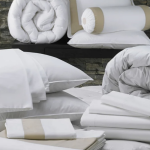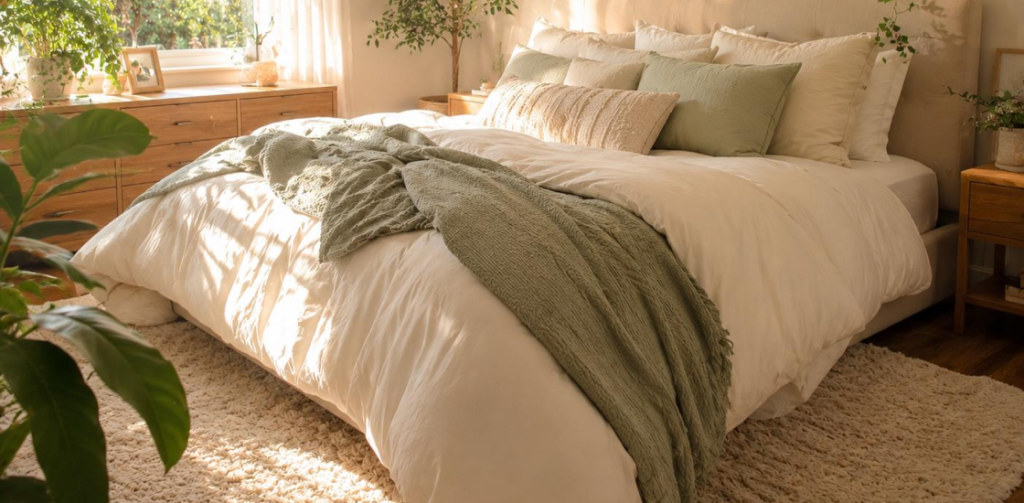
Decorative and throw pillow cases for hospitality staging need to do two jobs at once: look intentional in a high-traffic lobby or lounge, and hold up to daily guest contact without showing wear. That combination rules out most fabrics and closures made for residential use.
This guide covers the fabric, sizing, and compliance choices that matter most when ordering decorative and throw pillow cases in bulk for hotel lobbies, lounges, and common areas.
What Makes a Pillow Case “Hospitality-Grade”
A hospitality-grade decorative pillow case is built for repeated guest contact, frequent handling by housekeeping, and exposure to spills and sunlight, not just visual appeal. Residential decorative pillow covers are rarely built to handle this level of daily use.
Three qualities separate hospitality-grade pillow cases from standard retail versions:
- Commercial-weight fabric that resists wear from repeated handling and cleaning.
- Stain and moisture resistance, since lobby and lounge pillows sit in high-traffic, high-spill areas.
- Hidden, heavy-duty closures that keep a clean profile even after frequent insert removal for cleaning or replacement.
Fabric Choices for High-Traffic Lobby and Lounge Spaces
Fabric choice is the single biggest factor in how long a decorative pillow case lasts in a commercial setting. The table below compares common options used across hospitality staging.
| Fabric | Best For | Key Benefit |
|---|---|---|
| Performance velvet | Lounges, lobby seating areas | Rich texture with strong durability against daily handling |
| Solution-dyed acrylic | Sun-exposed lobbies, windows, patios | Resists fading from prolonged sunlight exposure |
| Heavyweight linen blend | Boutique or relaxed upscale settings | Casual, breathable look that still holds up commercially |
| Crypton or nano-treated fabric | High-spill areas, dining-adjacent lounges | Repels stains, moisture, and odors at the fiber level |
Buyers furnishing sun-exposed lobbies or patios should prioritize solution-dyed fabrics, since standard dyed fabric fades faster under prolonged light exposure. Buyers furnishing dining-adjacent lounges should prioritize stain-resistant treated fabrics over untreated natural fibers.
[INTERNAL LINK: suggested anchor text “wholesale pillowcase fabric options”]
Compliance: Fire Codes and Commercial Standards
Many commercial and hospitality spaces require soft furnishings, including decorative pillow covers and inserts, to meet local fire safety standards such as CAL 133 or NFPA 701. Requirements vary by property type, jurisdiction, and whether the space is public-facing.
Buyers should confirm which fire code requirements apply to their specific property and location before finalizing a decorative pillow order, since this varies by region and building use. Northern Linens’ Wholesale Account Management team can work with buyers to source fabric and construction options suited to a property’s confirmed compliance needs.
Closures and Construction for Commercial Durability
Closure choice affects both appearance and how easily a pillow case holds up to repeated cleaning and insert changes. Hidden, heavy-duty zippers are the standard choice for hospitality settings because they keep a clean, tailored look while allowing quick access for laundering or insert replacement.
- Hidden zipper closures: Maintain a smooth profile and support frequent commercial laundering.
- Reinforced seams: Hold up better than standard stitching under repeated handling in high-traffic areas.
- Removable, washable covers: Let housekeeping teams manage cleaning without replacing the entire pillow.
Sizing and Layering for Lobby and Lounge Staging
Sizing decisions shape how a lobby or lounge seating area reads visually, and most professional staging follows a layered sizing approach rather than using one uniform size throughout.
| Pillow Role | Common Size | Placement |
|---|---|---|
| Base pillow | 22×22 inches | Back of a sofa or lounge seat, largest visual anchor |
| Accent pillow | 20×20 inches | Layered in front of the base pillow for depth |
| Lumbar pillow | 14×20 inches | Front layer, adds lower-back support and visual variety |
Mixing sizes this way creates a layered, intentional look rather than a flat row of matching pillows, which is a common mistake in lobby and lounge staging.
Color and Texture Strategy for Brand-Consistent Staging
Color and texture choices in a lobby should reinforce the property’s overall brand identity while staying flexible enough to refresh seasonally without replacing every piece. A neutral anchor color paired with one or two accent tones tied to the brand palette generally works better than a fully matched, uniform look.
- Color blocking: Use neutral base pillows with accent-colored pieces layered on top to tie back to the brand palette.
- Texture contrast: Pair smooth fabrics like leather or velvet with chunkier woven textures or subtle patterns for visual depth.
- Seasonal accents: Keep a small rotating set of seasonal or promotional pillow covers separate from the core lobby inventory.
Sourcing Decorative Pillow Cases at Scale
Furnishing multiple lobbies or common areas across a hotel chain means ordering enough decorative pillow cases to keep every property visually consistent, while managing fabric and color variation across production runs.
How Northern Linens’ Team Handles This
Bulk decorative pillow orders across multiple properties run into the same risk as bedding programs: small fabric or color differences between production batches become obvious once pillows are placed side by side in a lobby. Northern Linens’ Production & Manufacturing team tracks fabric batches against the buyer’s approved specification, and Quality Control checks finished units before shipment so a multi-property order arrives visually consistent. The Warehousing & Distribution team then positions inventory across Northern Linens’ Canada and USA warehouses, which is designed to support faster restocking when a property needs to replace worn or damaged pieces.
Maintenance and Replacement Cycles for Commercial Spaces
Decorative pillow cases in high-traffic lobbies wear faster than bedroom linens because they are handled constantly by guests and staff throughout the day. Planning a replacement cycle in advance helps a property avoid a visibly worn lobby between restocking orders.
A few practical maintenance habits worth building into a property’s routine:
- Inspect lobby and lounge pillow covers on a regular schedule for visible wear, staining, or fading.
- Rotate covers between lower-traffic and higher-traffic seating areas to spread out wear evenly.
- Keep a small reserve stock of matching covers on hand so a single damaged piece does not leave a visible gap in the staging.
- Reorder ahead of major seasonal or renovation refreshes rather than waiting until pieces are visibly worn.
Frequently Asked Questions
What fabric holds up best for hotel lobby throw pillows?
Performance velvet, solution-dyed acrylic, and crypton or nano-treated fabrics tend to hold up best in commercial lobby settings, since each is built to resist the wear, fading, or staining that comes with constant guest handling.
Do hotel lobby pillow covers need to meet fire codes?
Many commercial and public-facing spaces require soft furnishings to meet fire safety standards such as CAL 133 or NFPA 701, though exact requirements depend on the property type, jurisdiction, and local building codes. Buyers should confirm their specific requirements before placing an order.
What size should lobby throw pillows be?
A common layering approach uses a larger 22×22 inch base pillow, a 20×20 inch accent pillow, and a 14×20 inch lumbar pillow to create visual depth rather than a flat, uniform row of matching sizes.
How often should hotel lobby throw pillow covers be replaced?
Replacement timing depends on foot traffic and handling frequency, but lobby and lounge pillows generally wear faster than bedroom linens. Regular inspection and a rotating reserve stock help properties catch wear before it becomes visible to guests.
Can decorative pillow covers be washed commercially?
Many hospitality-grade covers are designed to be removable and machine washable or safe for commercial laundering, though this depends on the specific fabric. Crypton and nano-treated fabrics in particular are built to resist staining between washes.
How do hotels keep lobby pillow colors consistent across multiple properties?
Consistency comes from ordering from one supplier working off a locked fabric and color specification, since colors and textures can vary noticeably between different production batches or suppliers.
What is the difference between a throw pillow cover and a decorative pillow case?
The terms are generally used interchangeably in hospitality settings to describe a removable fabric cover placed over a decorative accent pillow, distinct from a functional sleeping pillowcase.