Pillowcase sizes follow a small set of industry-standard dimensions, but getting the fit right across a hotel property, rental portfolio, or retail assortment takes more than matching a single chart. Standard pillowcases measure 20 x 26 inches, queen pillowcases measure 20 x 30 inches, king pillowcases measure 20 x 36 inches, and euro pillowcases measure 26 x 26 inches. This guide breaks down every standard and specialty size, how they relate to your actual pillow inserts, and what bulk buyers need to know before placing a wholesale order.
For hospitality buyers specifically, sizing mistakes are expensive at scale. A case that runs slightly tight across a thousand-unit order is not a minor inconvenience. It is a return, a re-order, or a guest-facing fit issue across an entire property. This guide is built around avoiding that.
What Are the Standard Pillowcase Sizes?
The four core pillowcase sizes used across North American hospitality and retail bedding are Standard, Queen, King, and Euro, each sized to match a common pillow insert category. Body and travel sizes cover specialty use cases like body-support pillows and compact travel inserts.
| Size | Dimensions (inches) | Dimensions (cm) | Typical use |
|---|---|---|---|
| Standard | 20 x 26 | 51 x 66 | Standard and full-size bed pillows, most common hotel guest room case |
| Standard/Queen | 20 x 30 | 51 x 76 | Combination case sized to fit both standard and queen inserts |
| Queen | 20 x 30 | 51 x 76 | Queen-size bed pillows, common in mid to upper-tier hotel programs |
| King | 20 x 36 | 51 x 91 | King-size bed pillows, standard for king guest rooms and suites |
| Euro/Euro Sham | 26 x 26 | 66 x 66 | Square decorative pillows, used for bed styling and shams in hospitality settings |
| Body | 20 x 54 | 51 x 137 | Long-format body pillows |
| Travel | 12 x 16 or 14 x 20 | 30 x 41 or 36 x 51 | Compact or neck-style pillows, common in boutique and travel-focused amenity lines |
These dimensions describe the finished case, not the raw fabric cut. Manufacturing always builds in seam allowance, so a 20 x 26 finished case starts from a larger cut of fabric before hemming and stitching.
How Do Pillowcase Sizes Correspond to Pillow Insert Sizes?
Pillowcases are cut slightly larger than the pillow insert they are meant to cover, since a case sized to the exact insert dimension will fit too tight and wear out faster from stretching. A well-fitted case typically runs one to a few inches longer than the insert it covers, which allows the pillow to move naturally without straining the seams.
| Pillow insert size | Insert dimensions (inches) | Matching pillowcase size |
|---|---|---|
| Standard | 20 x 26 | Standard (20 x 26) |
| Queen | 20 x 30 | Queen (20 x 30) |
| King | 20 x 36 | King (20 x 36) |
| Euro | 26 x 26 | Euro (26 x 26) |
| Body | 20 x 54 | Body (20 x 54) |
For bulk buyers replacing cases across an existing pillow inventory, always confirm the actual insert dimensions on hand rather than assuming the label matches the industry standard. Insert sizing can vary slightly between manufacturers, which matters more at hospitality volume than it does for a single household order.
How Do You Measure Existing Pillowcases Before Placing a Reorder?
Measuring your current inventory before reordering is the single most reliable way to avoid a fit mismatch, since labeled sizes on older stock do not always match the finished dimensions of what you actually have on hand. A five-minute check across a handful of units can prevent a much larger problem across a full bulk order.
- Lay the pillowcase flat on a hard surface rather than measuring it on a bed or while it is on a pillow, since fabric can stretch or bunch and throw off the reading.
- Measure width first, corner to corner across the closed end, not including any seam allowance or closure flap.
- Measure length from the closed end to the open end, along the same flat surface, keeping the tape measure straight rather than following any natural fabric sag.
- Repeat on at least three to five units from different batches or purchase dates, since older inventory can show more size variation than a single new sample would suggest.
- Compare against the standard dimension table above, and note any consistent variation rather than a one-off outlier, since a consistent pattern usually points to a supplier or fabric difference worth flagging before you reorder.
If your measurements consistently run outside standard tolerances, that is useful information to bring to any new supplier conversation, since it tells you whether you are matching against a true industry-standard case or a supplier’s own variation on it.
What’s the Difference Between Standard and Queen Pillowcases?
Standard and queen pillowcases share the same 20-inch width but differ in length, with standard measuring 26 inches and queen measuring 30 inches. That four-inch difference is enough to make a queen case fit loosely on a standard insert, and a standard case fit too tight on a queen insert.
Many bedding programs solve this by stocking a combined Standard/Queen size at 20 x 30 inches, which fits both insert types with a bit of extra room on the standard pillow. This is a common simplification for hotel and rental operators who want to reduce the number of distinct SKUs they manage across housekeeping inventory, at the cost of a slightly looser fit on standard-size pillows.
What Are Euro Pillowcases and When Do Hotels Use Them?
Euro pillowcases are square cases, typically 26 x 26 inches, designed for the large decorative pillows used in bed styling rather than for sleeping. Hospitality properties use them most often in shams that sit behind the sleeping pillows during the day, giving a room a more finished, layered look for guest arrival.
Euro shams are almost always closed with a back opening rather than the simple envelope closure used on standard sleeping cases, since they are handled and restyled by housekeeping more often than they are removed for laundering by a guest.
What Closure Styles Matter for Hospitality Pillowcases?
The closure style affects both how a pillowcase looks on the bed and how well it holds up to commercial laundering cycles, which makes it a real purchasing decision for bulk buyers, not just an aesthetic detail. The four closures most common in hospitality bedding programs are envelope, oxford, flanged, and housewife.
| Closure style | Description | Best suited for |
|---|---|---|
| Envelope | Open-back pocket closure with an overlapping fabric flap, no buttons or zippers | High-volume guest room programs, fast housekeeping turnover |
| Housewife | Fully enclosed with a flap sewn on three sides, insert slides in from one end | Mid to upper-tier hotel programs wanting a cleaner finished look |
| Oxford | Flat, stitched border extending beyond the pillow edge | Higher-end properties and suites, adds a tailored appearance |
| Flanged | Similar to oxford but with a narrower decorative border | Decorative and euro shams more often than everyday sleeping cases |
Envelope closures are generally the easiest and fastest for housekeeping teams to change during turnover, which is why they remain the default for high-volume guest room programs even at upper-tier properties.
How Should Hospitality Buyers Choose Pillowcase Sizes for Different Room Types?
The right pillowcase size mix depends on the pillow insert sizes already deployed across your property’s room categories, and mismatches usually surface first as housekeeping complaints rather than guest complaints. Working through sizing by room type before placing a bulk order prevents the more expensive fix of a mid-cycle reorder.
- Audit current pillow inserts by room category. Standard rooms, queen rooms, king rooms, and suites often carry different insert sizes, and housekeeping teams can usually confirm this quickly.
- Decide whether to consolidate to Standard/Queen combination sizing. This reduces SKU complexity but should be tested on a small batch first to confirm the fit works across your actual inserts.
- Account for euro shams separately from sleeping pillow cases. These are typically ordered in smaller volumes but need their own sizing and closure decision.
- Confirm sizing before scaling a private label order. A size that looks right on a sample can behave differently once cut and sewn at full production volume.
- Build in a buffer for insert variation. Even within one nominal size category, inserts from different suppliers or purchase years can vary slightly, so a small margin of fit tolerance protects against returns.
How Does Northern Linens Ensure Consistent Sizing Across Bulk Orders?
Sizing consistency matters more at wholesale volume than almost any other quality factor, since a small dimensional drift on one unit becomes a property-wide fit problem across a thousand-unit order.
How Northern Linens’ Team Handles This
Our Production and Manufacturing team works from fixed cut specifications for every size in our catalog, so a Standard case ordered this quarter matches the dimensions of one ordered last quarter. Our Quality Control team performs batch testing before every shipment, checking finished dimensions against spec rather than relying on cutting accuracy alone. For buyers running private label or custom SKU programs, our Private Label and Custom Development team confirms sizing on an initial sample run before scaling to full production, which is designed to catch a fit issue before it reaches a thousand-unit order rather than after.
Does Fabric Type Affect Pillowcase Fit and Sizing?
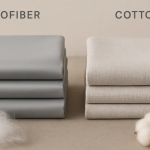
Fabric weight and weave affect how a pillowcase drapes and fits on an insert even when the finished cut dimensions are identical, which matters for hospitality buyers comparing samples across different fabric options. A lighter percale weave and a heavier sateen or microfiber blend can feel different on the same nominal size, even though both are cut to the same finished measurement.
A few fit-relevant differences worth checking during sample review:
- Percale weaves tend to feel crisp and hold their shape closely to the stated dimension, with minimal stretch.
- Sateen weaves have a bit more give and a softer drape, which can make a case feel slightly more generous on the same insert.
- Microfiber and blended fabrics vary more by manufacturer, since blend ratios affect how much the fabric stretches or relaxes after laundering.
- Shrinkage after commercial laundering is the factor most likely to change a case’s real-world fit over its service life, which is why hospitality buyers should ask about pre-shrunk or shrinkage-tested fabric rather than relying on the as-cut dimension alone.
This is also where quality testing before shipment matters most, since a case that measures correctly off the production line but shrinks unpredictably after its first commercial wash cycle creates a fit problem that will not show up until the product is already in guest rooms. Northern Linens’ batch testing checks finished dimensions before every shipment as part of its standard quality process, which is designed to catch that kind of drift before it reaches a bulk order.
What About International Size Standards for Global Buyers?
Pillowcase sizing conventions differ between North America, the UK, and continental Europe, which matters for hospitality groups or distributors sourcing across multiple regions. A “standard” case in one market is not necessarily the same dimension as a “standard” case in another.
| Region | Common sizing convention | Approximate dimensions |
|---|---|---|
| North America | Standard, Queen, King | 20 x 26 in, 20 x 30 in, 20 x 36 in |
| United Kingdom | Standard (Housewife), King | Roughly 50 x 75 cm, 50 x 90 cm |
| Continental Europe | Square (Euro-style) | Commonly 65 x 65 cm or 80 x 80 cm |
Buyers sourcing for properties or distribution across multiple regions should confirm which convention their specification sheet is referencing before placing an order, since assuming North American sizing on a UK or European order (or the reverse) is one of the more common bulk ordering mistakes.
Common Sizing Mistakes Bulk Buyers Make
Sizing errors at wholesale volume are almost always avoidable, and most trace back to a handful of repeat mistakes.
- Ordering by nominal size instead of confirming actual insert dimensions. Inserts from different suppliers can vary slightly even within the same labeled size, and a “Standard” insert from one supplier is not guaranteed to match a “Standard” insert from another.
- Mixing regional size conventions without checking unit systems. A UK “standard” and a North American “standard” are not the same dimensions, and converting between inches and centimeters incorrectly during a specification review is a surprisingly common source of ordering errors.
- Skipping a sample run before a full private label order. A small fit issue is cheap to fix on a sample and expensive to fix across a full production batch, especially once fabric has already been cut at scale.
- Not accounting for closure style when calculating fit. An oxford or flanged border adds visible dimension beyond the sleeping surface, which changes how a case looks on the bed compared to an envelope closure of the same core size.
- Treating Euro shams and sleeping pillowcases as interchangeable. They serve different functions and are almost always sized and closed differently, so ordering one when the program actually calls for the other creates a styling mismatch across guest rooms.
- Assuming all rooms in a property carry the same insert size. Many properties mix standard, queen, and king pillows across different room categories or renovation eras, and ordering a single size across the board without checking can leave certain room types under-supplied.
- Reordering from memory instead of a documented spec sheet. Relying on what “usually gets ordered” rather than a written size and closure specification makes it easy to repeat a past sizing mismatch without realizing it.
Frequently Asked Questions
What is the most common pillowcase size for hotels?
Standard (20 x 26 inches) is the most common pillowcase size for hotel guest rooms, since it matches the standard and full-size pillow inserts used across most guest room categories. Many properties also stock a Standard/Queen combination size at 20 x 30 inches to reduce SKU count across room types.
What size is a king pillowcase?
A king pillowcase measures 20 x 36 inches (51 x 91 cm) and is sized to fit king-size bed pillow inserts, which are longer than standard or queen inserts. King pillowcases are standard for king guest rooms and suites in most hospitality bedding programs.
What size is a queen pillowcase?
A queen pillowcase measures 20 x 30 inches (51 x 76 cm), four inches longer than a standard pillowcase. This is the same dimension commonly sold as a Standard/Queen combination size, since it fits both insert types.
What size is a euro pillowcase?
A euro pillowcase, also called a euro sham, is square and typically measures 26 x 26 inches (66 x 66 cm). Euro shams are used for decorative bed styling rather than everyday sleeping and are almost always closed with a back opening rather than a simple envelope closure.
Should pillowcases be the exact same size as the pillow insert?
No. A well-fitted pillowcase typically runs slightly larger than its insert, which allows the pillow to move naturally without straining the seams. A case cut to the exact insert dimension will fit too tight and tends to wear out faster.
Can I order custom pillowcase sizes for a private label program?
Yes, custom sizing is available for hospitality and retail buyers developing a private label bedding line, and it’s built around confirming fit on an initial sample before scaling to full production. This approach is designed to catch any sizing adjustment early rather than after a full bulk order has already been cut.
Do pillowcase sizes differ between the US, Canada, and international markets?
Yes, North America uses Standard, Queen, and King conventions in inches, while the UK and continental Europe generally use centimeter-based sizing with different naming conventions, such as Housewife sizing in the UK or square Euro-style sizing common across continental Europe. Buyers sourcing across regions should confirm which convention a specification sheet is using before placing an order.
How quickly can I restock pillowcases across multiple sizes for a hotel property?
Restocking timelines depend on the sizes, quantities, and any custom specifications in your order, so it’s worth confirming lead times directly for your specific mix of Standard, Queen, King, and Euro cases. Regional warehousing in Canada and the USA is designed to support faster fulfillment for hospitality buyers managing ongoing restocking cycles across multiple room categories.